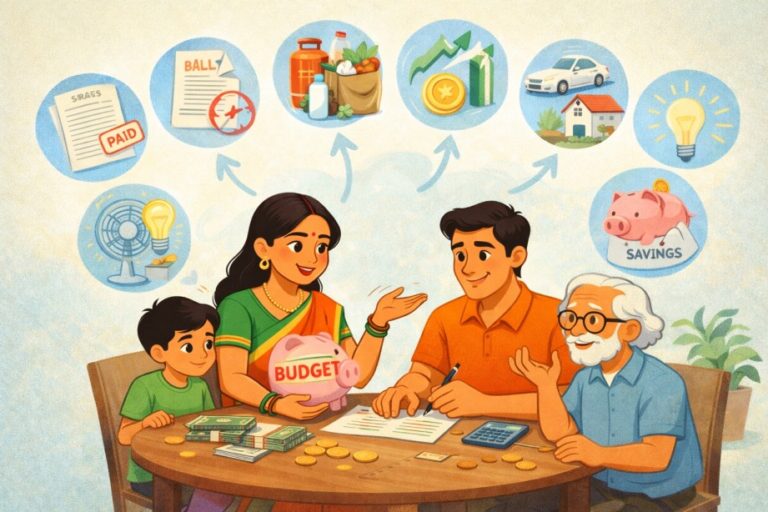

Discover ten practical, easy-to-adopt lifestyle changes that can help Indian families save thousands in 2025 & 2026.
10 Small Lifestyle Changes That Save Big Money in 2025 & 2026
Easy Money Saving Tips for India
Most Indians think saving big money needs big sacrifices.
Stopping outings. Killing all fun. Living like a monk.
That’s not how it actually works.
In real life, money leaks through small lifestyle habits — habits we don’t even notice because each one feels harmless on its own.
₹50 here. ₹100 there.
At the end of the month, ₹8,000–₹12,000 is gone, and we’re left wondering where the salary disappeared.
In 2025 and 2026, with rising prices and no guarantee of income growth, the smartest families won’t be those who earn the most — but those who fix small habits early.
These 10 lifestyle changes are:
- Easy to start
- Realistic for Indian households
- Proven to save money without hurting quality of life
Why Small Lifestyle Changes Work Better Than Big Cuts
Big money decisions happen once in a while:
- Buying a phone
- Taking a loan
- Shifting houses
But daily lifestyle habits happen every single day.
If a habit saves just ₹100 daily:
- ₹3,000 monthly
- ₹36,000 yearly
That’s not small money.
Now let’s get into habits that quietly change your finances.
1. Cooking One Extra Meal at Home Every Day
This is the highest-impact lifestyle change for most Indian families.
Replacing just one outside meal:
- Saves ₹100–₹200 daily
- ₹3,000–₹6,000 monthly
You don’t need fancy recipes.
Simple dal, sabzi, rice, or roti works.
This single habit has helped many families stabilise their budget, especially when groceries are planned properly, as explained in groceries budget shopping India – smart ways to save every month.
2. Checking Your Bank Balance Every Day
Sounds boring.
But it works.
People who check their bank balance daily:
- Spend less impulsively
- Think twice before tapping “Pay”
- Feel more in control
You don’t need to track expenses in detail.
Just knowing the number changes behaviour.
3. Carrying a Fixed Daily Spending Limit
Instead of “I’ll spend carefully”, decide:
- ₹300
- ₹500
- ₹800
That’s your daily flexible spending.
When the amount is fixed:
- You prioritise better
- You automatically say no to nonsense spending
This habit alone can save ₹2,000–₹3,000 monthly.
4. Turning Cashback Into a Habit (Not an Obsession)
Most Indians either:
- Ignore cashback completely, or
- Chase every offer and get confused
The smart approach is simple:
- Use one UPI app
- Use one shopping cashback app
- Pay regular bills through them
No chasing. No stress.
Over time, cashback quietly becomes “extra money”, as shown in how to earn ₹500 daily with cashback reward apps.
5. Cutting Convenience Spending, Not Comfort
Convenience spending includes:
- Food delivery when food is already at home
- Autos for walkable distances
- Paying convenience fees without checking alternatives
These don’t improve life much, but cost a lot.
Avoiding just one convenience expense daily saves ₹50–₹100 without affecting happiness.
6. Switching from Monthly to Weekly Expense Check
Most people check expenses at month-end — when it’s too late.
A weekly check:
- Shows problems early
- Allows quick correction
- Prevents budget collapse
This is especially useful for families trying to stay within limits, as explained in weekly budget vs monthly budget – which works better.
7. Cancelling One Unused Subscription Every Month
OTT apps, cloud storage, old apps — many run silently.
Canceling just one:
- Saves ₹199–₹499 instantly
- No lifestyle loss
Do this once every month.
That’s ₹2,000–₹5,000 yearly saved without effort.
8. Shopping with a List (Even Online)
Impulse buying is the enemy of savings.
Whether groceries or online shopping:
- Make a short list
- Stick to it
Shopping without a list increases spending by 15–25% on average.
This one habit protects your money quietly.
9. Reducing Electricity Usage Without Sacrifice
You don’t need to sit in the dark.
Small changes:
- Switching off unused fans
- Using LED bulbs
- Avoiding idle charging
These don’t reduce comfort but reduce bills.
Many families save ₹500–₹1,000 monthly just by awareness, as explained in electricity bill hacks to save ₹1,000 every month.
10. Saving First, Spending Later (Even ₹50 Daily)
Most people save what’s left.
Smart people save first.
Even:
- ₹50 daily = ₹1,500 monthly
- ₹100 daily = ₹3,000 monthly
Keep it separate:
- Another bank account
- RD
- Digital savings app
Small, consistent saving changes your mindset permanently.
If you want structure, this simple way to save ₹5,000 every month shows how small habits combine.
How These 10 Changes Save Big Money
Let’s do realistic math:
- Home-cooked meals: ₹4,000
- Cashback & fee avoidance: ₹1,500
- Subscription cuts: ₹1,000
- Reduced impulse shopping: ₹2,000
- Electricity & convenience cuts: ₹1,500
Total potential saving: ₹10,000 per month
No extra income.
No painful sacrifice.
Just better habits.
Why Most People Don’t See Results
Because they:
- Try all changes at once
- Quit after one bad week
- Expect instant results
Lifestyle change works when it’s slow and steady.
Pick 2–3 habits.
Make them automatic.
Then add more.
FAQs
1. Do these lifestyle changes really work for low-income families?
Yes. They work best for people with limited income because every rupee matters more.
2. How long before I notice savings?
Most people see results within 30–45 days.
3. Will these changes affect my quality of life?
No. Most people report less stress and better control.
4. Should I involve my family in these changes?
Absolutely. Money habits work better when everyone is aligned.
5. Can students follow these tips?
Yes. Students often save faster because habits are easier to change early.
Final Thoughts
In 2025 and 2026, financial success in India won’t come from extreme frugality or flashy income hacks.
It will come from:
- Awareness
- Small daily discipline
- Lifestyle choices that protect money quietly
Big savings don’t need big drama.
They need small changes done consistently.
Author Insight
In my own experience managing monthly expenses in India, I realized that the biggest financial problems were not due to low income, but due to lack of planning. For example, when my monthly income was around ₹25,000, I often ended up spending almost everything without saving anything at the end of the month.”
“I started tracking my expenses daily using a simple notebook. Within one month, I noticed that small, unnecessary expenses like frequent online orders and unplanned spending were taking a large portion of my income.”
“By making small changes—like setting a fixed budget for groceries, limiting online purchases, and saving at least ₹2,000 at the beginning of each month—I was able to reduce financial stress and slowly build better control over my money.” “These are simple and practical methods that any Indian household can follow without needing complex financial knowledge.”
Research Sources
- Reserve Bank of India – Financial Reports
- SEBI Investor Education
- Economic Times – Personal Finance
- Investopedia – Budgeting & Finance Basics
Disclaimer: This article is based on personal experience and is for educational purposes only. It does not constitute financial, investment, or legal advice. Readers are advised to do their own research or consult a qualified professional before making any financial decisions.