
Discover real-life stories and actionable strategies to avoid five major financial errors most Indians experience in their twenties. Learn how to build savings, beat debt traps, and control your financial journey—written in a practical, for savewithrupee.com.
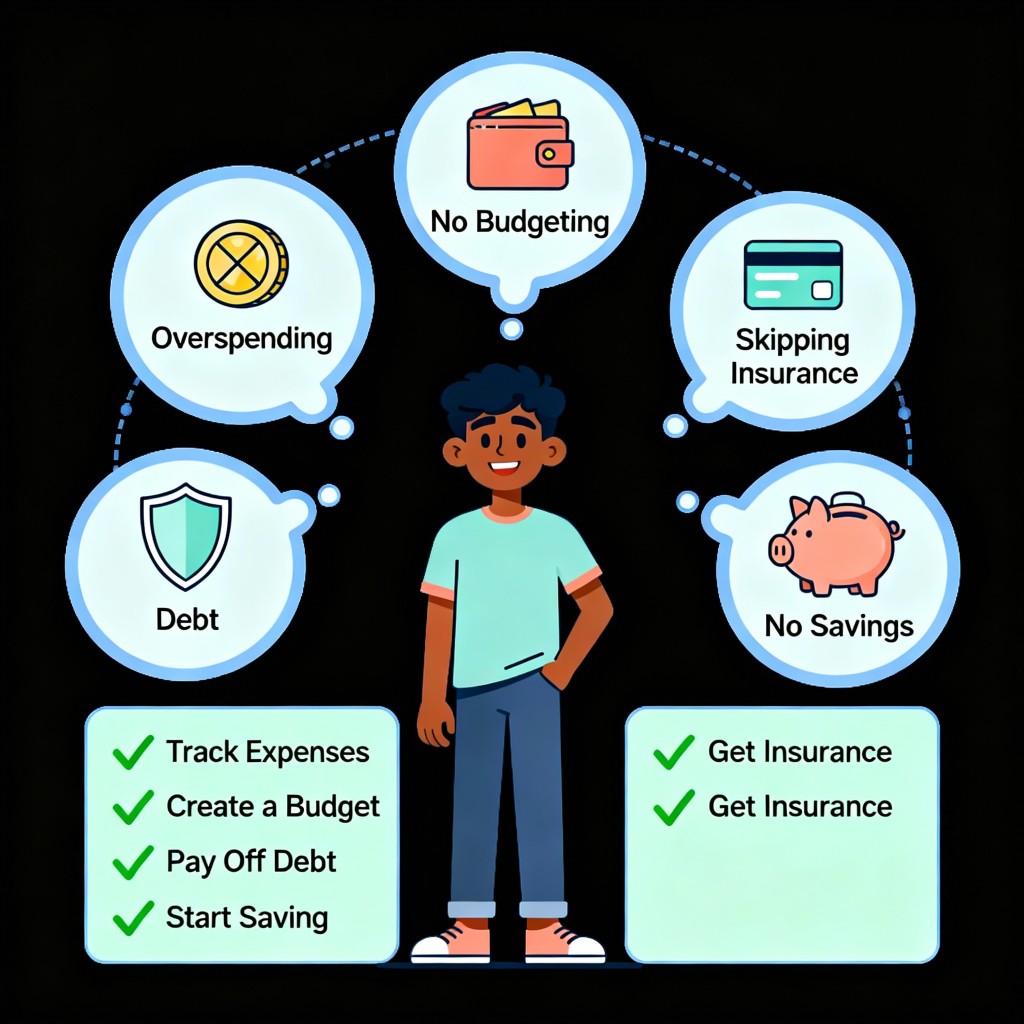
Stepping into your twenties feels like finally unlocking freedom—salary credits, independence, splurges, trips, gadgets. But for most young Indians, these years also serve up some bitter lessons about money. Often, small choices snowball into huge regrets later.
Let’s decode the top five mistakes most Indians make in their twenties, with true stories to guide your own financial journey.
The EMI Trap: Mistaking Loans for Lifestyle
Renu grew up in Pune, dreaming of her own car ever since college days. When she landed a job as a software engineer, it was only natural to celebrate her first promotion with a shiny sedan. Signing up for the car loan felt like an achievement—until reality set in.
Every month, Rs 24,000 disappeared into loan repayments. The rest went to rent, groceries, and the occasional shopping binge. By the end of each month, Renu was left with barely Rs 2,000 for savings. At 28, she felt exhausted and trapped—her social media showed off her drives, but her actual life was a juggling act between EMIs and bills.
What Usually Goes Wrong:
- Young professionals jump into loans for cars, phones, furniture without planning for the impact on savings.
- Monthly payments seem manageable at first, but emergencies, job changes or unexpected expenses quickly make them overwhelming.
- Losing out on the habit of saving.
How To Avoid:
- Try “Save First, Spend Later.” Before taking a loan, calculate how much of your salary will remain after the EMIs—if it’s less than 40% savings, rethink.
- Look for alternatives to expensive loans. Save for a bigger downpayment or second-hand options if possible.
- Automate savings before spending: Set up a system where money goes to savings/investment the moment it hits your account.
| Scenario | Monthly Income | EMI Payments | Savings Left | Stress Level |
|---|---|---|---|---|
| Renu’s Case | ₹55,000 | ₹24,000 | ₹2,000 | High |
| Sensible Plan | ₹55,000 | ₹10,000 | ₹12,000 | Low |
Salary ≠ Wealth: The High-Earnings Fallacy
Arun was thrilled when his first job in Bangalore bumped up his bank balance to Rs 38,000 a month. Suddenly, every Friday meant pub visits, tech gadgets, and splurging on gifts for friends. At the end of the year, his savings stood at just Rs 5,000.
Arun’s mistake was assuming a fat salary automatically meant he was “rich.” His expenses grew with his income, and soon, his lifestyle far outpaced his financial health.
The Problem:
- Mistaking income for actual wealth leads to living paycheck-to-paycheck—even with a decent salary.
- Ignoring the impact of inflation means idle money loses value over time.
How To Avoid:
- Build wealth by investing and saving, not just spending. Use recurring deposits, mutual funds SIPs, or even liquid funds for regular growth.
- Track your expenses every month. Free apps can highlight where your small leaks add up—subscriptions, snacks, spur-of-the-moment purchases.
Delaying Investments: Waiting for “The Right Time”
Neha, a young designer in Delhi, kept postponing investments every year. “I’ll start next year when I get promoted,” she told herself. Meanwhile, her college friend Priya began a small SIP of Rs 2,500 every month from the first year of work.
By the time Neha turned 28, Priya’s mutual fund corpus was almost six times Neha’s savings. The difference? Time and compounding.
| Starting Age | Monthly SIP | Years Invested | Total Corpus (at 12%) |
|---|---|---|---|
| Priya (22) | ₹2,500 | 8 | ₹3.85 lakh |
| Neha (28) | ₹2,500 | 2 | ₹65,000 |
Lesson:
- Compounding rewards those who start early. Waiting for big promotions or the “right time” costs lakhs in missed growth.
- Simple investments like SIPs, PPF, or even basic index funds can set up a future safety net.
Action Points:
- Begin with whatever you can—Rs 500, Rs 1,000 with auto-debit SIP. Consistency matters more than amount.
- If in doubt, start with safe, low-cost funds or government schemes.
Ignoring Emergency Funds and Insurance
Sudeep, an MBA student living in Chennai, believed he was too young to worry about medical costs. His freelance work kept him floating, and he spent anything extra on short trips and street food. But a sudden health emergency left him hospitalised, and in one week, his savings were gone.
Now, with mounting bills and overdue EMIs, Sudeep wished he had saved up for emergencies and had a basic health policy in place.
Common Mistake:
- Most twentysomethings think emergencies are rare. But accidents, job losses, and sudden hospitalisations happen more often than imagined.
- Skipping health insurance, and not having even a basic emergency fund.
How To Avoid:
- Build an emergency fund that covers 3–6 months’ expenses—even a couple of thousand rupees a month adds up over time.
- Take basic health insurance when young. Premiums are lower, benefits are higher.
Credit Card Debt: The Silent Trap
When Shweta started work as an HR manager in Gurgaon, credit cards seemed magical. Swipe for coffee, swipe for shopping, dinners, gifts. Paying only the “minimum amount due” felt smart—until rising bills and interest caught up.
Within a year, she was paying Rs 1,600 every month just in interest and late fees. When she finally applied for a home loan at 30, she was turned down because of her low CIBIL score. The real impact of credit card habits built up quietly but painfully.
| Credit Use | Monthly Due | Interest Paid | CIBIL Impact |
|---|---|---|---|
| Minimum Payment | ₹12,000 | ₹1,200 | -60 points |
| Full Payment | ₹12,000 | ₹0 | +10 points |
Key Advice:
- Always pay the full due amount each month. Carrying balances racks up steep interest charges.
- Avoid cards for impulse buys. Use them for planned, emergency spends only. Missing even one payment can tank your credit score and future loan eligibility.
Real Story: Losing It All in The Heat of Investment
Rahul, a marketing executive in Mumbai, followed the stock market craze during the pandemic. Friends were doubling their money in weeks. Without research, Rahul invested his entire savings on a “hot tip”—and lost nearly everything.
The lesson: Chasing quick returns or betting blindly on others’ advice is dangerous. Genuine wealth grows with patience, learning, and diversification. Rahul switched to SIPs, PPF, and conscious investing after this setback.
FAQs
Q: Is saving and investing possible if my income is under Rs 20,000/month?
A: Yes—start small. Saving even Rs 500 every month builds discipline. Regular deposits matter more than amount.
Q: What should I start investing in—FD, mutual funds, PPF?
A: For accessibility, try recurring deposits and mutual fund SIPs. For long-term tax-free returns, PPF is reliable.
Q: Education loan and credit card debt—what comes first?
A: Prioritise high-interest credit card payments while staying regular on education loan EMIs. Reduce unnecessary spending until debts are under control.
Q: How much should be saved from salary?
A: Aim for at least 20% of monthly income towards savings and investments—it may require lifestyle adjustments.
Q: How do I stick to good financial habits?
A: Use budgeting apps, set reminders, log daily expenses, and follow a “one-day wait” before buying non-essential items.
Peer Financial Advice
- “Don’t wait for a salary hike or some milestone—just start with tiny investments and let time do its magic.”
- “Note down all daily spends in a diary for one month. You’ll be shocked at the patterns.”
- “Resist becoming the generous spender in your friend group. Those treats add up faster than you realise.”
Quick Reference Table: Mistakes & Easy Fixes
| Money Mistake | Impact | Simple Fix |
|---|---|---|
| Buying on EMI | Stress, high fees, no savings | Delay, save, buy smarter |
| Assuming Salary = Wealth | Disappearing cash, no growth | Invest, track, limit spends |
| Delaying Investments | Lost compounding opportunity | Start SIP/PPF now |
| No Emergency Fund/Insurance | Stress, big risks | Save monthly, get insured |
| Credit Card Debt | High interest, poor CIBIL | Pay full, limit usage |
Twenties are a time for adventure, ambition and growth. But with a few practical steps and honest reflection on others’ stories, you can turn minor mistakes into major financial triumphs. Invest in habits, not just assets—because the real foundation for success in life starts with how you manage what you earn.
Author Insight
In my own experience managing monthly expenses in India, I realized that the biggest financial problems were not due to low income, but due to lack of planning. For example, when my monthly income was around ₹25,000, I often ended up spending almost everything without saving anything at the end of the month.”
“I started tracking my expenses daily using a simple notebook. Within one month, I noticed that small, unnecessary expenses like frequent online orders and unplanned spending were taking a large portion of my income.”
“By making small changes—like setting a fixed budget for groceries, limiting online purchases, and saving at least ₹2,000 at the beginning of each month—I was able to reduce financial stress and slowly build better control over my money.” “These are simple and practical methods that any Indian household can follow without needing complex financial knowledge.”
Research Sources
- Reserve Bank of India – Financial Reports
- SEBI Investor Education
- Economic Times – Personal Finance
- Investopedia – Budgeting & Finance Basics
Disclaimer: This article is based on personal experience and is for educational purposes only. It does not constitute financial, investment, or legal advice. Readers are advised to do their own research or consult a qualified professional before making any financial decisions.