
A complete 2025 Indian guide to saving your first ₹1 lakh. Step-by-step plan, real examples, budgeting tips, tools, comparison tables, and practical money hacks for beginners.
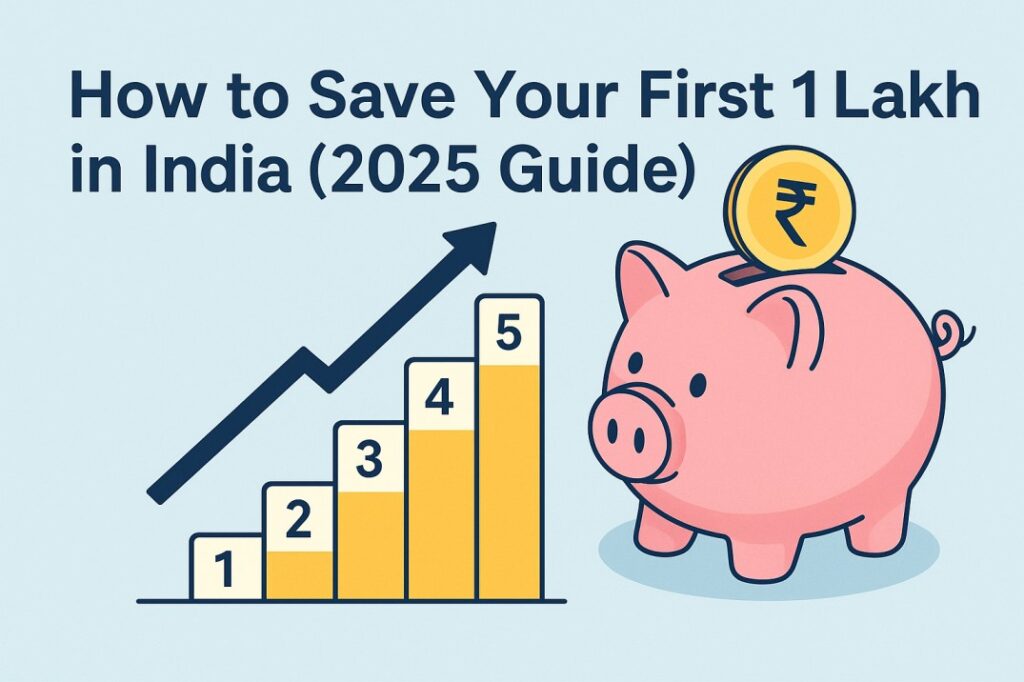
A Simple, Step-by-Step Plan That Actually Works for Indian Families
Saving your first ₹1 lakh is a turning point in your financial life. For many Indians, it’s the moment when money stress reduces, confidence increases, and future planning finally feels possible.
Why Saving the First ₹1 Lakh Feels So Hard (But Isn’t)
Most Indians don’t struggle because they earn too little. They struggle because:
- Money goes out without tracking
- Small daily expenses feel invisible
- Savings happen only if something is left
Your first ₹1 lakh is not about income level. It’s about systems and habits.
Once this milestone is achieved, saving and investing become far easier.
Step 1: Decide Your “Why” (This Is Non-Negotiable)
Before numbers, ask yourself:
Why do I want ₹1 lakh saved?
Common Indian reasons:
- Emergency fund safety
- Medical or family security
- Peace of mind
- Confidence to start investing
- Breaking the salary-to-salary cycle
People who save without a clear “why” usually stop midway.
Step 2: Choose a Comfortable Timeline (No Pressure)
You don’t need to rush. Choose what fits your life.
- 12 months → ~₹8,400/month
- 15 months → ~₹6,700/month
- 18 months → ~₹5,600/month
Saving slower is 100% okay. Consistency matters more than speed.
If you want a structured approach, this practical guide on how to save ₹1 lakh in 12 months shows realistic monthly planning.
Step 3: Track Expenses for Just One Month
This single habit changes everything.
For 30 days, note:
- Rent & groceries
- Mobile, internet, OTT
- Travel & fuel
- Food delivery & snacks
- Small UPI spends
Most people discover ₹2,000–₹5,000 of “invisible” expenses.
To make it easier, explore best free budgeting apps in India.
Step 4: Use a Simple Budget Rule (No Excel Required)
Follow the Indian-friendly 50-30-20 rule:
- 50% → Needs
- 30% → Wants
- 20% → Savings
If 20% feels high, start with 10% and grow gradually.
This breakdown is explained simply in 50-30-20 rule of budgeting explained for Indians.
Step 5: Cut Expenses Without Feeling Deprived
Saving doesn’t mean giving up joy.
High-impact changes that don’t hurt:
- Reduce food delivery to weekends
- Switch to budget mobile plans
- Grocery shopping with a list
- Cancel unused subscriptions
- Avoid unnecessary EMIs
Even saving ₹100 daily equals ₹36,500 per year.
Use these practical ideas from 15 daily money hacks to save ₹10,000 this year.
Step 6: Keep Savings Separate (Very Important)
Never mix spending money with savings.
Best beginner options:
- Separate savings account
- Recurring Deposit (RD)
- Combination of savings + RD
Automate transfers immediately after salary credit.
Confused between options? This comparison helps:
👉 FD vs RD – which is better for Indians
Step 7: Increase Income Slightly (No Burnout)
You don’t need a second full-time job.
Even ₹3,000–₹5,000 extra per month can cut your saving time drastically.
Realistic options:
- Freelancing (basic skills)
- Weekend tutoring
- Selling unused items
- Cashback & rewards apps
Explore 10 side hustles for Indians in 2025 for safe, beginner-friendly ideas.
3 Real Indian Stories (How Ordinary People Did It)
1️⃣ Neha Sharma – Jaipur, Rajasthan (Age 29)
Neha works as a school teacher earning ₹22,000 per month. She always felt saving was impossible after rent and family responsibilities. In 2023, she started tracking expenses and noticed frequent food delivery and impulsive shopping during sales.
She began saving ₹4,000 monthly via RD, cut food delivery to once a week, and earned ₹1,500 extra by taking tuition classes. She reached her first ₹1 lakh in 16 months.
Her biggest takeaway: “I didn’t earn more—I just stopped wasting.”
2️⃣ Arjun Patel – Ahmedabad, Gujarat (Age 34)
Arjun runs a small printing business with irregular income. Saving felt risky because some months were slow. Instead of fixed amounts, he saved 10–15% of whatever came in.
He opened a separate savings account, avoided touching it, and reduced unnecessary business expenses. He also followed simple budgeting tips from SaveWithRupee.
Result: ₹1 lakh saved in 18 months, without stress.
His lesson: “Flexible saving works better for unpredictable income.”
3️⃣ Lakshmi & Suresh – Coimbatore, Tamil Nadu (Ages 41 & 44)
This middle-class couple earns a combined ₹38,000. With school fees and household expenses, saving felt impossible. They started budgeting together and cut small leaks—OTT subscriptions, electricity wastage, and impulse grocery buys.
They saved ₹6,000 monthly and reached ₹1 lakh in 14 months.
Their insight: “Teamwork matters more than income.”
Step 8: Build an Emergency Fund First
Before investing aggressively, secure yourself.
Your emergency fund should cover:
- 3–6 months of expenses
- Medical or job loss situations
- Easy access, zero risk
This prevents breaking your savings later.
Follow this guide:
👉 Emergency fund – how much do you need
Step 9: Where to Keep Your First ₹1 Lakh Safely
For your first milestone, safety beats returns.
Best options:
- Savings account + RD
- Short-term FD
- Liquid mutual fund (only if disciplined)
Avoid stocks or crypto at this stage.
Beginners can decide using Gold vs SIP vs FD – what should beginners choose.
Step 10: What Comes After ₹1 Lakh?
Once you reach this milestone:
- Start SIPs slowly
- Improve credit score
- Plan tax-saving investments
- Think long-term wealth
Learn the next phase from how to build wealth slowly in India and SIP for beginners – start with ₹500.
Final CTA: Start Today, Not Someday
Saving your first ₹1 lakh is not about perfection. It’s about starting, staying consistent, and not giving up after small mistakes.
Thousands of ordinary Indians have done it.
You can too.
👉 If you want a complete checklist and deeper guidance, read
How to save your first ₹1 lakh – step by step
Your future financial confidence begins with one small decision today.
Disclaimer: This article is based on personal experience and is for educational purposes only. It does not constitute financial, investment, or legal advice. Readers are advised to do their own research or consult a qualified professional before making any financial decisions.