
Drowning in credit card debt? Learn smart ways to pay off balances faster, save on interest, and build better financial habits in 2025. Real stories, tables, and practical tips for Indian users.
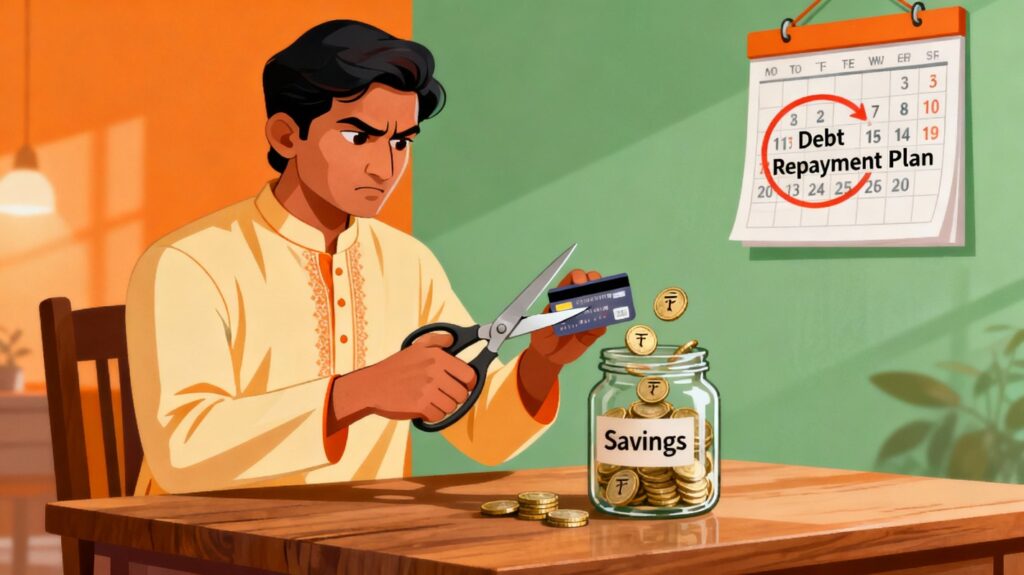
💳 Credit Card Debt in India – Smart Plan to Pay Off & Save Interest
In India, credit cards can be both a blessing and a burden.
They offer convenience, cashback, and quick payments — but if not handled wisely, they can trap you in high-interest debt that grows faster than you imagine.
The truth? You can use credit cards smartly, avoid endless EMIs, and even save money while paying them off.
Let’s explore how to create a practical, human-tested plan to get debt-free in 2025 — one that’s realistic for everyday Indians.
📚 Table of Contents
- Understanding Credit Card Debt in India
- Why Credit Card Interest Is So Dangerous
- Real Story: How Ritu Cleared ₹1.2 Lakh Debt in 10 Months
- Smart Plan to Pay Off Credit Card Debt
- Table: Debt Payoff Comparison
- Hidden Charges You Might Be Paying
- Best Practices to Stay Debt-Free
- FAQs on Credit Card Debt Management in India
- Final Thoughts + Call to Action
💡 Understanding Credit Card Debt in India
When you swipe your credit card, you’re borrowing money from the bank temporarily.
If you don’t pay it back in full by the due date, you’re charged interest — often between 36% and 48% annually.
That’s much higher than any loan or savings scheme.
Let’s say you owe ₹50,000 and pay only the minimum amount due (₹2,500).
It can take years to clear the balance and you’ll end up paying ₹20,000–₹30,000 extra in interest.
👉 Also read: Smart Investment Habits of Middle-Class Indians
⚠️ Why Credit Card Interest Is So Dangerous
Credit cards charge interest daily — not monthly.
So even if you delay payment by just a few days, your balance balloons.
| Detail | Typical Value |
|---|---|
| Monthly interest rate | 3–4% |
| Annual interest rate | 36–48% |
| Late fee | ₹400–₹1,000 |
| Cash advance charge | 2.5%–3% of amount |
| GST on interest | 18% extra |
💬 In short:
Using credit cards for convenience is fine — but carrying forward a balance is financial quicksand.
🌼 Real Story: How Ritu Cleared ₹1.2 Lakh Debt in 10 Months
Ritu Sharma, a 29-year-old marketing executive from Bengaluru, used three credit cards during the pandemic.
By 2023, she owed ₹1.2 lakh across cards and was struggling to pay more than the minimum due.
Instead of panicking, she followed a simple plan:
- Listed all debts from highest to lowest interest.
- Focused on clearing one card at a time (while paying minimums on others).
- Stopped using credit cards until balances dropped below 20%.
- Switched to a balance transfer card for lower interest.
Within 10 months, she was debt-free — and even started an SIP with ₹2,000/month.
“It wasn’t magic. It was discipline and a spreadsheet.”
👉 Read next: How to Save ₹5000 Every Month Without Sacrifice
🧠 Smart Plan to Pay Off Credit Card Debt
Let’s create your step-by-step Indian-style debt payoff plan that works in 2025.
Step 1: List All Your Debts
Note down:
- Card name
- Total due
- Minimum due
- Interest rate
| Card | Outstanding | Interest Rate | Minimum Due |
|---|---|---|---|
| HDFC Bank | ₹55,000 | 42% p.a. | ₹2,750 |
| SBI Card | ₹35,000 | 39% p.a. | ₹1,800 |
| ICICI Bank | ₹30,000 | 36% p.a. | ₹1,500 |
Step 2: Use the Avalanche or Snowball Method
| Method | What It Means | Best For |
|---|---|---|
| Avalanche | Pay off highest-interest card first | Mathematically efficient |
| Snowball | Pay off smallest balance first | Psychologically motivating |
👉 If you’re motivated by quick wins, start small (Snowball).
👉 If you want to save maximum money, go Avalanche.
Step 3: Stop Adding New Debt
Freeze unnecessary credit card spending.
Switch to UPI or debit card for daily use until debt drops below 30% of limit.
👉 Related post: UPI Lite Explained – Save While You Pay Small
Step 4: Consider Balance Transfer or Debt Consolidation
If your credit score is above 700, you can shift high-interest balances to a card offering 0% or low interest for 3–6 months.
This buys time to clear debt faster.
Alternatively, take a personal loan (10–14%) to pay off your 40% card interest — saving big.
Step 5: Increase Your Monthly Payment by 10–20%
Paying just ₹1,000 extra monthly can reduce your debt timeline by months and save thousands in interest.
Let’s see an example 👇
📊 Table: Debt Payoff Comparison
| Monthly Payment | Total Debt | Interest Rate | Months to Clear | Total Interest Paid |
|---|---|---|---|---|
| ₹3,000 | ₹50,000 | 40% | 28 | ₹33,000 |
| ₹5,000 | ₹50,000 | 40% | 13 | ₹17,000 |
| ₹7,000 | ₹50,000 | 40% | 9 | ₹10,500 |
💡 Even small payment increases make a massive difference.
💣 Hidden Charges You Might Be Paying
Most Indians don’t realize how many invisible fees credit cards add up:
| Hidden Charge | How It Affects You |
|---|---|
| Cash withdrawal fee | 2.5–3% + daily interest (from day 1) |
| Late payment fee | ₹400–₹1,000 each cycle |
| Over-limit fee | ₹500+ |
| Annual fee | ₹500–₹2,000 per card |
| GST | 18% on all above charges |
👉 You may like: Best Bank Accounts in India for Saving Money 2025
🔐 Best Practices to Stay Debt-Free
- Pay full balance before the due date.
- Enable SMS/email alerts for spending and bills.
- Avoid cash withdrawals — interest applies immediately.
- Keep utilization below 30% of credit limit.
- Set autopay for minimum dues to avoid late fees.
- Check your CIBIL score monthly.
👉 Learn more: How to Improve CIBIL Score Fast
🧘♀️ Practical Money Habits to Adopt
- Build an emergency fund before using credit cards again.
👉 See guide: Emergency Fund: How Much Do You Need? - Move small savings to a Recurring Deposit (RD) to rebuild confidence.
- Use cashback and reward points only if you can pay full balances.
- Use one primary credit card to track all expenses easily.
🙋♀️ FAQs on Credit Card Debt Management in India
1. What’s the best way to clear credit card debt fast?
Focus on the highest-interest card first (avalanche method) while paying minimums on others.
2. Should I take a personal loan to pay off credit card debt?
Yes, if the loan interest is much lower (10–14%) than your card (36–48%).
3. Does paying only the minimum due hurt my credit score?
Yes, because your credit utilization stays high, which lowers your score.
4. Can I negotiate with the bank to reduce interest?
Yes, many banks offer temporary relief or settlement plans if you’re consistent.
5. How to avoid future debt?
Build an emergency fund, track expenses, and never use credit for lifestyle purchases.
📣 Final Thoughts + Call to Action
Credit cards aren’t evil — lack of awareness is.
Once you understand interest, billing cycles, and repayment discipline, your credit card becomes a tool, not a trap.
Start your debt-free journey today:
- List your cards,
- Choose a method (Snowball or Avalanche),
- Pay a little extra each month,
- And watch your financial stress shrink.
Remember, being debt-free is the first step to financial independence.
The next? Start saving what you used to pay in interest.
👉 Continue reading: How to Build Wealth Slowly in India
Disclaimer: This article is based on personal experience and is for educational purposes only. It does not constitute financial, investment, or legal advice. Readers are advised to do their own research or consult a qualified professional before making any financial decisions.