
From ATM limits to balance shortfalls, SMS fees, and inward remittance costs — discover how Indian banks quietly deduct charges every month and learn smart ways to avoid them in 2025 & 2026
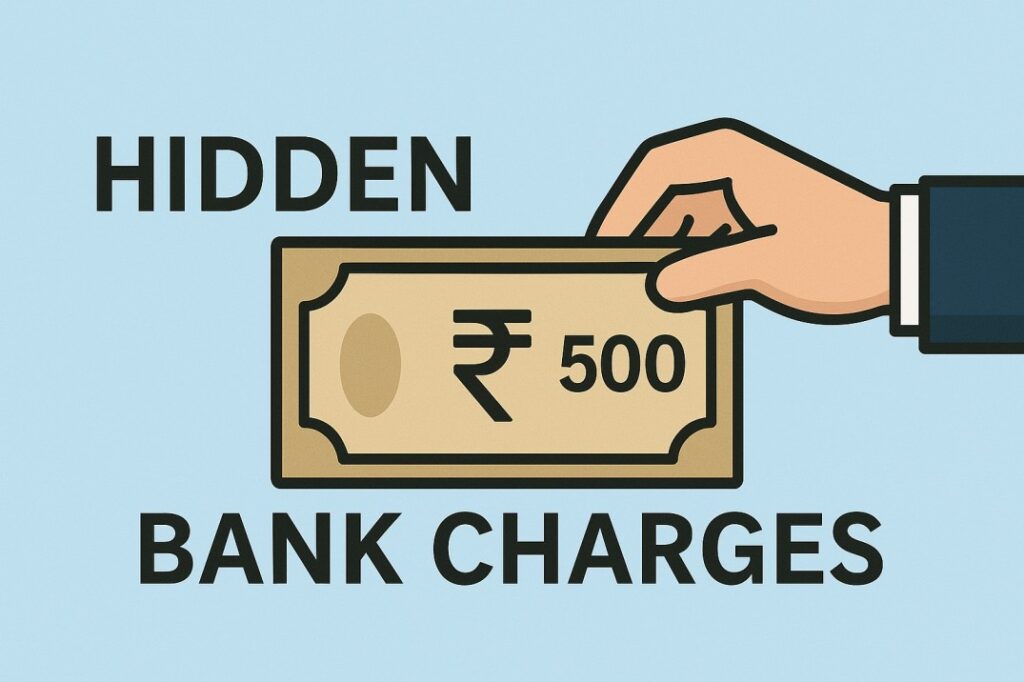
Hidden Bank Charges You’re Paying Every Month – Stop Losing Money in 2025 & 2026
Most Indians check their salary credit message carefully.
But very few check what quietly gets deducted after the money enters the account.
₹100 here. ₹150 there.
Individually, they don’t look dangerous. Together, they silently drain ₹5,000–₹15,000 every year from an average Indian household.
Banks don’t call these deductions “hidden” on paper.
But they are hidden in plain sight — buried inside SMS alerts, fine print, and statements we rarely open.
As we move into 2025 and 2026, when expenses are already rising, ignoring these charges is like leaving a tap open and wondering why the water bill is high.
Let’s break down the most common monthly bank charges Indians unknowingly pay — and how to stop them legally and safely.
1. Minimum Balance Penalty – The Most Common Money Leak
This is the biggest culprit.
Many savings accounts still require you to maintain a minimum monthly balance — ₹3,000, ₹5,000, or even ₹10,000 depending on the bank and city category.
If your balance drops below this:
- Banks charge ₹100 to ₹600 per month
- Plus GST
- Sometimes deducted silently at month-end
For families living month to month, this happens more often than they realise.
Real example:
You maintain ₹2,500 instead of ₹3,000 for three months.
That’s easily ₹500–₹1,000 gone, without any SMS explanation.
How to stop this:
- Convert your account to a zero-balance savings account
- Or switch to banks known for low or no balance penalties
You can compare safer options in this guide on best bank accounts in India for saving money.
2. Debit Card Annual & Quarterly Charges
Many people assume debit cards are “free forever”.
They’re not.
Banks often charge:
- ₹150–₹300 annual debit card fee
- Or ₹50–₹75 quarterly maintenance charges
- Replacement card fees if your card expires or gets damaged
Because this charge comes once a year or quarterly, most people don’t notice it.
What makes it worse:
Even if you barely use the card, the fee still applies.
What you can do:
- Ask your bank for a basic or virtual debit card
- Request fee reversal if you rarely use it (works surprisingly often)
- Shift most payments to UPI, which has zero card charges
3. ATM Withdrawal & Balance Enquiry Charges
ATM usage looks harmless. But overuse adds up.
After the free limit (usually 3–5 transactions per month):
- Cash withdrawal: ₹20–₹25 per transaction
- Balance enquiry at another bank ATM: ₹5–₹6
If you withdraw small amounts multiple times, you pay more in fees than necessary.
Smart habit change:
- Withdraw once or twice a month in larger amounts
- Use UPI apps to check balance instead of ATM
- Stick to your own bank’s ATM where possible
This is a small habit tweak that saves money silently every month.
4. SMS Alert Charges You Didn’t Agree To
Many banks charge ₹15–₹25 per quarter for SMS alerts.
You may think this is negligible.
But across multiple accounts, it quietly adds up.
And here’s the tricky part — many people never explicitly opted in.
Good news:
Most banks allow:
- Email alerts instead of SMS
- Or free SMS alerts if you request a downgrade
A quick visit or call to customer care can stop this charge permanently.
5. Inactive Account Penalties
If you haven’t used an account for:
- 12–24 months (varies by bank)
The bank may classify it as inactive or dormant.
Some banks then:
- Charge maintenance fees
- Deduct reactivation fees
- Stop interest credit until reactivated
This usually happens with:
- Old salary accounts
- College-time accounts
- Secondary savings accounts
Action step:
- Close unused accounts
- Or do one small transaction every few months
If you’re unsure how to manage multiple accounts efficiently, this article on how to open a zero balance bank account explains safer alternatives.
6. Cheque Book & Cheque Bounce Charges
Cheque usage has reduced, but charges haven’t.
Banks may charge:
- ₹2–₹5 per cheque leaf
- ₹100–₹300 for cheque bounce
- Penalty even if bounce happened due to technical reasons
Many people discover this only after checking the statement weeks later.
If you rarely use cheques:
- Opt out of auto-issued cheque books
- Use online transfers wherever possible
7. Standing Instruction & Auto-Debit Penalties
Missed auto-debits (EMIs, SIPs, insurance premiums) can attract:
- ₹250–₹750 per failed instruction
- Plus GST
- Plus late fees from the lender
This hits hard during tight months.
To avoid this:
- Keep one dedicated account for EMIs
- Maintain buffer balance
- Track monthly cash flow properly
A simple structure like this monthly budget plan for Indian families can prevent such penalties completely.
8. International Transaction Markup Fees
If you:
- Pay for Netflix international plans
- Use foreign websites
- Book international services
Banks charge 2–3.5% markup fee plus GST.
Most users never realise this until they compare the billed amount.
Solution:
- Use cards with zero or low forex markup
- Avoid unnecessary foreign currency transactions
9. Account Upgrade Traps
Banks often “upgrade” accounts:
- Premium savings account
- Salary account converted to regular
- Added features you didn’t ask for
These upgrades come with:
- Higher minimum balance
- Higher fees
- Paid services bundled in
Always read SMS or email updates from your bank carefully.
The Real Cost of Ignoring These Charges
Let’s do rough math for a middle-class Indian household:
- Minimum balance penalties: ₹3,000/year
- Debit card & SMS fees: ₹500/year
- ATM & service charges: ₹1,000/year
- Missed auto-debit penalties: ₹1,500/year
That’s ₹6,000+ gone, without buying a single thing.
That money could:
- Build an emergency fund
- Cover school expenses
- Fund a small SIP
If you’re trying to save consistently, this guide on how to save ₹5,000 every month without sacrifice shows how stopping leaks matters more than earning extra.
Final Thoughts: Banks Won’t Warn You — You Must Watch
Banks don’t break rules.
They just rely on customers not paying attention.
In 2025 and 2026, financial discipline isn’t about extreme frugality.
It’s about plugging silent leaks.
Open your bank statement today.
Not tomorrow. Not next month.
Because the easiest money you can save is the money you’re already losing.
Disclaimer: This article is based on personal experience and is for educational purposes only. It does not constitute financial, investment, or legal advice. Readers are advised to do their own research or consult a qualified professional before making any financial decisions.