
A true, practical look at the money mistakes I made in my 20s during the 2001–2010 era, and the lessons that shaped SaveWithRupee. Learn what to avoid and how to build financial stability today.
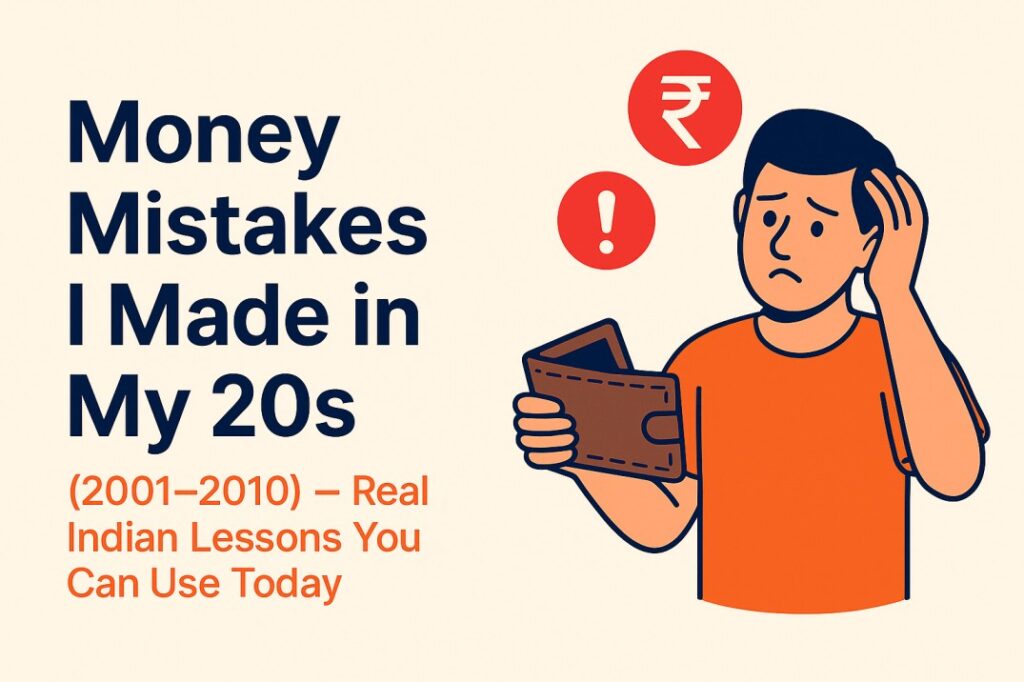
💭 The Money Mistakes I Made in My 20s (And What They Taught Me)
My 20s belonged to a different India.
It was the early 2000s—no UPI, no smartphones, no OTT apps, no digital wallets. Salaries came in cash, and most financial decisions were based on guesswork or whatever elders told us. No Google to check, no YouTube tutorials, no personal finance blogs to guide us.
And honestly?
Those years taught me the toughest money lessons of my life.
This isn’t a lecture.
Not a guide.
Not financial advice.
Just a real story from a young version of me—learning about money through mistakes, confusion, and experience.
💸 I Spent Money Without Thinking Because Cash Felt Unlimited
When money is physical, it doesn’t feel like it disappears.
My salary came in an envelope. I’d put some in my wallet, some in a drawer, and the rest would slowly vanish over the month.
A movie here, a meal there, a new shirt, a bus trip, cyber café browsing…
Small amounts, but they piled up silently.
By mid-month I would open my wallet and find almost nothing left. But I still wouldn’t know where it went.
That was my first real money mistake—
spending without awareness.
🚨 I Never Built an Emergency Fund (And Paid the Price)
Back then, I believed emergencies happened to “other people.”
I assumed my job was stable, my family was okay, and life would go smoothly.
Life rarely works that way.
One sudden medical emergency at home shook me completely.
I had no savings, no backup, no cushion. I had to borrow money from friends and relatives, and the helplessness of that moment still stays with me.
That day taught me:
Emergency money is not optional—it’s survival.
💳 I Took My First Credit Card Too Lightly
Around 2003–2005, credit cards became popular.
Sales people stood outside offices:
“Sir, no annual fee!”
“Free joining gift!”
“Just sign here!”
I fell for it.
I swiped for:
- New shoes
- A branded shirt
- A basic camera
- Dinner outings
- Petrol
And when the bill arrived, I paid only the “minimum due.”
That word minimum cost me more than every swipe combined.
Interest grew like wildfire.
It took me months to come out of that trap.
Credit cards aren’t dangerous—
ignorance is.
🎬 I Spent Too Much on Movies, Cafés & Lifestyle
Multiplexes had just entered India.
Pizza Hut felt luxurious.
Cafés were a new trend.
Every weekend plan involved spending money.
I wasn’t overspending because I loved luxury.
I was overspending because I wanted to “fit in.”
In your 20s, comparison becomes your worst financial enemy.
I bought things not because I needed them…
but because I didn’t want to feel left behind.
📉 I Didn’t Invest Because I Thought Investing Was Not for Me
In the early 2000s:
- No SIP culture
- No YouTube finance channels
- Mutual funds felt scary
- Stock market felt like gambling
- Nobody taught investing
I believed investing was for “rich and older” people.
So I did nothing.
Just missed years of compounding while doing nothing.
Even ₹500/month would have made a difference.
But I didn’t know that then.
👔 I Stayed in the Same Job for Too Long Without Negotiating
Switching jobs wasn’t common.
Negotiating salary felt rude.
Most advice from elders was:
“Stay stable.”
“Don’t change jobs too soon.”
I followed it.
And because of that, I stayed underpaid for years.
Hard work is important—
but knowing your worth is more important.
💡 What These Mistakes Finally Taught Me
I didn’t learn instantly.
These lessons grew slowly—like seeds planted by mistakes.
Here’s what stayed with me:
✨ 1. Money needs awareness, not luck.
Track your spending—digitally or mentally.
✨ 2. Savings come before lifestyle, not after.
✨ 3. Emergency fund = peace.
✨ 4. Credit cards require discipline, not emotion.
✨ 5. Investments don’t need big income—just consistency.
✨ 6. Never be afraid to negotiate your salary.
✨ 7. Your financial habits will walk with you longer than your friends will.
These became the foundation of how I live today—and the reason SaveWithRupee exists.
👥 Stories of Others From That Era Who Felt the Same
🧑💼 Prakash from Chennai
Got his first job in 2004. Spent almost everything on outings because “life is short.” At 30, he had to start from zero again.
👩🎓 Neeta from Pune
Used a credit card casually in college. Took her almost 2 years to clear the interest.
👨🔧 Arif from Hyderabad
Lived paycheck to paycheck until a family emergency forced him to rethink everything—just like me.
Different cities, different people, same lessons.
🎯 If You’re in Your 20s Today…
I won’t give advice.
I’ll just share the one sentence I wish someone had told me:
“How you treat money in your 20s decides how money treats you in your 30s and 40s.”
Small habits matter.
Awareness matters.
Consistency matters.
Your income will grow.
But your habits?
They decide your peace.
🏁 Final Thoughts
I don’t regret my mistakes anymore.
They shaped me, grounded me, and taught me lessons no book could teach. Everything SaveWithRupee stands for today comes from a place of lived experience, not theory.
If my story saves even one person from repeating the same mistakes, then all those struggles were worth it.
Disclaimer: This article is based on personal experience and is for educational purposes only. It does not constitute financial, investment, or legal advice. Readers are advised to do their own research or consult a qualified professional before making any financial decisions.