
Living on a ₹25,000 salary in India in 2026 is challenging—but possible. This realistic, stress-free monthly budget plan shows how Indian families and individuals can manage expenses, avoid debt, and still save a little without sacrificing peace of mind.
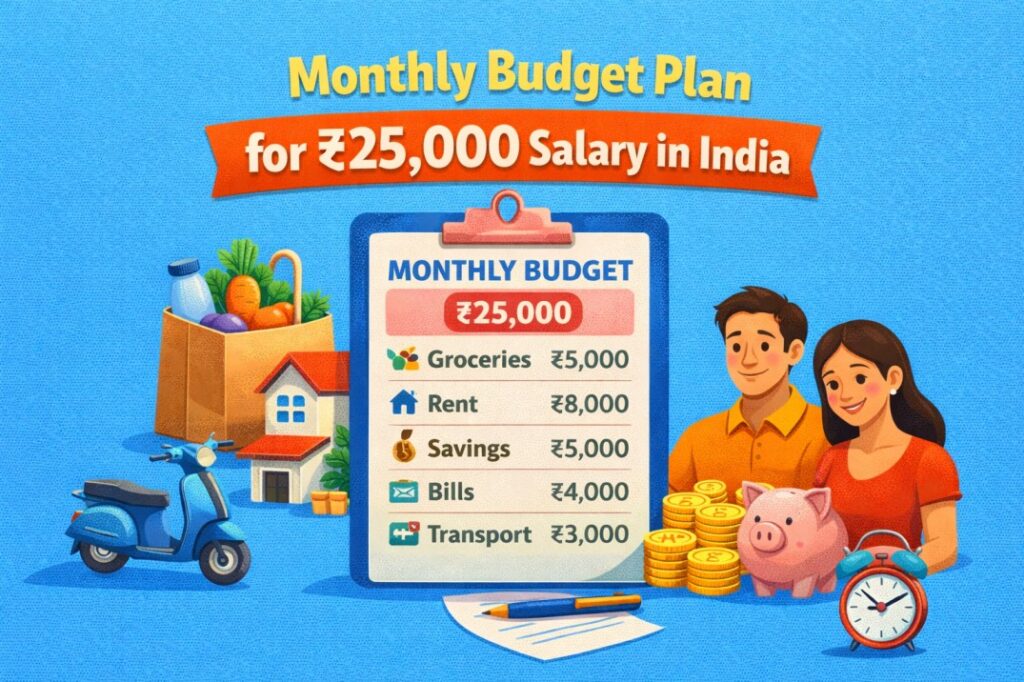
Monthly Budget Plan for ₹25,000 Salary in India
A Realistic & Stress-Free Guide (2026)
A ₹25,000 monthly salary is a reality for millions of Indians in 2026.
Teachers, office staff, delivery executives, small private employees, single earners supporting families—this income is common, but rarely discussed honestly.
Most advice online assumes:
- Higher income
- Zero family responsibility
- Perfect discipline
That’s not real life.
This guide is built for real Indian households, where money is tight, prices are rising, and mental peace matters as much as savings.
The goal here is simple:
👉 Run the month smoothly
👉 Avoid stress and debt
👉 Save something—even if small
First, the Truth About a ₹25,000 Salary
Let’s be clear and respectful.
₹25,000 is:
- Not “too low to manage”
- Not enough for luxury
- Enough for stability if planned properly
The problem is not income alone.
The problem is money leaking without control.
Once leaks are fixed, ₹25,000 becomes manageable.
Step 1: Know What Must Be Paid First (Fixed Expenses)
On a tight salary, fixed expenses decide everything.
Here’s a realistic structure for most Indian cities and towns.
1. House Rent – ₹6,000 to ₹8,000
(24–32%)
- Shared accommodation or small unit
- Semi-urban areas or city outskirts
- If living with family, treat this as “future saving potential”
If rent crosses ₹9,000, budgeting becomes very stressful on this income.
2. Utilities (Electricity, Mobile, Internet) – ₹1,800 to ₹2,200
(7–9%)
Typical split:
- Electricity: ₹700–₹900
- Mobile recharge: ₹300–₹400
- Internet / DTH: ₹500–₹700
Electricity control alone can free ₹300–₹500 monthly, as explained in electricity bill hacks to save ₹1,000 every month.
3. Transport – ₹2,000 to ₹2,500
(8–10%)
Includes:
- Bus/train passes
- Two-wheeler fuel
- Occasional auto
Daily cabs are not realistic on this income.
Step 2: Control the Biggest Variable – Food
Food is where most budgets break.
4. Groceries & Daily Food – ₹6,000 to ₹6,500
(24–26%)
This covers:
- Rice, wheat, dal
- Vegetables, milk
- Cooking gas
- Basic household items
Key rule:
👉 Groceries are cheaper than food delivery
Families who plan groceries weekly stay stable even on tight incomes, as shown in groceries budget shopping India – smart ways to save every month.
5. Outside Food & Snacks – ₹800 to ₹1,200
(3–5%)
Completely cutting this causes frustration.
Instead:
- Fix a small limit
- Use it mindfully
Controlled enjoyment is better than guilt spending.
Step 3: Don’t Ignore Medical & Emergency Needs
6. Medical / Emergency Buffer – ₹800 to ₹1,000
(3–4%)
This is non-negotiable, even on ₹25,000.
Medicines, doctor visits, small emergencies will happen.
Without this buffer, people fall into debt.
This simple guide on emergency fund planning for Indian households explains why even small buffers matter.
Step 4: Yes, You Still Need Savings (Even Small)
7. Savings – ₹1,000 to ₹1,500
(4–6%)
Many people think:
“I’ll save after income increases.”
That day often never comes.
Saving even ₹1,000:
- Builds confidence
- Creates safety
- Prevents panic
Options:
- RD
- Small SIP
- Separate savings account
Small savings matter more than perfect plans.
If saving feels impossible, this practical guide on how to save money on a small salary applies equally well here.
Step 5: Keep a Small Buffer for Life
8. Miscellaneous / Personal – ₹700 to ₹1,000
(3–4%)
This includes:
- Clothing
- Personal care
- Small social expenses
Without this, money pressure increases.
Sample Monthly Budget Summary (₹25,000)
- Rent: ₹7,000
- Groceries: ₹6,200
- Utilities: ₹2,000
- Transport: ₹2,300
- Outside food: ₹1,000
- Medical buffer: ₹900
- Savings: ₹1,200
- Miscellaneous: ₹1,400
Total: ₹25,000
This is tight—but realistic and stable.
A Real-Life Example (Short & Honest)
A single-earner family in Gwalior:
- Monthly income: ₹25,000
- Two adults, one child
- Government school
They didn’t aim for perfection.
They focused on:
- Weekly grocery planning
- Fixed food delivery limit
- ₹1,000 monthly RD
After one year:
- Emergency fund created
- No borrowing
- Much lower stress
Income didn’t change.
Control did.
Common Mistakes People Make on ₹25,000 Salary
- Ignoring small daily expenses
- No weekly review
- Overusing credit cards
- Skipping emergency buffer
- Trying to copy higher-income lifestyles
Fixing mistakes matters more than earning extra.
This article on where most Indian households lose money without realising explains these leaks clearly.
How to Make This Budget Stress-Free
- Review expenses weekly, not monthly
- Use cash or fixed weekly limits for food
- Avoid comparison with others
- Focus on stability, not perfection
Weekly control works better than strict monthly pressure, as shown in weekly budget vs monthly budget – which works better.
FAQs
1. Is ₹25,000 enough to live comfortably in India?
Comfort depends on location and expectations. Stability is possible with discipline.
2. Can I save on this income?
Yes. Even ₹1,000–₹1,500 monthly is meaningful.
3. Should I avoid credit cards completely?
Yes, unless you have strong control. Credit increases risk on low income.
4. What if rent is very high?
Then other categories must reduce—or location change should be considered.
5. How long before budgeting feels easier?
Most people feel relief within 1–2 months.
Final Thoughts
A ₹25,000 salary doesn’t mean a stressful life.
It means a carefully planned life.
In 2026, financial peace will not come from earning fast.
It will come from spending with clarity and purpose.
You don’t need luxury.
You need control, safety, and small progress.
Disclaimer: This article is based on personal experience and is for educational purposes only. It does not constitute financial, investment, or legal advice. Readers are advised to do their own research or consult a qualified professional before making any financial decisions.