
In 2026, most Indian families overspend not because of big expenses, but because weekly spending has no clear limit. This guide explains a realistic weekly spending limit for Indian families, with a simple example that actually works in real life.

A Realistic Weekly Spending Limit for Indian Families (With Example)
Ask an Indian family this simple question:
“How much can you safely spend in one week?”
Most people won’t have a clear answer.
They know the monthly salary.
They roughly know rent and school fees.
But weekly spending? That’s where things go out of control.
In 2026, weekly spending is where most money leaks happen — groceries, snacks, fuel, small shopping, food delivery, and random UPI payments.
Setting a realistic weekly spending limit is one of the easiest ways for Indian families to save money without strict budgeting or stress.
Why Monthly Budgets Fail for Many Indian Families
Monthly budgets look good on paper, but fail in practice because:
- Expenses don’t happen monthly — they happen daily
- Digital payments hide spending pain
- Small expenses feel “too small to track”
- Overspending is noticed only at month-end
By the time the month ends, it’s already too late to fix mistakes.
That’s why weekly limits work better than monthly intentions.
What Is a Weekly Spending Limit (In Simple Terms)
A weekly spending limit is the maximum amount your family can spend in 7 days on variable expenses.
It usually covers:
- Groceries
- Vegetables & milk
- Local transport & fuel
- Snacks & eating out
- Small household needs
It does not include:
- Rent
- EMIs
- School fees
- Insurance
- Fixed bills
Those are handled separately.
Why Weekly Limits Work Better in Indian Homes
Weekly limits work because they:
- Match how Indians actually spend
- Catch overspending early
- Reduce guilt and arguments
- Allow quick correction
Instead of saying “We overspent this month”, you say:
“Let’s slow down this week.”
That mindset change makes a big difference.
Many families discover this only after comparing weekly vs monthly tracking, as explained in weekly budget vs monthly budget – which works better.
Step 1: Find Your Monthly Variable Spending
First, identify how much you actually spend flexibly.
Example (₹45,000 monthly income):
Fixed expenses:
- Rent: ₹12,000
- School fees: ₹4,000
- EMIs & insurance: ₹6,000
- Utilities (average): ₹3,000
Fixed total = ₹25,000
Remaining for flexible spending:
- ₹45,000 – ₹25,000 = ₹20,000
This ₹20,000 is where overspending usually happens.
Step 2: Convert Monthly to Weekly (The Right Way)
Many people divide by 4. That’s a mistake.
A month is 4.3 weeks, not 4.
Correct calculation:
- ₹20,000 ÷ 4.3 ≈ ₹4,650 per week
👉 This is your realistic weekly spending limit.
Round it slightly lower for safety:
- ₹4,500 per week
Step 3: What ₹4,500 Per Week Covers (Real Example)
For a family of 3–4 people, ₹4,500 weekly may cover:
- Vegetables, fruits, milk: ₹1,500
- Groceries top-up: ₹1,200
- Fuel / transport: ₹800
- Snacks & small eating out: ₹600
- Miscellaneous buffer: ₹400
Total: ₹4,500
No luxury.
No extreme cuts.
Just realistic control.
A Real Indian Family Example
A family in Surat:
- Monthly income: ₹42,000
- Always ran out of money before month-end
They tried a simple change in 2026:
- Fixed weekly spending limit: ₹4,000
- Cash + UPI combined
- Weekly review every Sunday
What changed:
- Fewer impulse snacks
- Reduced random online orders
- Better grocery planning
Result after 2 months:
- ₹3,000 saved monthly
- Less stress
- No lifestyle downgrade
They didn’t earn more.
They just stopped money from drifting weekly.
Common Mistakes While Setting Weekly Limits
Setting an Unrealistically Low Limit
This leads to frustration and failure.
Ignoring Small Daily Expenses
Small UPI payments matter the most.
Not Reviewing Weekly
A limit without review is useless.
Treating Limits Like Punishment
It’s a guide, not a jail rule.
Many families fall into these traps before learning where money actually leaks, as explained in where most Indian households lose money without realising.
How to Track Weekly Spending (Simple Methods)
You don’t need apps.
Use one of these:
- Keep weekly cash separately
- Track total UPI spends only
- Write daily total on phone notes
The goal is awareness, not perfection.
If tracking feels difficult, this simple approach in how I track every rupee I spend can be adapted easily.
What If One Week Goes Over Budget?
Don’t panic.
Options:
- Reduce spending next week slightly
- Skip one non-essential expense
- Learn and adjust future weeks
Weekly limits work because mistakes are small and fixable.
How Weekly Limits Help You Save Automatically
Most families save money because:
- Spending slows down naturally
- Decisions become conscious
- Impulse buying reduces
That extra ₹2,000–₹4,000 saved monthly can be redirected to:
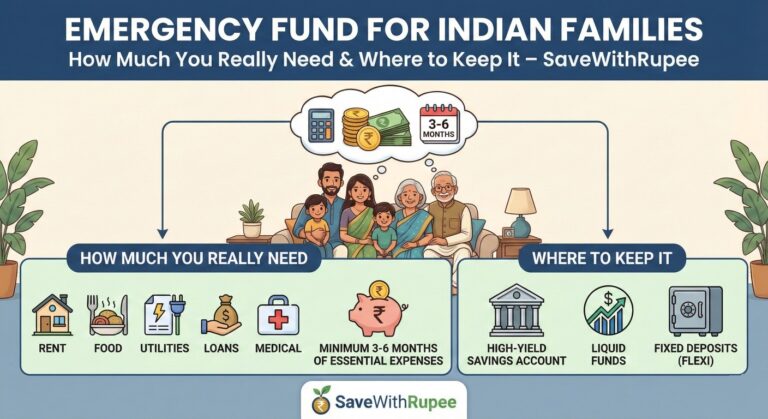
- Emergency fund
- SIP
- RD
This redirection habit is explained clearly in how to save ₹5,000 every month without sacrifice.
FAQs
1. Is a weekly spending limit better than a monthly budget?
For most Indian families, yes. It’s more practical and flexible.
2. Can this work with UPI and digital payments?
Yes. Track total weekly spending, not individual items.
3. What if income is irregular?
Base limits on minimum guaranteed income.
4. Should the whole family know the limit?
Yes. Shared clarity reduces conflict and confusion.
5. How soon will I see results?
Most families feel control within the first 2–3 weeks.
Final Thoughts
In 2026, money control doesn’t come from strict rules.
It comes from clear weekly boundaries.
A realistic weekly spending limit:
- Prevents overspending early
- Protects savings
- Reduces stress
You don’t need complex budgets.
You need a number you respect — every week.
Set the limit.
Watch your money behave better.
Disclaimer: This article is based on personal experience and is for educational purposes only. It does not constitute financial, investment, or legal advice. Readers are advised to do their own research or consult a qualified professional before making any financial decisions.