
In 2026, eating healthy in India doesn’t have to be expensive. This guide lists the cheapest healthy meals you can cook under ₹30 per serving—perfect for students, bachelors, and middle-class families trying to save money without sacrificing nutrition.
last updated : 22-02-2026
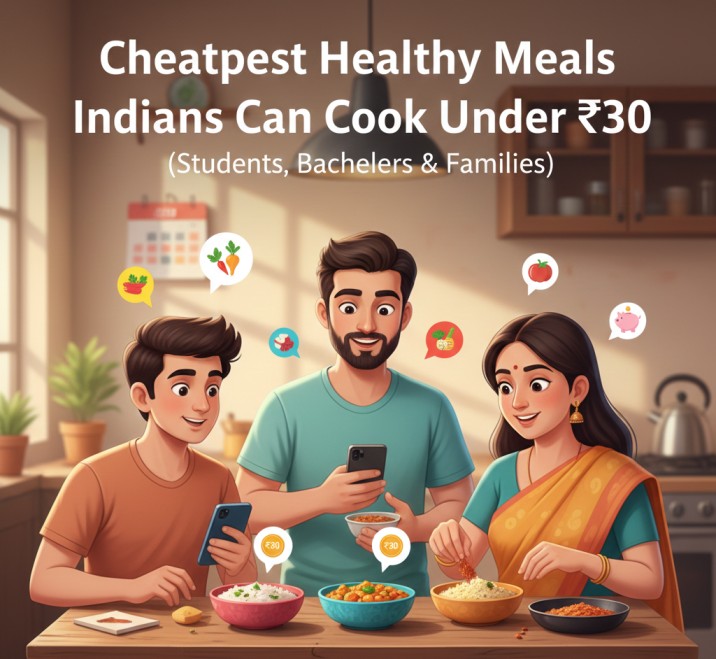
Cheapest Healthy Meals Indians Can Cook Under ₹30 (Students, Bachelors & Families)
With rising food prices in India, many students, bachelors, and even families are searching for ways to cook affordable yet nutritious meals at home. The good news is that Indian kitchens already have a huge advantage—traditional recipes that are both healthy and budget-friendly.
Many delicious meals can be prepared for less than ₹30 per serving, especially when you cook at home and buy ingredients wisely. These meals are not only affordable but also provide essential nutrients like protein, fiber, and carbohydrates needed for a balanced diet.
In this guide, we’ll explore some of the cheapest healthy meals Indians can cook under ₹30, along with practical tips to reduce food expenses without compromising nutrition.
Why Cooking at Home Saves More Money
Eating outside or ordering food regularly can quickly increase monthly expenses. A single food delivery order can cost anywhere between ₹150 and ₹400, while home-cooked meals often cost a fraction of that amount.
Many households notice major savings when they reduce restaurant meals and cook more frequently at home. People who also follow smart grocery shopping habits to reduce monthly food expenses often see their kitchen budget drop significantly over time.
Cooking at home offers several benefits:
- Lower food costs
- Healthier ingredients
- Better portion control
- Reduced food waste
These advantages make home cooking one of the most effective ways to manage monthly expenses.
1. Dal Rice (Simple Protein Meal)
Approximate Cost: ₹25–₹30 per serving
Dal rice is one of the most affordable and nutritious meals in India. Lentils provide protein and fiber, while rice supplies carbohydrates for energy.
Ingredients
- ½ cup rice
- ¼ cup lentils (toor dal or moong dal)
- Turmeric and salt
- A small tempering of mustard seeds and garlic
Why It’s Healthy
Dal rice contains a balanced mix of carbohydrates, protein, and essential minerals. It is easy to digest and suitable for people of all ages.
Adding seasonal vegetables can further improve the nutritional value without increasing the cost significantly.
2. Vegetable Upma
Approximate Cost: ₹20–₹25 per serving
Upma is a quick and filling breakfast or dinner option made with semolina (rava). It requires minimal ingredients and cooks in less than 15 minutes.
Ingredients
- ½ cup rava
- Onion
- Carrot or beans (optional)
- Mustard seeds
- Curry leaves
Why It’s Healthy
Upma contains fiber from vegetables and provides steady energy through complex carbohydrates.
Because it is inexpensive and easy to prepare, it is one of the most popular meals among students and bachelors.
3. Lemon Rice
Approximate Cost: ₹20–₹25 per serving
Lemon rice is a simple South Indian dish that transforms leftover rice into a flavorful meal.
Ingredients
- Cooked rice
- Lemon juice
- Mustard seeds
- Curry leaves
- Peanuts
Why It’s Healthy
Lemon rice contains vitamin C from lemon and protein from peanuts, making it a balanced yet affordable dish.
Using leftover rice also helps reduce food waste, which is an important habit for controlling food expenses.
4. Vegetable Khichdi
Approximate Cost: ₹25–₹30 per serving
Khichdi is one of the most nutritious and comforting Indian meals. It combines rice, lentils, and vegetables in one dish.
Ingredients
- Rice
- Moong dal
- Carrot or potato
- Turmeric
- Salt and spices
Why It’s Healthy
Khichdi provides:
- Protein from lentils
- Carbohydrates from rice
- Vitamins from vegetables
It is also extremely easy to cook, making it ideal for beginners.
5. Chapati with Potato Curry
Approximate Cost: ₹25–₹30 per serving
Potatoes are one of the most affordable vegetables available in India.
When paired with chapati, they create a filling and budget-friendly meal.
Ingredients
- Wheat flour
- Potatoes
- Onion
- Basic spices
Why It’s Healthy
Although simple, this meal provides carbohydrates, fiber, and essential minerals.
To improve nutrition, you can add peas or spinach to the curry when available.
6. Egg Bhurji with Chapati
Approximate Cost: ₹25–₹30 per serving
Eggs are one of the cheapest sources of high-quality protein.
Ingredients
- One egg
- Onion
- Tomato
- Basic spices
- Chapati
Why It’s Healthy
Eggs provide protein, vitamin B12, and healthy fats, making them an excellent addition to a budget diet.
Many students include eggs in their diet because they are affordable and nutritious.
7. Curd Rice
Approximate Cost: ₹20–₹25 per serving
Curd rice is a simple meal made with leftover rice and yogurt.
Ingredients
- Cooked rice
- Curd
- Mustard seeds
- Curry leaves
Why It’s Healthy
Curd contains probiotics that support digestion and gut health.
This meal is especially popular in South India because it is cooling and easy to digest.
Smart Tips to Keep Meal Costs Under ₹30
Cooking cheap meals consistently requires a few smart habits.
Buy Seasonal Vegetables
Seasonal vegetables are usually cheaper and fresher. Adjusting your cooking based on seasonal produce can significantly reduce grocery spending.
Many households save money by following practical grocery shopping strategies that help reduce monthly food expenses.
Buy Staples in Bulk
Staples like rice, wheat, lentils, and cooking oil are cheaper when purchased in larger quantities.
Bulk buying helps reduce the cost per kilogram and prevents frequent grocery trips.
Reduce Food Waste
Food waste increases grocery expenses more than people realize.
Simple habits like storing vegetables properly and using leftovers creatively can prevent unnecessary waste.
Some families discover these hidden losses when they review common household expenses that quietly drain money every month.
Track Your Food Spending
Tracking monthly food expenses helps you identify where your money is going.
When households start monitoring their spending carefully, they often notice how small purchases accumulate.
People who follow structured budgeting methods such as the 50-30-20 budgeting rule adapted for Indian households often find it easier to control grocery spending.
Cheap Meal Planning Example (Weekly Budget)
Here is a simple weekly meal plan that keeps food costs low.
Monday – Dal rice
Tuesday – Vegetable upma
Wednesday – Lemon rice
Thursday – Chapati with potato curry
Friday – Vegetable khichdi
Saturday – Egg bhurji with chapati
Sunday – Curd rice
Planning meals in advance reduces unnecessary grocery purchases and helps control food expenses.
Many families also combine meal planning with a realistic monthly budget strategy designed for Indian households, which makes it easier to balance food spending with other expenses.
Final Thoughts
Eating healthy on a tight budget is completely possible in India. Traditional Indian meals already include affordable ingredients like rice, lentils, vegetables, and spices that provide balanced nutrition.
By cooking simple meals at home, buying seasonal ingredients, and reducing food waste, students and families can easily prepare nutritious meals for under ₹30 per serving.
Over time, these habits can save thousands of rupees every year while improving overall health.
Affordable food does not have to mean unhealthy food. With smart planning and traditional recipes, you can enjoy nutritious meals while keeping your budget under control.
Frequently Asked Questions (FAQs)
Can healthy meals really cost under ₹30 in India?
Yes. Simple Indian meals using rice, lentils, eggs, and seasonal vegetables can easily cost under ₹30 per serving when cooked at home.
What is the cheapest source of protein for students?
Lentils (dal), eggs, and peanuts are among the cheapest and healthiest protein sources available in India.
How can students reduce food expenses while living alone?
Students can save money by cooking simple meals at home, buying groceries in bulk, sharing groceries with roommates, and avoiding frequent food delivery.
Is cooking cheaper than ordering food online?
Yes. Home-cooked meals often cost 70–80% less than restaurant or food delivery meals.
What are the best budget foods for Indian families?
Rice, lentils, potatoes, seasonal vegetables, eggs, and curd are some of the most affordable and nutritious foods for Indian households.
Author Insight
In my own experience managing monthly expenses in India, I realized that the biggest financial problems were not due to low income, but due to lack of planning. For example, when my monthly income was around ₹25,000, I often ended up spending almost everything without saving anything at the end of the month.”
“I started tracking my expenses daily using a simple notebook. Within one month, I noticed that small, unnecessary expenses like frequent online orders and unplanned spending were taking a large portion of my income.”
“By making small changes—like setting a fixed budget for groceries, limiting online purchases, and saving at least ₹2,000 at the beginning of each month—I was able to reduce financial stress and slowly build better control over my money.” “These are simple and practical methods that any Indian household can follow without needing complex financial knowledge.”
Research Sources
- Reserve Bank of India – Financial Reports
- SEBI Investor Education
- Economic Times – Personal Finance
- Investopedia – Budgeting & Finance Basics
Disclaimer: This article is based on personal experience and is for educational purposes only. It does not constitute financial, investment, or legal advice. Readers are advised to do their own research or consult a qualified professional before making any financial decisions.