
Drowning in credit card debt? Learn smart ways to pay off balances faster, save on interest, and build better financial habits in 2025. Real stories, tables, and practical tips for Indian users.
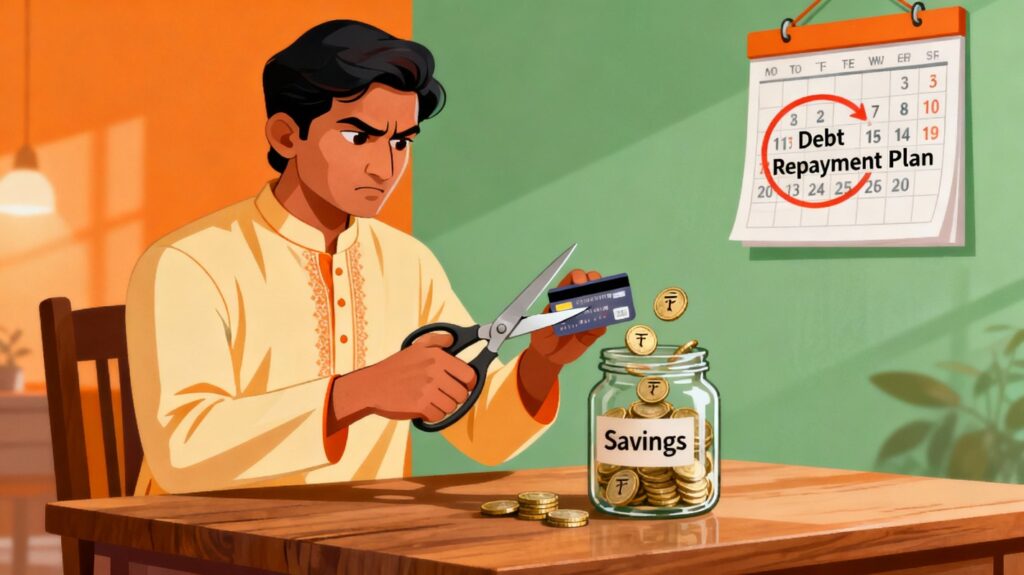
Credit Card Debt in India – Smart Plan to Pay Off & Save Interest | Practical 2025 Guide
Credit cards have become extremely common in India. They are convenient, widely accepted, and often come with rewards like cashback, travel points, and discounts. For many people, a credit card feels like a helpful financial tool.
But if not used carefully, credit cards can quickly turn into expensive debt.
Interest rates on credit cards in India can range from 30% to 45% per year, which is far higher than most personal loans. Missing payments or carrying a large balance can make the debt grow very fast.
Many people fall into a common trap: paying only the minimum amount due, thinking the rest can be cleared later. Unfortunately, this approach can lead to long-term debt and heavy interest charges.
The good news is that with a clear strategy and disciplined habits, it is possible to pay off credit card debt faster and reduce interest costs.
This practical 2025 guide will explain how credit card debt works in India and provide a step-by-step plan to become debt-free.
💡 Personal Experience
A few years ago, I realised I was paying only the minimum due on one credit card for several months. The balance hardly reduced because most of the payment went toward interest. Once I started paying more than the minimum and tracking expenses carefully, the debt reduced much faster.
You can also explore practical strategies in our guide on saving money tips at
https://savewithrupee.com/15-daily-money-hacks-to-save-₹10000-this-year/
Understanding Credit Card Debt in India
A credit card allows you to borrow money from the bank temporarily to pay for purchases.
You usually get 30–45 days of interest-free credit. If the full bill is paid before the due date, you don’t pay any interest.
However, if you pay only the minimum amount due, the remaining balance starts accumulating interest.
Credit card interest is usually calculated monthly, which means the actual annual rate becomes very high.
Example:
| Credit Card Balance | Monthly Interest (3.5%) | Annual Interest |
|---|---|---|
| ₹20,000 | ₹700 | ₹8,400 |
| ₹50,000 | ₹1,750 | ₹21,000 |
| ₹1,00,000 | ₹3,500 | ₹42,000 |
This is why credit card debt can grow quickly.
Understanding these financial habits is an important part of personal finance planning. Learn more here:
https://savewithrupee.com/7-steps-to-become-financially-independent/
Why Credit Card Debt Becomes Dangerous
Many people underestimate how quickly credit card debt grows.
Here are the main reasons.
1. Very High Interest Rates
Credit card interest is among the highest in consumer finance.
2. Minimum Payment Trap
Paying only the minimum keeps the debt active for years.
3. Easy Spending
Credit cards make spending easier because money is not immediately deducted.
4. Multiple Credit Cards
Some people use one card to pay another, creating a debt cycle.
5. Late Payment Charges
Missing payments can add penalties and affect your credit score.
Step-by-Step Plan to Pay Off Credit Card Debt
If you currently have credit card debt, follow this practical strategy.
Step 1: List All Your Credit Card Balances
Start by writing down every credit card you have.
Example:
| Card | Balance | Interest Rate |
|---|---|---|
| Card A | ₹30,000 | 36% |
| Card B | ₹20,000 | 42% |
| Card C | ₹15,000 | 30% |
Knowing the total debt helps you create a clear repayment plan.
Step 2: Stop Adding New Debt
The most important step is to stop using the card temporarily.
If you continue spending on the card while trying to repay debt, progress becomes very slow.
Step 3: Pay More Than the Minimum Amount
The minimum payment usually covers only interest and small principal.
Try to pay at least 2–3 times the minimum amount due.
Example:
| Total Bill | Minimum Due | Better Payment |
|---|---|---|
| ₹20,000 | ₹1,000 | ₹3,000–₹5,000 |
This reduces the balance much faster.
Step 4: Use the Debt Snowball or Avalanche Method
There are two popular methods to repay debt.
Debt Snowball Method
Pay off the smallest balance first.
Example:
- ₹15,000 card
- ₹20,000 card
- ₹30,000 card
This creates psychological motivation.
Debt Avalanche Method
Pay off the highest interest rate first.
Example:
- Card with 42% interest
- Card with 36% interest
- Card with 30% interest
This method saves more interest.
Step 5: Consider Balance Transfer Options
Many banks offer balance transfer facilities.
This allows you to transfer credit card debt to another card with lower interest for a limited period.
However, always check:
- Processing fees
- Offer validity
- Interest after the promotional period
Step 6: Create a Monthly Budget
Without a clear budget, debt repayment becomes difficult.
Budgeting helps you control spending and allocate money for repayments.
You can explore a practical monthly budgeting guide here:
https://savewithrupee.com/monthly-budget-plan-for-₹25000-salary-in-india/
Comparison Table: Debt Snowball vs Debt Avalanche
| Feature | Debt Snowball | Debt Avalanche |
|---|---|---|
| Focus | Smallest debt first | Highest interest first |
| Motivation | High | Moderate |
| Interest saved | Moderate | Higher |
| Suitable for | Beginners | Financially disciplined users |
Both strategies work—the best one is the one you can follow consistently.
Real-Life Example: Paying Off ₹80,000 Credit Card Debt
Let’s consider a simple example.
Ankit has three credit cards with a total debt of ₹80,000.
His repayment plan:
| Month | Payment |
|---|---|
| Month 1–3 | ₹10,000 per month |
| Month 4–6 | ₹12,000 per month |
| Month 7–8 | ₹8,000 per month |
Within 8 months, Ankit clears his entire credit card debt.
This requires discipline but prevents thousands of rupees in interest charges.
Common Mistakes to Avoid
1. Paying Only Minimum Amount Due
This keeps the debt active and increases interest costs.
2. Using Multiple Credit Cards
Managing several cards can lead to confusion and overspending.
3. Ignoring Credit Score Impact
Late payments can damage your credit score.
If you want to understand this better, see our guide on credit score basics at
https://savewithrupee.com/credit-score-in-india-beginners-guide/
4. Using Credit Card for Daily Essentials
If groceries and fuel are being bought on credit regularly, it may indicate a deeper budgeting issue.
Expert Tips to Reduce Credit Card Interest
Convert to EMI
Many banks allow converting large purchases into lower-interest EMIs.
Use Personal Loan for Consolidation
If the debt is very high, a personal loan with lower interest can sometimes help.
Increase Income Temporarily
Side income can accelerate debt repayment.
Explore practical options in our guide on passive income ideas at
https://savewithrupee.com/passive-income-ideas-in-india-2025-12-real-ways-to-earn-while-you-sleep/
Build an Emergency Fund
Once debt is cleared, start building emergency savings.
Learn how in our emergency fund guide at
https://savewithrupee.com/emergency-fund-how-much-should-an-indian-household-keep-practical-guide-2025/
Pros and Cons of Credit Cards
| Pros | Cons |
|---|---|
| Convenient payments | High interest rates |
| Reward points and cashback | Easy overspending |
| Useful for emergencies | Late fees and penalties |
| Builds credit history | Debt risk if misused |
Credit cards are powerful tools, but only when used responsibly.
Frequently Asked Questions
1. What happens if I pay only the minimum amount due?
Interest will be charged on the remaining balance, making the debt grow.
2. Is it better to close credit cards after paying debt?
Not always. Keeping a card active with responsible use can improve your credit score.
3. Can banks reduce credit card interest?
In some cases, banks may offer restructuring or settlement options if you face financial hardship.
4. Does credit card debt affect credit score?
Yes. Late payments and high balances can reduce your credit score.
5. How long does it take to pay off credit card debt?
It depends on the amount and repayment speed. Many people clear debt within 6–18 months.
6. Should I use savings to pay off credit card debt?
If interest rates are very high, paying off the debt quickly is often a good decision.
Conclusion
Credit cards can be useful financial tools when used responsibly. However, if balances are not paid in full, the high interest rates can turn small purchases into long-term debt.
The key to escaping credit card debt is simple but powerful:
- Stop adding new debt
- Pay more than the minimum due
- Follow a structured repayment strategy
- Create a realistic monthly budget
With discipline and a clear plan, it is entirely possible to eliminate credit card debt and regain financial control.
Once the debt is cleared, the next step is to focus on building savings and investing for the future so that credit cards become a convenience—not a financial burden.
References
- Reserve Bank of India – Credit Card Statistics
https://www.rbi.org.in - SEBI Investor Education Resources
https://www.sebi.gov.in - Investopedia – Credit Card Debt Strategies
https://www.investopedia.com - Economic Times – Credit Card Usage Trends in India
https://economictimes.indiatimes.com
Author Insight
In my own experience managing monthly expenses in India, I realized that the biggest financial problems were not due to low income, but due to lack of planning. For example, when my monthly income was around ₹25,000, I often ended up spending almost everything without saving anything at the end of the month.”
“I started tracking my expenses daily using a simple notebook. Within one month, I noticed that small, unnecessary expenses like frequent online orders and unplanned spending were taking a large portion of my income.”
“By making small changes—like setting a fixed budget for groceries, limiting online purchases, and saving at least ₹2,000 at the beginning of each month—I was able to reduce financial stress and slowly build better control over my money.” “These are simple and practical methods that any Indian household can follow without needing complex financial knowledge.”
Research Sources
- Reserve Bank of India – Financial Reports
- SEBI Investor Education
- Economic Times – Personal Finance
- Investopedia – Budgeting & Finance Basics
Disclaimer: This article is based on personal experience and is for educational purposes only. It does not constitute financial, investment, or legal advice. Readers are advised to do their own research or consult a qualified professional before making any financial decisions.