
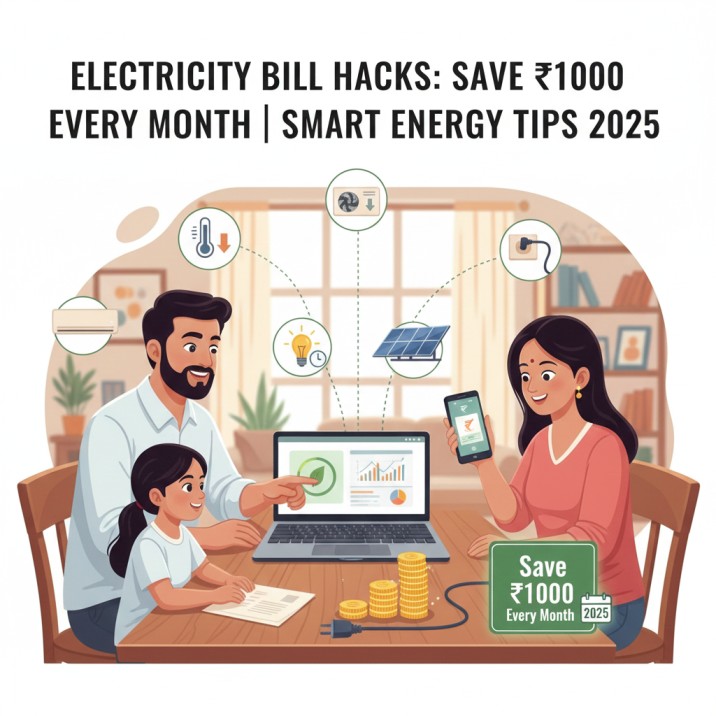
Cut your electricity bill by ₹1000 monthly! Use LED lights, set AC at 24°C, switch to BLDC fans, unplug devices, and adopt smart home energy hacks.
Meera, a homemaker from Bangalore, was shocked by rising electricity bills especially during summer months. Rather than cut comfort drastically, she began experimenting with LED bulbs, adjusting AC temperatures, and using fans smartly. Within 3 months, her family’s electricity bill dropped by over ₹1,000 monthly while everyone’s comfort level remained. Her story illustrates that well-informed small tweaks save money and energy—a win-win for pocket and planet.
Simple Habits to Save ₹1,000 on Your Monthly Electricity Bill
| Tip | Estimated Savings (Units/₹) | How to Implement |
|---|---|---|
| Swap incandescent bulbs for LED | 10-26 units / ₹80-₹200 | Replace frequently used bulbs |
| Use star-rated appliances | 20-50 units / ₹150-₹400 | Upgrade fans, fridge, AC to 5-star BEE |
| Raise AC thermostat 2-4°C | 15% reduction in AC power usage | Set AC to 24-26°C instead of 22-23°C |
| Use fans instead of AC | 20 units/day / ₹150 monthly | Use ceiling fans longer where possible |
| Turn off standby devices | 5-10% total savings | Unplug or use power strips |
| Time heavy appliances | Use washing machine/dishwasher in off-peak hours | Save by lower tariff times (check TOD in your area) |
| Maintain appliances | Clean fridge coils, AC filters | Improves efficiency and reduces power consumption |
Understanding Your Electricity Bill: Why ₹1,000 Savings Matters
- Average household pays ₹4-5 per unit in many states; saving 200-250 units leads to ₹1,000+ savings.
- High-usage appliances like ACs and refrigerators contribute majorly to bills; focus on their efficient use.
Real-Life Story: Meera’s Energy-Saving Makeover
Meera replaced all CFL and incandescent bulbs with LEDs costing about ₹10 each. She cleaned AC filters monthly and set thermostat to 25°C. Using fans during daylight reduced AC run-time. Appliances like washing machines were run during evening off-peak hours. She monitored the meter weekly and saw clear savings. Her family comfortably cut ₹1,000 off the bill without hardship.
Frequently Asked Questions (FAQs)
Q: How long does it take to see savings?
A: You can notice lower bills within a month after implementing energy-efficient measures.
Q: Are LED bulbs expensive?
A: Initial cost is higher, but savings and lifespan make LED bulbs cost-effective in 1 year.
Q: Can I retrofit old appliances with energy-saving parts?
A: Yes, like adding smart thermostats or energy-efficient fans helps reduce consumption.
Q: Is solar power a good way to save on electricity bills?
A: Yes, solar installation drastically cuts bills but requires upfront investment and government subsidies can help.
Q: How to reduce AC power usage without discomfort?
A: Raise temperature slightly, use fans for airflow, switch off when not in room.
Useful External Links for More Tips
- How to Reduce Electric Bill: 10 Easy Steps – Cromptoncrompton
- Actionable Science-Based Tips to Save Electricity – Enciserenciser
- Save ₹1,000 on Electricity Bill with Simple Tricks – NDTV Hindindtv
Personal Tips: How to Save Power and Enjoy Comfort
- Replace old bulbs with LEDs gradually to spread cost
- Use timers or smart plugs to automatically switch off appliances
- Regularly maintain appliances to keep efficiency high
- Opt for natural light during daytime as much as possible
- Educate family members to turn off lights and fans when not in use
Conclusion: Small Steps Add Up to Big Savings
Like Meera’s story shows, saving ₹1,000 a month on electricity bills is about awareness, routine changes, and smart appliance choices. Not only does it free money for better uses, but it reduces environmental impact. Start with one or two tips today—it quickly becomes a habit that pays off every month.
Author Insight
In my own experience managing monthly expenses in India, I realized that the biggest financial problems were not due to low income, but due to lack of planning. For example, when my monthly income was around ₹25,000, I often ended up spending almost everything without saving anything at the end of the month.”
“I started tracking my expenses daily using a simple notebook. Within one month, I noticed that small, unnecessary expenses like frequent online orders and unplanned spending were taking a large portion of my income.”
“By making small changes—like setting a fixed budget for groceries, limiting online purchases, and saving at least ₹2,000 at the beginning of each month—I was able to reduce financial stress and slowly build better control over my money.” “These are simple and practical methods that any Indian household can follow without needing complex financial knowledge.”
Research Sources
- Reserve Bank of India – Financial Reports
- SEBI Investor Education
- Economic Times – Personal Finance
- Investopedia – Budgeting & Finance Basics
Disclaimer: This article is based on personal experience and is for educational purposes only. It does not constitute financial, investment, or legal advice. Readers are advised to do their own research or consult a qualified professional before making any financial decisions.