

Discover which is best for beginners in India in 2025—Gold for inflation hedge, SIP for long-term wealth growth, or FD for safe and fixed returns. Make an informed investment choice.
When starting out on the investment journey, many beginners face the classic dilemma: Should I invest in Gold, opt for a SIP in mutual funds, or park my money in a Fixed Deposit (FD)? Let’s break down these options with a clear comparison, advantages, disadvantages, and who they best suit.
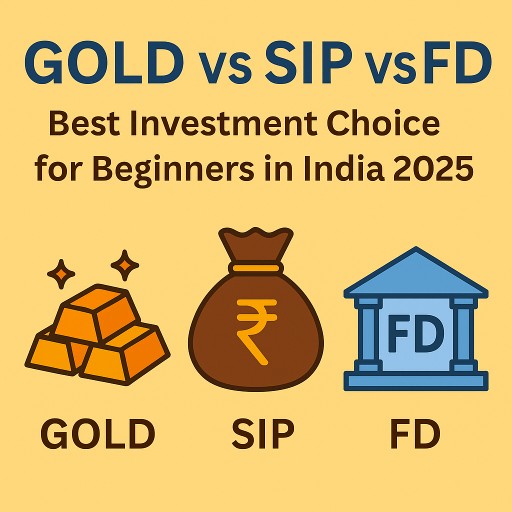
What is Gold Investment?
Gold has been a trusted asset in India for centuries. It includes physical gold (jewelry, coins, bars) and digital forms like gold ETFs and sovereign gold bonds.
- Advantages: Tangible asset, hedge against inflation, high liquidity in physical and digital forms.
- Disadvantages: No regular income, price can be volatile, making short-term gains uncertain.
What is SIP?
Systematic Investment Plan (SIP) is a method to invest a fixed amount regularly in mutual funds, especially equity or hybrid funds, helping build wealth over the long run.
- Advantages: Potential for higher returns (8-15% long term), rupee cost averaging reduces market volatility impact, flexibility to start small.
- Disadvantages: Market risk (returns fluctuate), no guaranteed returns, requires discipline and long-term horizon.
What is FD?
Fixed Deposit is a one-time lump sum investment in a bank or NBFC that earns fixed interest over a predetermined tenure.
- Advantages: Guaranteed returns, very low risk, capital protection, easy to understand.
- Disadvantages: Lower returns (6-7% approx.), interest fully taxable, limited liquidity (penalties on early withdrawal).
Side-by-Side Comparison Table
| Feature | Gold | SIP | FD |
|---|---|---|---|
| Nature | Physical/Digital Asset | Market-linked Mutual Fund | Bank/NBFC Deposit |
| Returns | Variable; depends on market price | Variable; average 8-15% long term | Fixed; approx. 6-7% |
| Risk | Medium-High (Price Volatility) | Medium (Market Risk) | Low |
| Liquidity | High (easy to buy/sell) | High (redeem anytime) | Moderate (penalty on early withdrawal) |
| Investment Horizon | Medium to Long | Long (5+ years recommended) | Short to Medium |
| Taxation | Capital gains applicable | LTCG/STCG on gains | Interest taxable as income |
| Starting Amount | Varies | As low as ₹100/month | ₹5,000 and above |
| Ideal For | Hedge against inflation, portfolio diversification | Wealth creation over long-term | Capital protection, conservative investors |
Who Should Choose What?
- Gold: If you want to protect against inflation and diversify your portfolio and prefer tangible assets. Ideal if you have a medium to long-term outlook and are comfortable with some price volatility.
- SIP: Best for beginners wanting to grow wealth over the long term and who can tolerate market ups and downs. Great for disciplined investors aiming for goals like retirement, child’s education, or home purchase.
- FD: Suitable if you seek safety of capital and guaranteed returns with low risk. Perfect for conservative beginners, retirees, or short-term saving needs.
A Beginner’s Personal Story
Ravi, a 28-year-old IT professional, was new to investing. Initially, he put ₹50,000 into an FD for safety and parked an additional ₹5,000 per month into a diversified equity mutual fund SIP. After 5 years, Ravi was happy to see his SIP grow much faster than FD, though he kept FD for emergency funds. Meanwhile, he bought some gold coins during festivals as a traditional investment.
Ravi’s approach balanced safety, growth, and tradition, illustrating how beginners can use all three based on their needs.
FAQs
Q1: Can beginners invest in SIP with small amounts?
Yes, many mutual funds allow SIPs starting at ₹100 or ₹500, making it beginner-friendly.
Q2: Is gold a good short-term investment?
Gold is better as a medium to long-term hedge against inflation, not ideal for short-term gains due to price volatility.
Q3: Are FDs safe for beginners?
Yes, FDs are one of the safest investment options with guaranteed returns, ideal for risk-averse beginners.
Q4: Does SIP carry risk?
Yes, SIP returns depend on market performance, so short-term fluctuations happen. Long-term SIPs tend to average out market volatility.
In conclusion, no single option is universally best. Beginners should assess their risk tolerance, investment horizon, and financial goals. Combining SIP for growth, FD for safety, and gold for diversification can create a balanced portfolio tailored for long-term financial health.
Author Insight
In my own experience managing monthly expenses in India, I realized that the biggest financial problems were not due to low income, but due to lack of planning. For example, when my monthly income was around ₹25,000, I often ended up spending almost everything without saving anything at the end of the month.”
“I started tracking my expenses daily using a simple notebook. Within one month, I noticed that small, unnecessary expenses like frequent online orders and unplanned spending were taking a large portion of my income.”
“By making small changes—like setting a fixed budget for groceries, limiting online purchases, and saving at least ₹2,000 at the beginning of each month—I was able to reduce financial stress and slowly build better control over my money.” “These are simple and practical methods that any Indian household can follow without needing complex financial knowledge.”
Research Sources
- Reserve Bank of India – Financial Reports
- SEBI Investor Education
- Economic Times – Personal Finance
- Investopedia – Budgeting & Finance Basics
Disclaimer: This article is based on personal experience and is for educational purposes only. It does not constitute financial, investment, or legal advice. Readers are advised to do their own research or consult a qualified professional before making any financial decisions.