

Introduction
Money is one of the most common reasons for disagreements in many Indian families. It is not unusual for couples or family members to argue about spending habits, budgeting decisions, or financial priorities. One person may feel that expenses are too high, while the other believes the spending is necessary.
In many households, these disagreements happen because there is no clear financial plan. Salary comes in, bills get paid, and the rest of the spending happens randomly. Over time, confusion about where the money is going can lead to frustration and arguments.
However, financial conflicts are not unavoidable. With a simple and transparent system, families can manage money together without tension. When everyone understands the budget and agrees on priorities, financial decisions become easier.
This article explains how Indian families can plan their monthly expenses in a way that reduces misunderstandings and helps everyone feel financially secure.
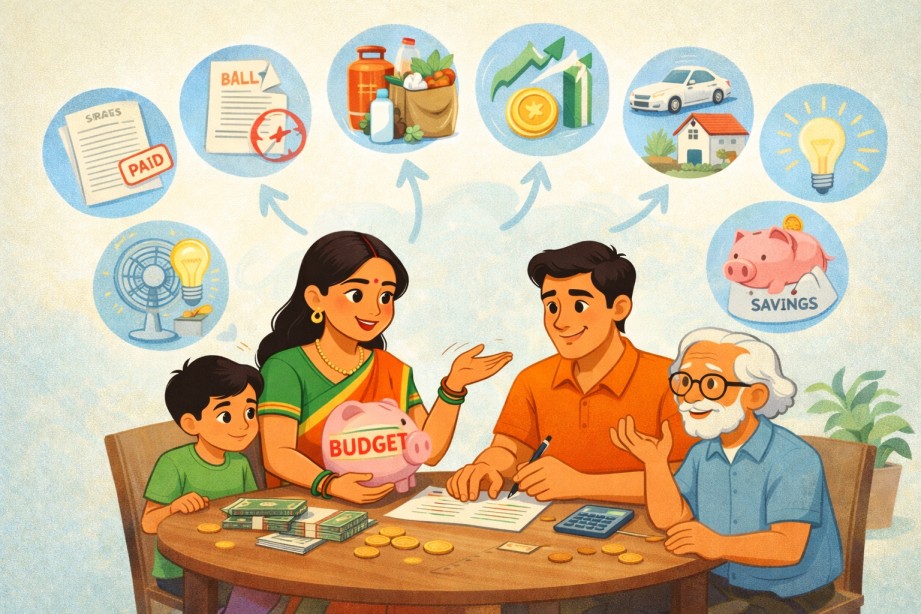
Personal Experience
“In the early years of managing family finances, small spending decisions often turned into unnecessary discussions. One person thought we were overspending while the other believed the expenses were justified.”
“Once we started planning monthly expenses together and writing everything down, the arguments almost disappeared. The clarity itself solved most of the problems.”
Why Money Arguments Happen in Indian Families
Financial disagreements usually arise from a few common situations.
Lack of Transparency
When one person manages most of the finances, the other family members may not fully understand where the money is going. This lack of visibility can create suspicion or frustration.
Different Spending Priorities
Every person values money differently. One partner may prioritize saving, while the other prefers spending on comfort, experiences, or family needs.
Unexpected Expenses
Medical bills, school costs, repairs, or social obligations can suddenly change the monthly budget. If there is no plan, these expenses create stress.
Cultural and Family Expectations
In India, family responsibilities are significant. Supporting parents, attending weddings, giving gifts during festivals, or helping relatives financially are common obligations. These expenses sometimes lead to disagreements if they are not planned.
Benefits of Planning Family Expenses Together
When families manage finances collaboratively, several positive outcomes appear.
Better Financial Clarity
Everyone understands how much money is coming in and where it is being spent.
Reduced Stress
When there is a plan, unexpected expenses are easier to manage.
Stronger Financial Discipline
Families become more mindful about unnecessary spending.
Shared Financial Goals
Planning together allows families to work toward goals like buying a house, saving for education, or building retirement savings.
If you’re just starting to organize finances, explore this detailed guide on personal finance planning at
https://savewithrupee.com/the-only-money-system-an-indian-family-needs-simple-sustainable-stress-free/
Step-by-Step Guide to Planning Monthly Family Expenses
Creating a structured system makes financial discussions much easier.
Step 1: List Total Household Income
Start by calculating the total income entering the household each month.
Example:
| Income Source | Amount |
|---|---|
| Salary (Partner 1) | ₹40,000 |
| Salary (Partner 2) | ₹25,000 |
| Side Income | ₹5,000 |
| Total Household Income | ₹70,000 |
Knowing the exact income helps families make realistic spending decisions.
Step 2: Identify Fixed Monthly Expenses
These are expenses that rarely change.
Examples include:
- Rent or home loan EMI
- School fees
- Insurance premiums
- Internet and mobile bills
- Transport costs
Example breakdown:
| Fixed Expense | Amount |
|---|---|
| Rent | ₹15,000 |
| School Fees | ₹6,000 |
| Utilities | ₹3,000 |
| Transport | ₹4,000 |
| Insurance | ₹2,000 |
Total fixed expenses: ₹30,000.
Step 3: Estimate Variable Expenses
Variable expenses change from month to month.
Examples:
- Groceries
- Medical expenses
- Dining out
- Shopping
- Social events
These expenses should have a flexible but defined limit.
Many families underestimate these costs. Understanding spending patterns is important. Learn more in our guide on saving money tips at
https://savewithrupee.com/where-most-indian-households-lose-money-without-realising-hidden-leaks-explained/
Step 4: Decide Savings First
Savings should be treated as a fixed expense.
Example:
| Category | Allocation |
|---|---|
| Savings | 15–20% |
| Household expenses | 60% |
| Lifestyle expenses | 20% |
Even saving ₹3,000–₹5,000 monthly creates long-term financial stability.
If you are new to investing, start with simple options explained here:
Learn more in our guide on best investment options in India at
https://savewithrupee.com/sip-for-beginners-start-with-₹500/
Step 5: Conduct a Monthly Family Money Meeting
Once a month, spend 15–20 minutes discussing finances together.
Topics to discuss:
- Upcoming expenses
- Monthly budget adjustments
- Saving progress
- Financial goals
This habit builds financial transparency and prevents misunderstandings.
Comparison: Different Ways Families Manage Money
| Feature | One Person Handles Everything | Shared Planning System | Separate Finances |
|---|---|---|---|
| Transparency | Low | High | Medium |
| Risk of Arguments | High | Low | Medium |
| Financial Awareness | Limited | Strong | Moderate |
| Best for Long-Term Goals | No | Yes | Limited |
Most financial experts recommend shared planning with clear responsibilities.
Real-Life Example: A ₹60,000 Income Household
Consider a family in Hyderabad with a combined monthly income of ₹60,000.
Before Planning
| Expense Category | Amount |
|---|---|
| Rent | ₹14,000 |
| Groceries | ₹9,000 |
| Transport | ₹5,000 |
| Random Spending | ₹20,000 |
| Savings | ₹0–₹2,000 |
Because spending was not planned, arguments about expenses were frequent.
After Budget Planning
| Category | Amount |
|---|---|
| Fixed Expenses | ₹30,000 |
| Variable Expenses | ₹15,000 |
| Savings | ₹10,000 |
| Emergency Buffer | ₹5,000 |
Once both partners agreed on the plan, financial stress reduced significantly.
Common Mistakes Families Should Avoid
Avoid Blaming Each Other
Financial problems are usually the result of habits, not individuals.
Avoid Hiding Expenses
Transparency is essential for trust.
Avoid Unrealistic Budgets
A budget should allow reasonable comfort and entertainment.
Avoid Ignoring Emergency Savings
Unexpected events can disrupt finances.
Learn how to build a proper safety net in our emergency fund guide at
https://savewithrupee.com/emergency-fund-for-indian-families-how-much-you-really-need-where-to-keep-it-savewithrupee/
Expert Tips for Peaceful Financial Planning
Use a Shared Expense Tracker
A simple spreadsheet or budgeting app can help both partners see the same data.
Create Personal Spending Allowances
Give each partner a small monthly amount they can spend freely.
Plan Festival and Event Expenses Early
Indian festivals often increase spending. Planning ahead prevents budget disruption.
Build Multiple Income Streams
Additional income can reduce financial pressure.
Explore ideas in our guide on passive income ideas at
https://savewithrupee.com/passive-income-ideas-in-india-2025-12-real-ways-to-earn-while-you-sleep/
Pros and Cons of Joint Budgeting
| Pros | Cons |
|---|---|
| Better transparency | Requires regular communication |
| Reduces financial arguments | Needs discipline |
| Encourages saving | Some lifestyle adjustments required |
| Helps achieve long-term goals | Initial setup takes time |
Frequently Asked Questions
1. Why do couples argue about money?
Usually due to different financial priorities or lack of communication about spending.
2. Should both partners manage finances together?
Yes. Shared financial planning improves transparency and trust.
3. How often should families review their budget?
Ideally once every month.
4. Is it necessary to track every expense?
Tracking expenses helps identify unnecessary spending.
5. How much should a family save monthly?
Financial experts suggest saving 10–20% of total income.
6. What is the best way to avoid money arguments?
Open communication and a clear monthly budget.
7. Should couples have separate spending money?
Yes. Personal spending allowances can reduce conflicts.
Conclusion
Financial disagreements in Indian families often arise from confusion rather than actual financial problems. When income, expenses, and goals are clearly discussed, most conflicts naturally disappear.
A simple system of planning monthly expenses, reviewing spending together, and saving consistently can transform how families manage money.
Instead of arguing about finances, families can focus on building financial stability and working toward shared goals.
Money management becomes much easier when it becomes a team effort rather than an individual responsibility.
References
Reserve Bank of India – Household Financial Data
https://www.rbi.org.in
SEBI Investor Education Resources
https://www.sebi.gov.in
Economic Times Personal Finance Section
https://economictimes.indiatimes.com/wealth
Investopedia – Family Budgeting Guide
https://www.investopedia.com/budgeting-4689745
Author Insight
In my own experience managing monthly expenses in India, I realized that the biggest financial problems were not due to low income, but due to lack of planning. For example, when my monthly income was around ₹25,000, I often ended up spending almost everything without saving anything at the end of the month.”
“I started tracking my expenses daily using a simple notebook. Within one month, I noticed that small, unnecessary expenses like frequent online orders and unplanned spending were taking a large portion of my income.”
“By making small changes—like setting a fixed budget for groceries, limiting online purchases, and saving at least ₹2,000 at the beginning of each month—I was able to reduce financial stress and slowly build better control over my money.” “These are simple and practical methods that any Indian household can follow without needing complex financial knowledge.”
Research Sources
- Reserve Bank of India – Financial Reports
- SEBI Investor Education
- Economic Times – Personal Finance
- Investopedia – Budgeting & Finance Basics
Disclaimer: This article is based on personal experience and is for educational purposes only. It does not constitute financial, investment, or legal advice. Readers are advised to do their own research or consult a qualified professional before making any financial decisions.