

In 2026, Indian households don’t need extreme budgeting to save money. This practical guide shows how to reduce household expenses without cutting comfort, using small, realistic changes that actually work in daily life.
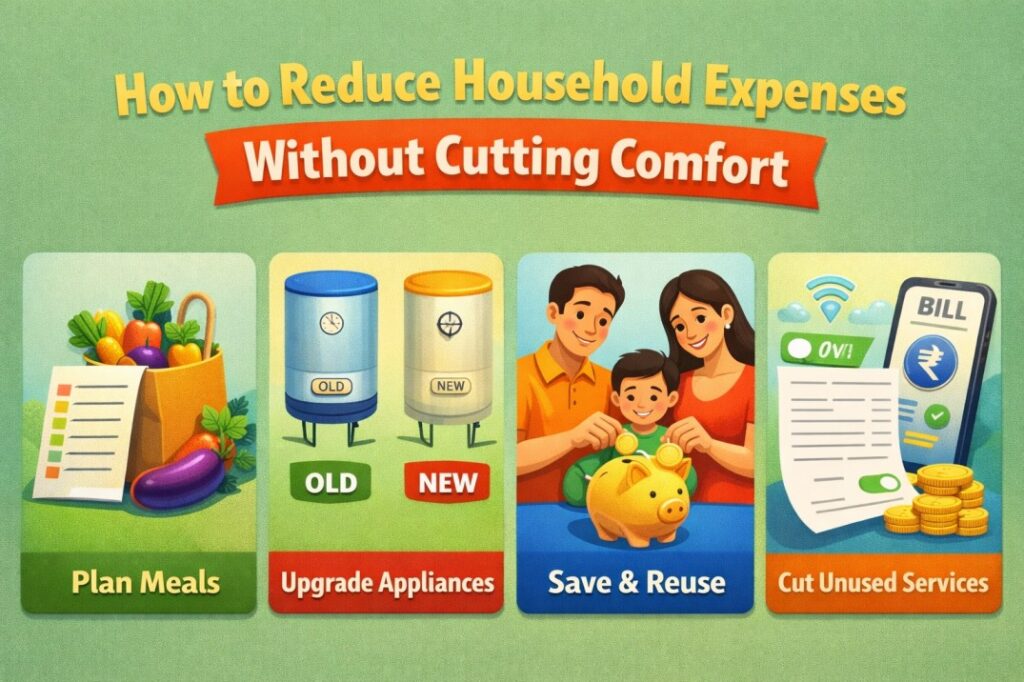
How to Reduce Household Expenses Without Cutting Comfort (India, 2026)
When people hear “reduce expenses”, they imagine sacrifice.
No eating out.
No small joys.
No comfort.
That fear stops most Indian families from even trying.
But in 2026, the smartest families are doing something different. They are spending less without feeling deprived — not by cutting comfort, but by removing waste.
There’s a big difference between:
- Comfort spending (adds value to life)
- Careless spending (adds nothing but drains money)
This article focuses only on the second one.
Why Cutting Comfort Never Works Long-Term
Extreme cost-cutting fails because:
- It creates frustration
- Family members resist
- Old habits return quickly
That’s why people say:
“Budgeting doesn’t work for us.”
The truth is:
Bad budgeting doesn’t work. Smart adjustment does.
Reducing expenses should feel like relief, not punishment.
Step 1: Separate “Comfort” from “Convenience”
Most families confuse these two.
Comfort:
- Good food
- Reliable electricity
- Decent internet
- Occasional outings
Convenience:
- Ordering food when food is available
- Paying extra to avoid minor effort
- Repeating small paid shortcuts daily
Convenience is expensive.
Comfort is not.
Once families learn this difference, expenses drop naturally.
1. Reduce Food Expenses Without Changing What You Eat
Food is emotional. Cutting it harshly never works.
Instead:
- Cook one extra home meal per day
- Keep ready-to-cook food stocked
- Limit food delivery to fixed days
This doesn’t change taste or nutrition — only frequency.
Families who plan groceries smartly save thousands yearly, as shown in groceries budget shopping India – smart ways to save every month.
2. Control Electricity Bills Without Living in the Dark
Reducing electricity doesn’t mean sweating in silence.
Small changes work:
- Switch off idle fans/lights
- Replace old bulbs with LEDs
- Avoid idle charging
- Use appliances in batches
Comfort remains the same.
Waste reduces.
Many households save ₹500–₹1,000 monthly this way, as explained in electricity bill hacks to save ₹1,000 every month.
3. Cut Subscriptions You Don’t Actually Use
Subscriptions don’t feel like spending — until you add them up.
Ask one simple question for each subscription:
“Have we used this in the last 30 days?”
If not, cancel.
You’re not losing comfort.
You’re removing forgotten expenses.
Most families find ₹300–₹600 monthly savings here alone.
4. Shop Smarter, Not Less
You don’t need to stop shopping.
You need to stop impulse shopping.
Simple rules:
- Wait 24 hours before buying non-essential items
- Always shop with a list (even online)
- Avoid buying just because it’s discounted
This protects money without affecting lifestyle.
Families who shop intentionally spend less without feeling restricted, as shown in best online shopping tricks to save money.
5. Fix the “Small Expenses” That Don’t Feel Dangerous
This is where most money leaks happen.
Examples:
- Snacks outside
- Auto rides for short distances
- Convenience fees
- Small daily purchases under ₹100
Individually harmless.
Collectively expensive.
Many Indian families overspend here without noticing, as explained in how Indian families accidentally overspend ₹2,000 every month.
Reducing frequency — not eliminating — is enough.
6. Stop Losing Money to Bank Charges Silently
Bank charges don’t affect comfort at all — but they reduce balance every month.
Check for:
- Minimum balance penalties
- ATM charges
- SMS alert fees
- Debit card annual charges
Fixing these costs nothing in effort, but saves real money.
Many families discover this too late, as explained in hidden bank charges you’re paying every month.
7. Use Weekly Reviews Instead of Strict Rules
Rules create rebellion.
Reviews create awareness.
Once a week:
- Look at spending
- Identify one unnecessary expense
- Adjust next week
This flexible approach works better for Indian homes than rigid monthly rules, as explained in weekly budget vs monthly budget – which works better.
What “Comfort-Safe” Expense Reduction Looks Like
Let’s be realistic.
A family that:
- Reduces food delivery frequency
- Cancels unused subscriptions
- Controls electricity waste
- Avoids impulse buying
can save:
- ₹2,000–₹4,000 per month
Without:
- Changing lifestyle
- Feeling restricted
- Creating family stress
That’s ₹24,000–₹48,000 per year, saved quietly.
Where to Put the Money You Save (Important)
Saved money should not sit idle.
Redirect it to:
- Emergency fund
- SIP
- RD
- Education savings
If saved money stays in the same account, it usually gets spent again.
This simple redirection habit is explained clearly in how to save ₹5,000 every month without sacrifice.
FAQs
1. Can expenses really be reduced without cutting comfort?
Yes. Most savings come from removing waste, not joy.
2. How long before results are visible?
Most families notice improvement within 30 days.
3. Should the whole family be involved?
Yes. Shared understanding reduces conflict and improves results.
4. Is this possible on a tight income?
It works best on tight incomes because small leaks matter more.
5. Do I need budgeting apps for this?
No. Awareness and simple weekly reviews are enough.
Final Thoughts
In 2026, financial stability is not about extreme discipline.
It’s about:
- Knowing where money leaks
- Protecting comfort
- Removing waste quietly
You don’t need to live smaller.
You need to spend smarter.
When comfort stays and waste goes,
saving becomes natural — not stressful.
Author Insight
In my own experience managing monthly expenses in India, I realized that the biggest financial problems were not due to low income, but due to lack of planning. For example, when my monthly income was around ₹25,000, I often ended up spending almost everything without saving anything at the end of the month.”
“I started tracking my expenses daily using a simple notebook. Within one month, I noticed that small, unnecessary expenses like frequent online orders and unplanned spending were taking a large portion of my income.”
“By making small changes—like setting a fixed budget for groceries, limiting online purchases, and saving at least ₹2,000 at the beginning of each month—I was able to reduce financial stress and slowly build better control over my money.” “These are simple and practical methods that any Indian household can follow without needing complex financial knowledge.”
Research Sources
- Reserve Bank of India – Financial Reports
- SEBI Investor Education
- Economic Times – Personal Finance
- Investopedia – Budgeting & Finance Basics
Disclaimer: This article is based on personal experience and is for educational purposes only. It does not constitute financial, investment, or legal advice. Readers are advised to do their own research or consult a qualified professional before making any financial decisions.