
Introduction
Many people believe they are not saving money because:
- Their salary is too low
- Expenses are too high
- Life is becoming expensive
But the truth is often uncomfortable:
👉 It’s not always your income that keeps you broke.
👉 It’s your daily money habits.
In India, especially among middle-class families, financial struggle is not always due to lack of earnings—but due to small, unnoticed habits that slowly drain money every month.
These habits don’t feel dangerous.
- ₹100 here
- ₹200 there
- Small EMIs
- Random purchases
But over time:
👉 They silently destroy your savings.
In this article, you’ll learn:
- The most common money habits keeping Indians broke
- Real-life examples with numbers
- Why these habits are hard to notice
- How to fix them without extreme budgeting
Real Experience: When Income Was Not the Problem
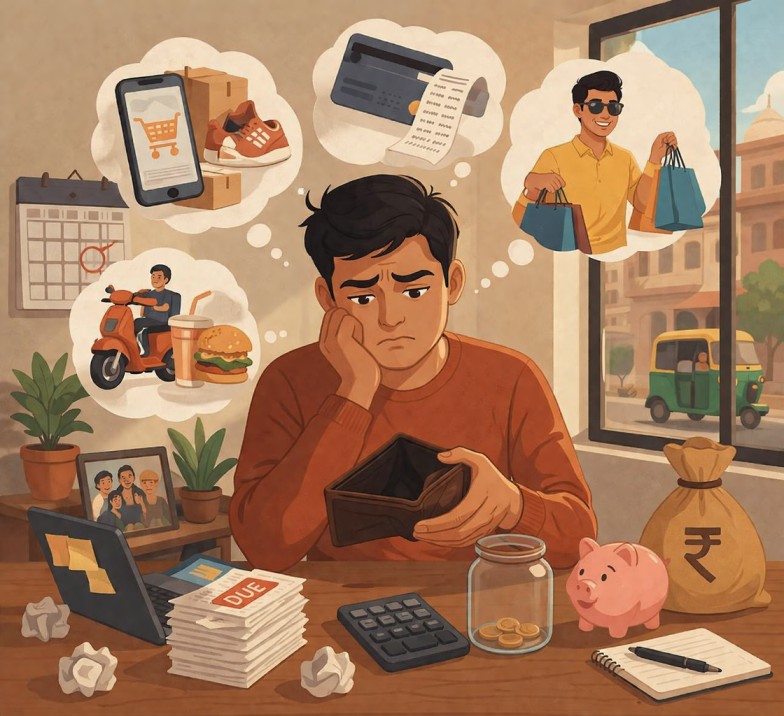
When my monthly income was around ₹25,000, I believed:
👉 “If I earn more, everything will be fine.”
But every month:
- My account balance went close to zero
- Savings were almost nothing
So I decided to track my expenses.
The result shocked me:
- ₹3,000 on food delivery
- ₹2,000 on small online purchases
- ₹1,500 on random UPI spending
None of these felt big individually.
But together:
👉 ₹6,500+ was disappearing every month.
That’s when I realised:
👉 The problem was not my income.
👉 It was my habits.
10 Money Habits That Quietly Keep You Broke
1. Ignoring Small Daily Expenses
This is the most common habit.
- Tea / coffee → ₹50–₹100
- Snacks → ₹100
- Small UPI payments → unnoticed
Monthly impact:
👉 ₹3,000–₹6,000 easily
Learn more:
👉 https://savewithrupee.com/how-indian-families-accidentally-overspend-₹2000-every-month-and-how-to-stop/
2. Not Tracking Where Your Money Goes
If you don’t track:
👉 You assume everything is fine
Reality:
👉 Money leaks everywhere
Start here:
👉 https://savewithrupee.com/how-i-track-every-rupee-i-spend-my-simple-real-indian-method-2025/
3. Living Salary to Salary
Many Indians follow this pattern:
- Salary comes
- Expenses happen
- Nothing left
No savings.
No buffer.
👉 This creates constant financial stress.
4. Depending Only on One Income Source
Relying only on salary is risky.
- Job loss
- Medical emergency
- Unexpected expenses
👉 Everything collapses.
Explore:
👉 https://savewithrupee.com/passive-income-ideas-in-india-2025-12-real-ways-to-earn-while-you-sleep/
5. Emotional Spending
Spending based on mood:
- Stress → food delivery
- Bored → shopping
- Happy → treat
👉 This becomes a hidden habit.
6. Falling for Discounts and Offers
“70% OFF”
“Limited deal”
You don’t ask:
👉 “Do I need this?”
Instead:
👉 “What if I miss this?”
7. Using Credit Without Control
Credit cards and BNPL feel easy.
But:
- Interest builds up
- Debt increases
8. No Clear Budget System
Without a system:
👉 Money flows without control
9. Ignoring Hidden Expenses
These include:
- Subscriptions
- Delivery charges
- Bank fees
Read:
👉 https://savewithrupee.com/hidden-monthly-expenses-middle-class-indians-ignore-until-year-end/
10. Trying to Impress Others
Spending to match others:
- Gadgets
- Clothes
- Lifestyle
👉 This leads to unnecessary pressure.
Why These Habits Are Hard to Notice
1. They Feel Normal
Everyone around you is doing the same.
2. They Are Small Individually
But dangerous when combined.
3. They Don’t Show Immediate Impact
Damage happens slowly.
How to Break These Habits (Simple System)
Step 1: Track Your Expenses for 30 Days
This is non-negotiable.
Step 2: Identify Top 3 Money Leaks
Focus only on major issues.
Step 3: Set Spending Limits
Example:
- Food delivery → ₹1,000/month
Step 4: Build a Budget Plan
If you need help:
👉 https://savewithrupee.com/monthly-budget-plan-for-₹25000-salary-in-india/
Step 5: Increase Income Alongside Saving
Only cutting expenses has limits.
Real-Life Example (Indian Middle-Class Case)
Income: ₹30,000
Before fixing habits:
- Food delivery → ₹3,000
- Shopping → ₹2,000
- Misc → ₹2,000
Total waste: ₹7,000
After fixing habits:
- Reduced to ₹2,500
👉 Savings increased by ₹4,500
Mindset Shift That Changes Everything
Old thinking:
👉 “I don’t earn enough”
New thinking:
👉 “Where is my money leaking?”
This one change can transform your finances.
Long-Term Impact of Bad Money Habits
If not fixed:
- No savings
- No investments
- Financial stress
- Dependence on salary
👉 Even high earners struggle due to habits.
Frequently Asked Questions
1. Are small expenses really a big problem?
Yes. They add up significantly over time.
2. How can I identify bad money habits?
Track your expenses and observe patterns.
3. Can I fix habits without increasing income?
Yes, but income growth helps faster.
4. How long does it take to change habits?
Usually 1–2 months with consistency.
5. Should I completely stop spending?
No. Balanced control works better.
6. Is budgeting necessary?
Yes. It provides structure.
7. What is the first step to improve finances?
Start tracking your expenses.
Final Thoughts
Most people think financial problems come from low income.
But in reality:
👉 Small daily habits are the real reason.
You don’t need:
- a huge salary
- complicated systems
You just need:
👉 awareness + control
Fixing even 2–3 habits can:
- improve savings
- reduce stress
- build financial confidence
Personal Insight
One of the biggest lessons I learned was this:
👉 Money doesn’t disappear suddenly.
👉 It disappears slowly through habits.
I was not making big financial mistakes.
But:
- small daily expenses
- untracked spending
- emotional decisions
were quietly draining my income.
After I started:
- tracking expenses
- identifying patterns
- setting limits
Within 2 months:
👉 I saved more than ₹3,000 consistently
👉 The biggest change was not income.
👉 It was awareness.
Author Insight
In my own experience managing monthly expenses in India, I realized that the biggest financial problems were not due to low income, but due to lack of planning. For example, when my monthly income was around ₹25,000, I often ended up spending almost everything without saving anything at the end of the month.”
“I started tracking my expenses daily using a simple notebook. Within one month, I noticed that small, unnecessary expenses like frequent online orders and unplanned spending were taking a large portion of my income.”
“By making small changes—like setting a fixed budget for groceries, limiting online purchases, and saving at least ₹2,000 at the beginning of each month—I was able to reduce financial stress and slowly build better control over my money.” “These are simple and practical methods that any Indian household can follow without needing complex financial knowledge.”
Research Sources
- Reserve Bank of India – Financial Reports
- SEBI Investor Education
- Economic Times – Personal Finance
- Investopedia – Budgeting & Finance Basics
Disclaimer: This article is based on personal experience and is for educational purposes only. It does not constitute financial, investment, or legal advice. Readers are advised to do their own research or consult a qualified professional before making any financial decisions.