

Learn to build a strong emergency fund in India 2025. Save 3–6 months of expenses, choose safe options like FDs or liquid funds, and stay financially secure.
Raman, a pharmaceutical sales professional in Chennai, suddenly finds his company downsizing due to market shifts. With home loans, a child’s school fees, and medical commitments for his aging parents, Raman’s world nearly crashes. But he has a stash—his emergency fund. It helps him buy time, look for a new job, and sleep without nightmares. Unexpected stuff—job loss, illness, major repairs—can happen to anyone. In India, with rising health costs (14% annual medical inflation!), out-of-pocket emergencies are common.
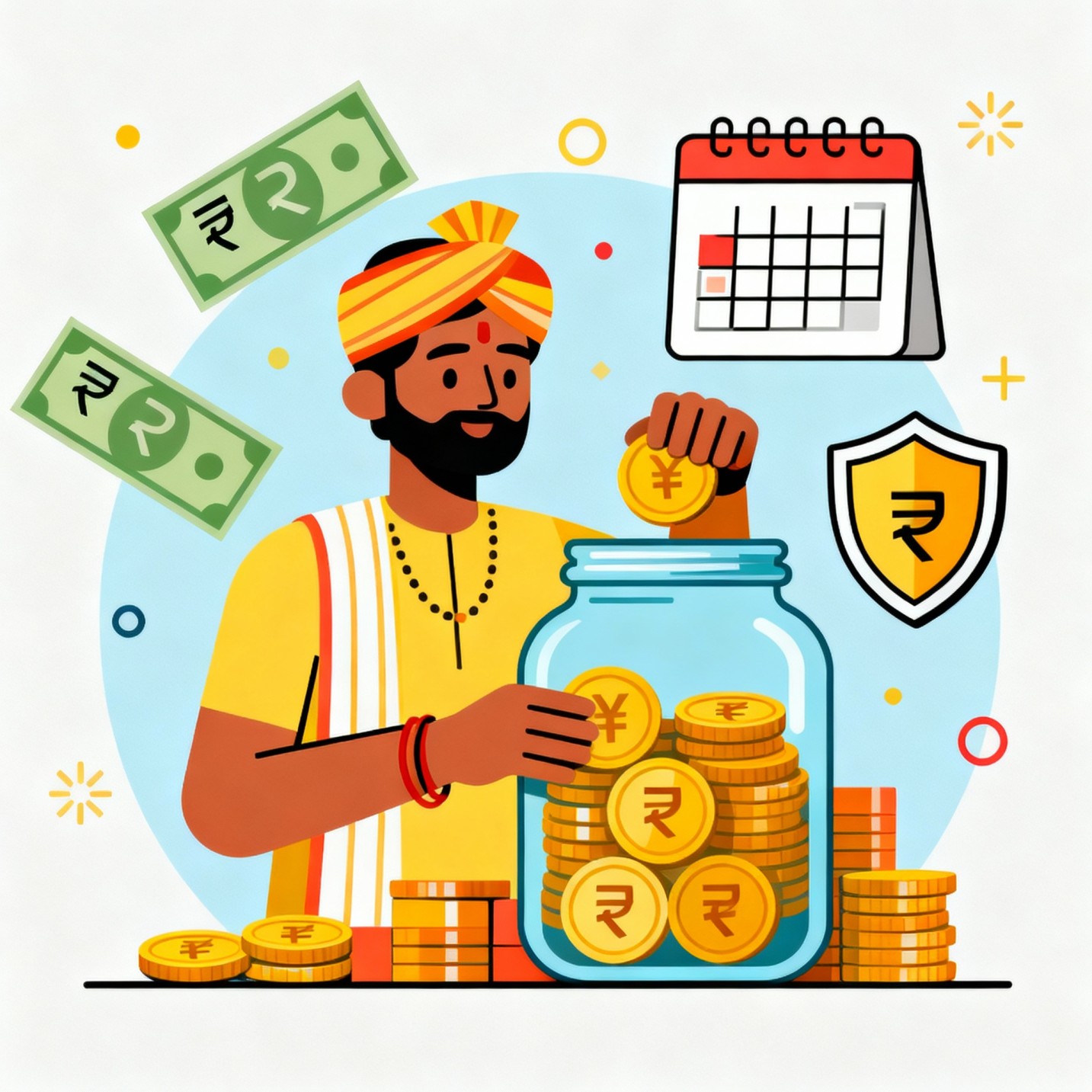
How Much Emergency Fund Is Enough?
The Indian Rule of Thumb
- Single and salaried: Target at least 6 months of essential expenses.
- Family or dependents: Opt for 9–12 months, since you’re responsible for more lives.
- Self-employed or freelancers: Should stretch to 12 months, given income is uncertain.
What counts as “essential”? Think only of survival: rent/EMI, groceries, utilities, school fees, transport, existing insurance premiums, and required medications. Fully skip luxuries, shopping, and eating out.
Example Table: Emergency Fund Estimates
| Scenario | Monthly Expenses (₹) | Months Covered | Target Fund (₹) |
|---|---|---|---|
| Single, salaried | 40,000 | 6 | 2,40,000 |
| Double-income family | 50,000 | 6 | 3,00,000 |
| Single-income family | 50,000 | 10 | 5,00,000 |
| Freelancer | 60,000 | 12 | 7,20,000 |
Review these numbers every year to beat inflation! What was enough last year may fall short now due to rising prices for food, healthcare, and fuel.
Real-Life Indian Story
Sneha, a young marketing executive in Bengaluru, started her career with minimal savings. After seeing her friend Raj borrow money for sudden surgery, she promised herself, “Never again will I be unprepared.” She started with ₹5,000 each month—skipped pizza nights and pouched auto rides for buses. In a year, she had ₹60,000. When COVID hit and her salary was delayed, she survived three months on that money. Her emergency fund wasn’t huge, but it bought her dignity and calm.
Step-by-Step: Calculate Your Emergency Fund
- Estimate essential monthly expenses (rent, food, EMIs, insurance, utilities).
- Multiply by suggested months—a minimum of 6, up to 12 if possible.
- Add a buffer for extra dependents, elderly parents’ health costs, or if your job is unstable.
- Review and adjust for inflation every year.
Bonus: Use a Free Emergency Fund Calculator
Try these calculators for precise, personalized numbers—just plug in your expenses:
- HDFC Securities: Emergency Fund Calculator ([HDFC])
- Jagoinvestor: Emergency Fund Tool ([Jagoinvestor])
- PGIM India: Plan with Monthly Goals ([PGIM])
Where Should the Money Be Kept?
Your emergency fund must be liquid—easy to withdraw instantly, but not so tempting you’ll splurge it accidentally. Here are solid options:
- Savings account: Most Indians prefer this for quick access.
- Sweep-in fixed deposit: Slightly more interest, yet easy withdrawal.
- Liquid mutual funds: Good for those who are a bit investment-savvy, as they offer better returns than regular savings accounts, usually within one working day.
FAQs
Why not keep it in cash at home?
Safety risk. If something happens to your home (fire/theft), you lose it all.
Can gold or stocks be considered emergency funds?
No. Gold or stocks are volatile and not instantly liquid. Only keep your emergency fund where you can withdraw without delays or penalties.
I already have insurance—why still need an emergency fund?
Insurance often doesn’t cover everything—non-medical emergencies, job loss, sudden expenses not in policy clauses.
What if I can’t save a big amount right away?
Start with just one month’s expense—maybe ₹10,000 or ₹20,000. Build from there. What matters is creating the saving habit, not the perfect target.
What emergencies qualify?
- Job loss or salary delays
- Hospitalization not covered by insurance
- Major repairs (home/car)
- Emergency travel or relocation
Should I invest the money for higher returns?
No. Prioritize safety and liquidity over returns. Emergency funds are not for growing wealth, but for protecting against sudden shocks.
Tips to Build Your Fund Faster
- Automate savings: Set a standing instruction to move money monthly to your emergency fund.
- Use windfalls smartly: Tax refunds, bonuses, or festival gifts—route part to your fund.
- Cut non-essential expenses: Small lifestyle changes can build your safety net faster.
External Resources and Further Reading
- [India Today: How Big Should Your Emergency Fund Be?]
- [Economic Times: Why You Need an Emergency Fund]
- [PGIM Mutual Fund: Emergency Fund Calculator]
- [Investopedia: What is an Emergency Fund]
Short Story: When Preparation Pays Off
Amit, an IT professional from Pune, laughed off the idea of an emergency fund for years. “It’ll never happen to me,” he thought—until he slipped and broke his leg during a trek. Off work for months, medical costs stacked up quickly. Had it not been for the advice from his wife, who’d been quietly saving a portion every month, they would have been forced to borrow at high interest. They got through the crisis, learning the value of a humble savings cushion the hard way.
Key Takeaways
- Aim for 6–12 months of essential living expenses for your emergency fund.
- Keep it in a liquid, safe place—savings account or liquid funds.
- Start small, but start today. Build the habit, then the balance.
- Review and top-up for inflation every year.
- Use tools and examples to set realistic, Indian-specific targets.
- Learn from real stories—financial emergencies are not rare, and preparation is freedom.
Author Insight
In my own experience managing monthly expenses in India, I realized that the biggest financial problems were not due to low income, but due to lack of planning. For example, when my monthly income was around ₹25,000, I often ended up spending almost everything without saving anything at the end of the month.”
“I started tracking my expenses daily using a simple notebook. Within one month, I noticed that small, unnecessary expenses like frequent online orders and unplanned spending were taking a large portion of my income.”
“By making small changes—like setting a fixed budget for groceries, limiting online purchases, and saving at least ₹2,000 at the beginning of each month—I was able to reduce financial stress and slowly build better control over my money.” “These are simple and practical methods that any Indian household can follow without needing complex financial knowledge.”
Research Sources
- Reserve Bank of India – Financial Reports
- SEBI Investor Education
- Economic Times – Personal Finance
- Investopedia – Budgeting & Finance Basics
Disclaimer: This article is based on personal experience and is for educational purposes only. It does not constitute financial, investment, or legal advice. Readers are advised to do their own research or consult a qualified professional before making any financial decisions.