
Discover all about PM Vishwakarma Yojana 2025 — India’s flagship scheme for artisans and traditional craftsmen. Learn eligibility criteria, ₹3 lakh loan details, 5% interest rate, toolkit incentives, training benefits, and application steps for artisans.
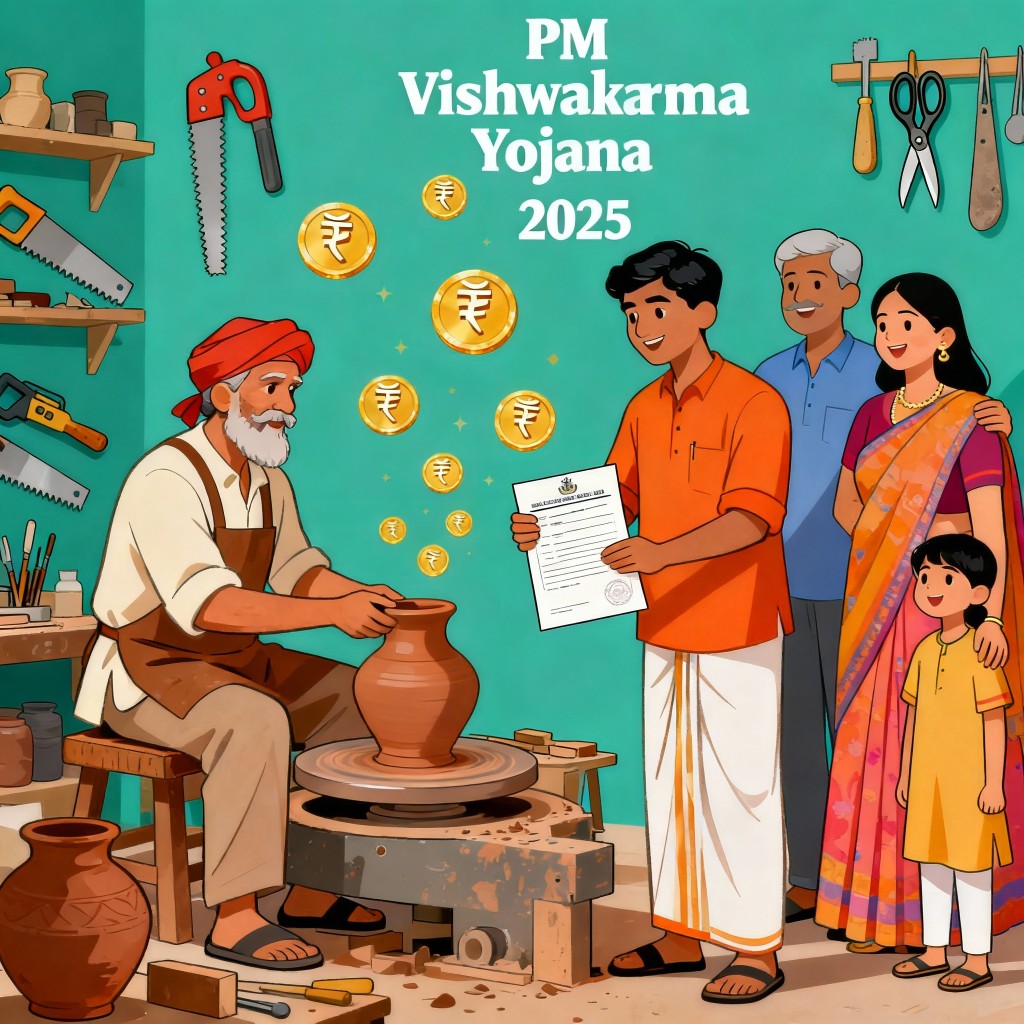
PM Vishwakarma Yojana 2025 – Artisans’ Loan, Incentives & Benefits Explained
India has a long tradition of skilled artisans—carpenters, potters, goldsmiths, blacksmiths, tailors, cobblers, and many others. These workers have preserved traditional crafts for generations. However, many artisans in the unorganised sector struggle with limited access to finance, modern tools, and market opportunities.
To support this community, the Government of India launched the PM Vishwakarma Yojana on 17 September 2023. The scheme aims to provide financial assistance, skill training, and business support to traditional artisans so they can improve their livelihoods and expand their work.
In 2025, the scheme continues to help millions of craftsmen by offering collateral-free loans, toolkits, training programs, and market support.
This guide explains the loan benefits, incentives, eligibility, and application process of the PM Vishwakarma Yojana in simple terms.
💡 Personal Experience
In many Indian towns, artisans like carpenters or tailors still depend on old tools and small local markets. Government schemes like PM Vishwakarma can help them upgrade their skills and earn more income with better equipment and financial support.
What Is PM Vishwakarma Yojana?
The Pradhan Mantri Vishwakarma Yojana is a central government scheme designed to support artisans and craftspeople working in traditional family-based trades. The scheme focuses on providing recognition, skill training, financial assistance, and market access.
The program will run for five years (2023–2028) and aims to modernise traditional crafts while preserving India’s cultural heritage.
Key Objectives of the Scheme
The main goals of the PM Vishwakarma Yojana include:
- Recognising traditional artisans through official certification
- Providing affordable loans for business expansion
- Offering skill training and modern toolkits
- Connecting artisans with markets and digital platforms
- Encouraging self-employment and entrepreneurship
The scheme is designed to strengthen the informal sector workforce, which plays an important role in India’s economy.
Loan Benefits Under PM Vishwakarma Yojana
One of the most attractive features of the scheme is collateral-free credit support.
Loan Structure
| Loan Stage | Amount | Repayment Period |
|---|---|---|
| First Loan | Up to ₹1 lakh | 18 months |
| Second Loan | Up to ₹2 lakh | 30 months |
| Total Possible Loan | Up to ₹3 lakh | Based on eligibility |
These loans are provided at a concessional interest rate of about 5%, which is much lower than typical business loan rates.
To qualify for the second loan tranche, artisans must successfully repay the first loan and complete required training.
Major Benefits and Incentives
PM Vishwakarma Yojana offers multiple benefits beyond loans.
1. Official Recognition
Every registered artisan receives:
- PM Vishwakarma Certificate
- Digital ID Card
This recognition helps artisans access government programs and financial services.
2. Toolkit Incentive
Artisans receive toolkit support of up to ₹15,000 through e-vouchers to purchase modern equipment.
3. Skill Training
The scheme provides training to improve productivity.
| Training Type | Duration |
|---|---|
| Basic Training | 5–7 days |
| Advanced Training | 15 days or more |
During training, artisans receive a daily stipend of ₹500 so they don’t lose income while learning.
4. Digital Transaction Incentives
To promote digital payments, beneficiaries receive ₹1 per digital transaction, up to 100 transactions per month.
5. Marketing and Branding Support
The government also provides support for:
- product branding
- quality certification
- marketing and advertising
- market linkages
This helps artisans sell products in larger markets.
Eligible Trades Under the Scheme
PM Vishwakarma Yojana initially covers 18 traditional trades, including:
- Carpenter
- Boat maker
- Blacksmith
- Goldsmith
- Potter
- Sculptor
- Mason
- Cobbler
- Basket maker
- Doll and toy maker
- Barber
- Washerman
- Tailor
- Garland maker
- Fishing net maker
These trades represent many of India’s traditional crafts and occupations.
Eligibility Criteria
To apply for PM Vishwakarma Yojana, applicants must meet certain conditions.
Basic Requirements
- Must be 18 years or older
- Must be engaged in a traditional artisan trade
- Must work in the unorganised sector
- Only one member per family can apply
- Must not have availed similar government loans in the past five years (unless repaid)
Government employees and their family members are not eligible.
Step-by-Step Process to Apply
Applying for the PM Vishwakarma Yojana is relatively simple.
Step 1: Visit the Official Portal
Apply through the government website:
https://pmvishwakarma.gov.in/
Step 2: Register with Aadhaar
Provide:
- Aadhaar number
- mobile number
- bank account details
Step 3: Verification
Local authorities verify the applicant’s trade and eligibility.
Step 4: Receive ID Card
Once approved, the artisan receives a PM Vishwakarma certificate and digital ID card.
Step 5: Training and Loan Access
After completing training, artisans can apply for the first loan tranche.
Comparison: PM Vishwakarma vs Other Government Loan Schemes
| Feature | PM Vishwakarma | MUDRA Loan | PMEGP |
|---|---|---|---|
| Target Group | Artisans | Small businesses | Entrepreneurs |
| Loan Amount | Up to ₹3 lakh | Up to ₹10 lakh | Up to ₹25 lakh |
| Interest Rate | Around 5% | Bank-dependent | Subsidised |
| Training | Yes | Limited | Yes |
| Toolkit Incentive | Yes | No | No |
This makes PM Vishwakarma especially helpful for traditional craftsmen.
Real-Life Example
Ramesh is a carpenter in a small town.
Before the scheme:
- Uses old tools
- Limited local customers
- Low monthly income
After joining PM Vishwakarma:
- Receives toolkit worth ₹15,000
- Gets ₹1 lakh loan at 5% interest
- Learns new techniques through training
Result:
- Better tools
- More customers
- Higher income
Common Challenges and Issues
Despite its benefits, the scheme faces some challenges.
1. Awareness Gap
Many artisans are not aware of the scheme.
2. Documentation Issues
Linking Aadhaar, bank accounts, and verification can take time.
3. Loan Approval Delays
Banks sometimes take longer to approve loans.
Some reports show only a portion of registered artisans complete training or receive loans due to administrative hurdles.
Pros and Cons of PM Vishwakarma Yojana
| Pros | Cons |
|---|---|
| Low-interest loans | Application process may take time |
| Toolkit support | Limited awareness in rural areas |
| Skill training with stipend | Loan approval delays |
| Market linkage support | Limited trades covered |
Frequently Asked Questions
1. What is the maximum loan amount under PM Vishwakarma Yojana?
Artisans can receive loans up to ₹3 lakh in two stages.
2. Do artisans need collateral for the loan?
No. The loans are collateral-free, meaning no property or asset is required as security.
3. What is the interest rate for the loan?
The scheme provides loans at a concessional rate of around 5% interest.
4. Is there any financial help for tools?
Yes. Artisans receive toolkit incentives up to ₹15,000.
5. Can women artisans apply?
Yes. The scheme encourages participation from both men and women artisans.
6. How long does the scheme run?
The program is planned for five years from 2023 to 2028.
Conclusion
The PM Vishwakarma Yojana is a major initiative aimed at supporting India’s traditional artisans and craftspeople. By offering training, toolkits, low-interest loans, and market access, the scheme helps skilled workers modernise their businesses and increase income.
For carpenters, potters, blacksmiths, tailors, and many other artisans, this program provides a valuable opportunity to improve their livelihood while preserving India’s rich craftsmanship heritage.
If implemented effectively and widely adopted, the PM Vishwakarma Yojana could significantly strengthen the country’s traditional artisan economy and promote self-employment across rural and urban India.
References
- PM Vishwakarma Official Portal – Scheme Overview
https://pmvishwakarma.gov.in/ - ClearTax – PM Vishwakarma Scheme Details
https://cleartax.in/s/pradhan-mantri-vishwakarma-scheme - LendingKart – PM Vishwakarma Loan Benefits
https://www.lendingkart.com/blog/pm-vishwakarma-scheme-unlocking-artisan-loans-for-traditional-msme-crafts/ - Invest India – Skill Training and Toolkit Incentives
https://www.investindia.gov.in/blogs/pm-vishwakarma-scheme-empowering-artisans - Drishti IAS – List of Eligible Trades
https://www.drishtiias.com/important-government-schemes/ministry-of-msmes/pm-vishwakarma-scheme-2
Author Insight
In my own experience managing monthly expenses in India, I realized that the biggest financial problems were not due to low income, but due to lack of planning. For example, when my monthly income was around ₹25,000, I often ended up spending almost everything without saving anything at the end of the month.”
“I started tracking my expenses daily using a simple notebook. Within one month, I noticed that small, unnecessary expenses like frequent online orders and unplanned spending were taking a large portion of my income.”
“By making small changes—like setting a fixed budget for groceries, limiting online purchases, and saving at least ₹2,000 at the beginning of each month—I was able to reduce financial stress and slowly build better control over my money.” “These are simple and practical methods that any Indian household can follow without needing complex financial knowledge.”
Research Sources
- Reserve Bank of India – Financial Reports
- SEBI Investor Education
- Economic Times – Personal Finance
- Investopedia – Budgeting & Finance Basics
Disclaimer: This article is based on personal experience and is for educational purposes only. It does not constitute financial, investment, or legal advice. Readers are advised to do their own research or consult a qualified professional before making any financial decisions.