

Savings and Investing in India 2025 – Smart Guide for Beginners & Families
Learn how to start saving and investing in India 2025 — from PPF and SIPs to FDs and RDs. A simple, practical guide with real examples, tables, and smart tips for Indian beginners.
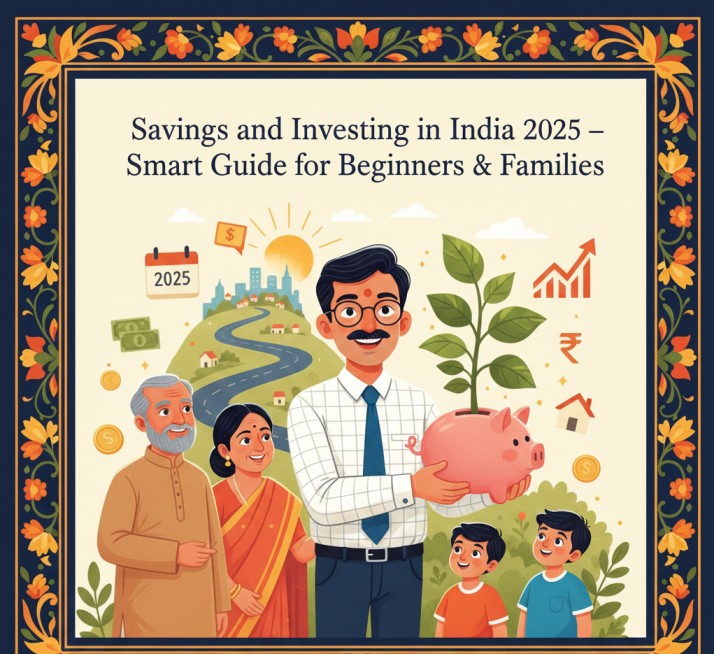
💰 Savings & Investing in India 2025 – Smart Guide for Every Indian
In 2025, India offers more ways to save and invest than ever before — from government schemes to online SIPs and digital gold.
But with so many options, most people feel confused where to start.
Should you put money in an FD or a SIP?
Is gold still safe?
And how much should you save vs. invest?
This guide simplifies everything — so you can confidently grow your money, protect your future, and reach your goals step by step.
💡 The Difference Between Saving and Investing
Though often used interchangeably, saving and investing aren’t the same.
| Aspect | Saving | Investing |
|---|---|---|
| Goal | Safety & liquidity | Growth & wealth creation |
| Risk | Very low | Low to high |
| Returns | 3–7% | 8–15%+ |
| Best For | Emergencies & short-term goals | Long-term wealth |
| Examples | RD, FD, PPF | SIPs, mutual funds, stocks |
💬 Think of saving as planting seeds, and investing as growing trees.
👉 Also read: Best Low-Cost Saving Schemes in India 2025
🌱 Why Both Are Important in 2025
Savings give you stability — investments give you freedom.
In 2025, with inflation around 5–6%, money kept idle in a savings account actually loses value.
That’s why you need a balance:
- Save for emergencies and short-term needs.
- Invest for growth and long-term goals.
Example:
- ₹50,000 in a savings account grows to ₹52,500 in a year (at 5%).
- ₹50,000 in an SIP may grow to ₹57,000 (at 14%).
👉 Guide: How to Build Wealth Slowly in India
🌼 Real Story: How Neha Turned ₹500 SIPs into ₹2 Lakh Corpus
Neha Verma, a 28-year-old from Pune, started a ₹500 SIP in 2018 after reading about mutual funds online.
She increased it by ₹200 every year.
In 2025, her investment is worth over ₹2 lakh — all from slow, consistent investing.
“I never understood markets. I just invested regularly and didn’t panic during market dips.”
💬 Moral: You don’t need timing; you need time.
👉 Also read: SIP for Beginners – Start with ₹500
🏦 Smart Saving Options in India 2025
1. Public Provident Fund (PPF)
- Returns: ~7.1% p.a.
- Lock-in: 15 years
- Tax-free: Yes (80C)
A safe, long-term government option ideal for retirement or future security.
2. Post Office Recurring Deposit (RD)
- Returns: ~6.7% p.a.
- Lock-in: 5 years
- Minimum: ₹100/month
Perfect for beginners and families starting small savings.
👉 Learn more: FD vs RD – Which Is Better for Indians?
3. Fixed Deposit (FD)
- Returns: 6–8% p.a.
- Flexible tenures and easy liquidity
FDs are reliable for short-term saving, though not ideal for high growth.
👉 Compare: Mutual Fund vs Fixed Deposit – Which Is Better in India 2025
4. Savings Accounts with Auto Sweep
Many banks now offer auto-sweep savings accounts — idle money automatically shifts to an FD for higher interest (6–7%) while keeping liquidity.
📈 Top Investment Options for Beginners
1. Mutual Fund SIPs
- Returns: 10–15%
- Risk: Moderate
Start with ₹100/month — the most beginner-friendly investment in 2025.
👉 Guide: Mistakes to Avoid While Starting SIP
2. Equity Index Funds
Low-cost, diversified funds that track indices like Nifty50 or Sensex — great for long-term wealth.
3. Gold (Digital or ETF)
Gold remains a favorite among Indian families.
Digital gold or ETFs remove storage hassles while maintaining long-term value.
4. ELSS (Equity Linked Savings Scheme)
Tax-saving mutual funds under Section 80C.
Lock-in of 3 years — ideal for young professionals.
5. National Pension System (NPS)
For retirement planning — combines equity and debt exposure with tax benefits under 80CCD.
📊 Comparison Table – Savings vs. Investing
| Feature | Savings (e.g., FD, PPF) | Investing (e.g., SIP, NPS) |
|---|---|---|
| Purpose | Safety & Liquidity | Wealth Creation |
| Risk | Low | Moderate to High |
| Returns | 4–8% | 8–15%+ |
| Tax Benefit | Yes (80C/80D) | Yes (ELSS, NPS) |
| Liquidity | High | Medium |
| Time Horizon | Short to Medium | Long-term |
💬 Pro Tip: Keep 60% of your portfolio safe (savings) and 40% growth-oriented (investments).
🧭 How to Build a Savings + Investment Plan
Step 1: Set Clear Goals
Decide what you’re saving or investing for —
💰 Emergency fund, 🏠 home, 🎓 education, or 💼 retirement.
Step 2: Follow the 60-20-20 Strategy
| Category | % of Income | Example (₹50,000 Salary) |
|---|---|---|
| Needs | 60% | ₹30,000 |
| Savings | 20% | ₹10,000 |
| Investments | 20% | ₹10,000 |
Step 3: Automate Everything
Set auto-debit SIPs and auto-transfers to savings accounts.
Automation removes emotion — and builds wealth silently.
Step 4: Review Once a Year
Adjust your plan if your salary, expenses, or goals change.
And don’t withdraw early unless it’s an emergency.
👉 Also read: How to Save Your First ₹1 Lakh Step by Step
⚠️ Common Mistakes to Avoid
- Keeping all money in savings accounts — inflation will eat it.
- Chasing high returns without safety — never invest money you can’t afford to lose.
- Not starting early — compounding needs time, not timing.
- Ignoring tax efficiency — PPF, ELSS, and NPS reduce tax burden.
- Stopping SIPs during market dips — that’s when you buy low!
🙋♀️ FAQs on Saving & Investing in India
1. How much should I save and invest monthly?
Aim to save 20% and invest another 20% of your income.
2. Which is better — FD or SIP?
FD is safe but low return; SIP is riskier but beats inflation long-term.
3. How can I start investing with little money?
Start SIPs with ₹100–₹500/month — consistency matters more than size.
4. Are government schemes better than mutual funds?
They’re safer but slower. A mix of both gives the best balance.
5. What’s the right time to start investing?
Now. The earlier you start, the stronger your compounding power.
📣 Final Thoughts + Call to Action
Saving keeps you safe. Investing helps you grow.
When you combine both, you create financial freedom.
You don’t need lakhs to start — you just need consistency.
Begin with ₹500 SIPs, open a PPF account, track your expenses, and let compounding do the magic.
💬 “Small savings make big futures — one smart choice at a time.”
👉 Explore more on SaveWithRupee.com for practical guides on SIPs, FDs, PPFs, and money-saving strategies designed for Indian families.