
Discover the pros and cons of weekly vs monthly budgeting. Learn which budgeting plan suits your lifestyle and how a hybrid approach can boost financial control in 2025.
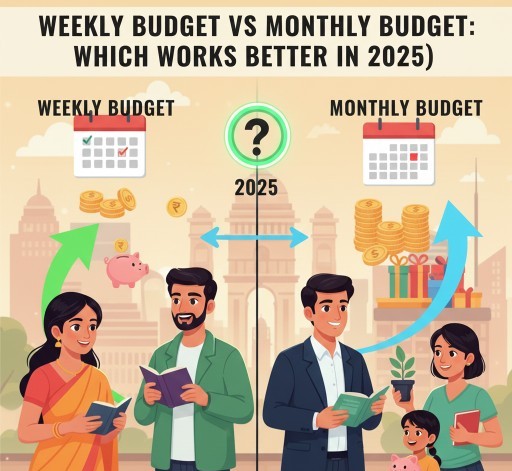
A Practical Indian Guide to Choosing the Right Budgeting Style for Your Life
Budgeting is not about complex spreadsheets or cutting all joy from life. It’s simply about deciding where your money should go before it disappears.
Why Budgeting Feels Hard for Many Indians
Budgeting usually fails because:
- Expenses are irregular
- Small daily spends feel invisible
- Family needs change week to week
- Festivals, travel, and emergencies disrupt plans
The problem is not discipline—it’s choosing the wrong budgeting timeframe.
Let’s fix that.
What Is a Monthly Budget? (The Traditional Approach)
A monthly budget plans your entire income and expenses for one full month.
Common monthly expenses:
- Rent / home loan
- Groceries
- Electricity & water
- School fees
- Transport
- Savings & SIPs
Why Indians like monthly budgeting
- Salaries come monthly
- Bills are monthly
- Easy to plan big expenses
It gives a big-picture view of your money.
Where Monthly Budgets Fail in Real Life
Despite being popular, monthly budgets often break because:
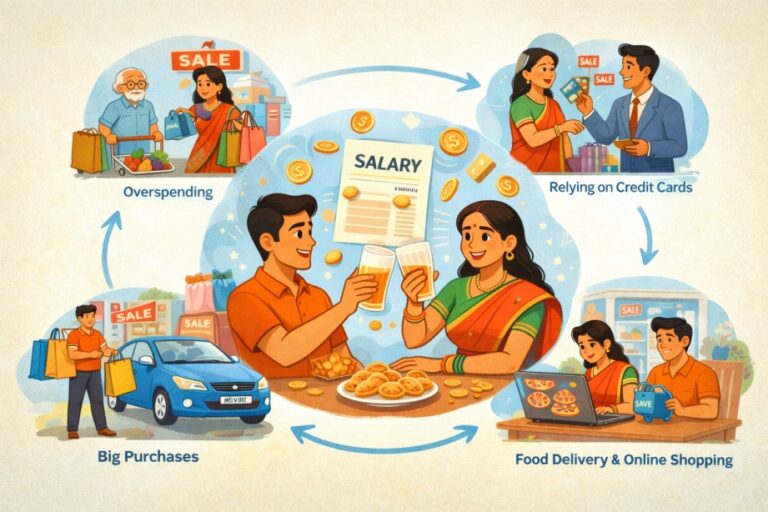
- You overspend in the first 10–15 days
- Festivals or guests disturb the plan
- Small daily expenses are ignored
- There’s no control once the month starts
By the last week, many people say:
“I don’t know where the money went.”
If this sounds familiar, you’re not alone.
What Is a Weekly Budget? (The Practical Reality Check)
A weekly budget divides your monthly spending money into 4 (or 5) parts.
Example:
- Monthly discretionary money: ₹6,000
- Weekly limit: ₹1,500
This covers:
- Groceries top-ups
- Eating out
- Travel
- Small purchases
You reset every week.
Why Weekly Budgets Work Better for Many Indians
Weekly budgeting succeeds because:
- It feels closer and more real
- Overspending is noticed immediately
- You don’t ruin the whole month with one mistake
- It controls UPI and impulse spends
In 2025, when small digital payments are everywhere, this matters a lot.
This habit fits perfectly with
👉 how I track every rupee I spend.
Weekly Budget vs Monthly Budget: Side-by-Side Comparison
| Factor | Weekly Budget | Monthly Budget |
|---|---|---|
| Control over daily spending | ⭐⭐⭐⭐ | ⭐⭐ |
| Best for UPI & impulse spends | ✅ Yes | ❌ No |
| Suitable for fixed bills | ❌ Limited | ✅ Excellent |
| Flexibility | High | Medium |
| Ease for beginners | Easy | Moderate |
| Risk of overspending | Lower | Higher |
Who Should Use a Monthly Budget?
A monthly budget works best if you:
- Have a fixed salary
- Spend mostly on predictable expenses
- Are disciplined with daily spending
- Track expenses regularly
It’s ideal for:
- Rent
- EMIs
- School fees
- SIPs
- Insurance
Monthly budgeting pairs well with
👉 50-30-20 rule of budgeting explained for Indians.
Who Should Use a Weekly Budget?
A weekly budget works better if you:
- Overspend early in the month
- Use UPI frequently
- Struggle with impulse buying
- Have irregular income
- Feel monthly budgets “don’t work”
It’s especially effective for:
- Groceries
- Eating out
- Travel
- Shopping
Weekly budgeting supports habits explained in
👉 10 lifestyle changes that save big money.
The Best Solution in 2025: Use Both (Hybrid Budget)
Here’s what actually works for most Indian families:
✅ Monthly Budget for Fixed Expenses
- Rent / EMI
- Utilities
- School fees
- Savings & investments
✅ Weekly Budget for Variable Expenses
- Groceries
- Eating out
- Transport
- Personal spending
This hybrid method gives control + clarity.
It’s also ideal for families managing groceries smartly, as explained in
👉 grocery shopping tips to cut monthly expenses.
Real Indian Example: How Weekly Budget Fixed Overspending
Pankaj, a private employee in Lucknow, Uttar Pradesh, earned ₹32,000/month.
Problem:
- Monthly budget looked perfect on paper
- Money finished by the 20th
What he changed:
- Fixed bills stayed monthly
- He switched to a ₹1,200 weekly spending limit
Result:
- Controlled impulse spends
- No end-of-month stress
- Started saving ₹3,000/month consistently
His words:
“Weekly limits finally made money visible.”
Common Budgeting Mistakes to Avoid
❌ Choosing monthly budget because “everyone does”
❌ Ignoring small daily spends
❌ Being too strict and quitting
❌ Not involving family members
❌ Giving up after one bad week
Budgeting is a skill, not a test.
How the Right Budget Helps Bigger Financial Goals
When budgeting works:
- Savings become automatic
- Emergency funds grow
- Debt reduces
- Money stress reduces
This is how budgeting connects to long-term stability, explained in
👉 how to build wealth slowly in India.
Final CTA: Choose What Fits Your Life (Not Theory)
There’s no “best” budget—only the right one for you.
👉 If you overspend easily → try weekly
👉 If expenses are stable → monthly works
👉 If confused → use both
Start simple. Adjust slowly. Stay consistent.
👉 For more practical Indian money systems, explore
weekly budget vs monthly budget – which works better on SaveWithRupee.
A budget that fits your life
will finally stick.
Author Insight
In my own experience managing monthly expenses in India, I realized that the biggest financial problems were not due to low income, but due to lack of planning. For example, when my monthly income was around ₹25,000, I often ended up spending almost everything without saving anything at the end of the month.”
“I started tracking my expenses daily using a simple notebook. Within one month, I noticed that small, unnecessary expenses like frequent online orders and unplanned spending were taking a large portion of my income.”
“By making small changes—like setting a fixed budget for groceries, limiting online purchases, and saving at least ₹2,000 at the beginning of each month—I was able to reduce financial stress and slowly build better control over my money.” “These are simple and practical methods that any Indian household can follow without needing complex financial knowledge.”
Research Sources
- Reserve Bank of India – Financial Reports
- SEBI Investor Education
- Economic Times – Personal Finance
- Investopedia – Budgeting & Finance Basics
Disclaimer: This article is based on personal experience and is for educational purposes only. It does not constitute financial, investment, or legal advice. Readers are advised to do their own research or consult a qualified professional before making any financial decisions.