

A real, personal Indian story about tracking expenses for one full year. Honest lessons on money habits, mistakes, mindset shifts, and practical insights from a middle-class life in Chennai.
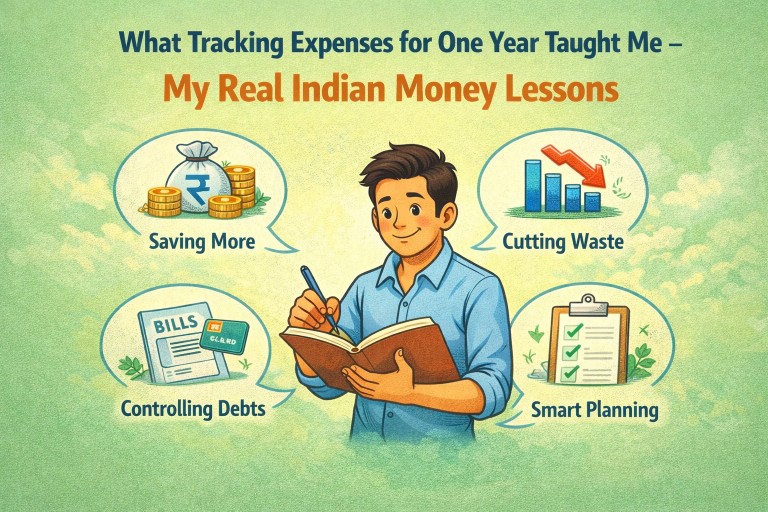
What Tracking Expenses for One Year Taught Me
My name is H. Suresh. I am 42 years old, living in Chennai, Tamil Nadu, and working in an MNC company.
I come from a middle-class background, and I understand first-hand how difficult it can be to manage money with rising expenses, uncertain income, and very little real financial guidance. For years, I believed I was doing “okay” with money—until one simple habit changed everything.
This is what tracking my expenses for one full year taught me.
Why I Started Tracking My Expenses
On the surface, my life looked stable:
- A regular monthly salary
- No luxury lifestyle
- No reckless spending
Yet every month felt tight.
I kept asking myself:
- Why is saving so difficult?
- Why does one unexpected expense disturb everything?
- Why does my bank balance never reflect my effort?
The real issue was that I never actually knew where my money was going.
That confusion is common among Indian families, and I later realised it’s exactly what leads to money stress, as explained in
👉 Why most Indians never feel rich no matter how much they earn
So I decided to track every rupee I spent—for one full year.
The First Month Was Uncomfortable but Necessary
The first month was shocking.
It wasn’t big expenses that hurt me. It was:
- Frequent food delivery after long office hours
- “Small” Amazon and Flipkart orders
- Multiple app subscriptions
- Daily coffee, snacks, and impulse buys
Each expense felt harmless. Together, they quietly drained thousands.
This experience closely matches what many Indians realise when they finally look at numbers honestly:
👉 Where most Indian households lose money without realising
Tracking didn’t judge me. It showed me the truth.
I Wasn’t Bad With Money—Just Unaware
One major emotional shift happened early.
For years, I believed:
“Maybe I’m just bad at handling money.”
Tracking proved that wrong.
I wasn’t careless. I was unaware.
Most middle-class Indians don’t overspend intentionally. We overspend due to convenience, fatigue, and stress—especially after long working days.
This realisation later became the foundation of how I manage money today, similar to what I explained here:
👉 How I track every rupee I spend – my simple real Indian method
Fixed Expenses Were Not the Real Problem
Before tracking, I assumed rent, bills, and EMIs were killing my finances.
They weren’t.
The real problem was flexible spending:
- Food delivery apps
- Online shopping convenience
- Travel shortcuts
- Lifestyle “rewards” after stressful weeks
This was the exact moment I understood something crucial—that my income wasn’t the enemy.
That shift is something many Indians experience, and I’ve written about it separately here:
👉 The day I realised my salary wasn’t the problem – my habits were
By Month Three, Patterns Started Showing
Around the third month, patterns became clear:
- Stressful work weeks = higher spending
- Busy days = more convenience costs
- Emotional fatigue = online shopping
Money was deeply emotional.
I wasn’t buying things because I needed them.
I was buying relief.
This awareness alone reduced my spending more than any strict budget ever could.
I Didn’t Cut Everything—I Became Intentional
I didn’t eliminate enjoyment. I adjusted consciously:
- Fixed days for food delivery
- Cancelled unused subscriptions
- Planned groceries better
- Accepted occasional splurges without guilt
These small lifestyle changes are exactly what make savings sustainable, not painful:
👉 10 small lifestyle changes that save big money
No extreme discipline. Just awareness.
Around Month Six, Savings Started Growing Naturally
Something unexpected happened after six months.
I didn’t “force” savings.
Savings started happening automatically.
Because:
- Waste reduced
- Impulse spending slowed
- Decisions became thoughtful
For the first time, checking my bank balance didn’t cause anxiety.
That calm feeling is something many Indians only get after putting a simple money system in place:
👉 The only money system an Indian family needs
Emergency Expenses Stopped Feeling Like Disasters
Earlier, any unexpected expense felt like failure.
After tracking for months:
- I expected irregular expenses
- I kept buffers
- Emergencies felt manageable
This naturally pushed me to build a proper safety net, something every Indian household should prioritise:
👉 Emergency fund – how much should an Indian household keep
Tracking taught me that unpredictability isn’t the real problem—being unprepared is.
The Emotional Impact Was Bigger Than the Financial One
The biggest benefit wasn’t money saved.
It was:
- Reduced stress
- Better sleep
- Healthier conversations at home
- Less shame around spending
Money stopped being mysterious.
This emotional relief is something I’ve seen repeated in many real Indian stories, including my own journey shared here:
👉 How my life changed after tracking my expenses
Beliefs I Let Go Of After One Year
Tracking expenses quietly broke long-held myths.
| Old Belief | What I Learned |
|---|---|
| I need a higher salary | I needed clarity |
| Budgeting kills freedom | Awareness creates freedom |
| Small spends don’t matter | They matter the most |
| Money stress is normal | It’s avoidable |
| Only experts manage money | Simple habits work |
Mistakes I Made During the Year
It wasn’t perfect.
I made mistakes:
- Being too strict initially
- Feeling guilty instead of curious
- Expecting fast results
- Comparing my journey with others
Tracking works best when it’s observational, not punishing.
What I’d Tell Anyone Starting Today
If you’re middle-class, salaried, responsible, yet constantly worried about money—start here:
- Track without judgement
- Focus on patterns, not perfection
- Give it time
- Let habits change naturally
You don’t need fancy apps. You need honesty.
This habit laid the foundation for everything else I do financially today.
Frequently Asked Questions
Did tracking expenses make life restrictive?
No. It made spending intentional, not joyless.
How long did it take to see results?
Clarity in 3–4 months. Real improvement by 6 months.
Is this useful only for salaried people?
No. Anyone with income and expenses benefits.
Do you still track expenses now?
Yes, but in a simpler, faster way.
Is budgeting the same as tracking?
Tracking comes first. Budgeting follows naturally.
What was the biggest gain?
Mental peace, not just savings.
Final Thoughts
Tracking expenses for one year didn’t make me rich.
It made me aware, calm, and confident.
As a middle-class Indian professional living in Chennai, facing rising costs and limited financial guidance, I can say this honestly:
If you feel stuck with money, don’t start with investments.
Start with awareness.
One year.
One habit.
A completely different relationship with money.
