

Discover why having a family budget plan is essential for financial security, reducing stress, and achieving shared goals. Learn how budgeting fosters communication, discipline, and peace of mind in 2025.
Managing a family budget well is the key to financial peace and achieving your household goals—whether that’s saving for your children’s education, buying a house, or simply making ends meet each month. If you’ve ever wondered how to start or improve your family’s budget plan, this guide with a straightforward template will help you take control of your money and lower stress about expenses.
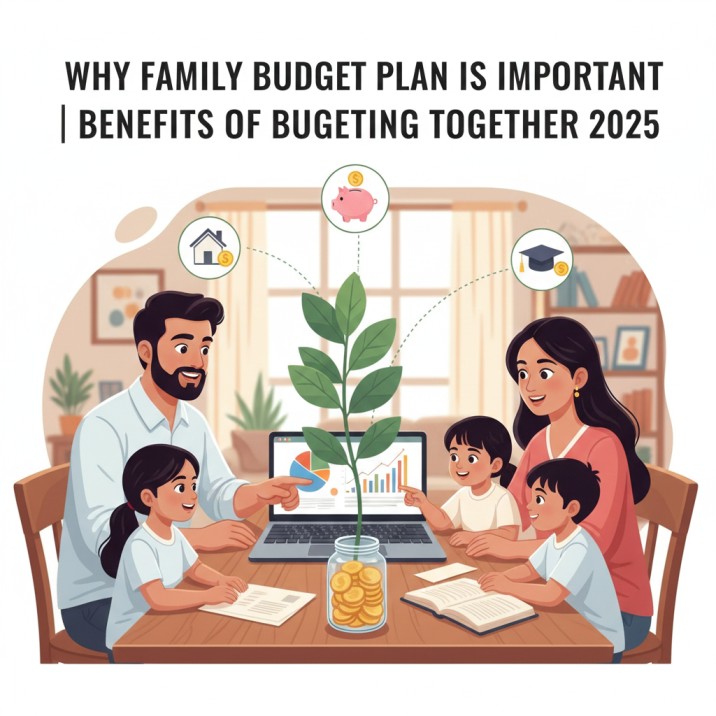
Why a Family Budget Plan is Important
A family budget plan helps you:
- Track all income and expenses accurately
- Prioritize essential needs and reduce unnecessary spending
- Set aside savings for emergencies and future goals
- Plan big purchases without surprises
- Encourage smart financial habits across family members
Without a clear budget, it’s easy to overspend and lose sight of your financial goals. A well-structured budget brings clarity and control.
Simple Family Budget Plan Template (Monthly)
Use the following table as a basic family budget template. Customize the amounts according to your income and spending priorities.
| Category | Subcategory | Budget Amount (₹) | Actual Spent (₹) | Difference (₹) |
|---|---|---|---|---|
| Income | Salary 1 | |||
| Salary 2 | ||||
| Other Income | ||||
| Total Income | ||||
| Fixed Expenses | Rent / Home Loan | |||
| Utilities (Water, Electricity, Gas) | ||||
| Phone & Internet | ||||
| School Fees | ||||
| Variable Expenses | Groceries | |||
| Transportation | ||||
| Medical & Health | ||||
| Clothing & Accessories | ||||
| Entertainment & Eating Out | ||||
| Miscellaneous | ||||
| Savings/Investments | Emergency Fund | |||
| Children’s Education Fund | ||||
| Retirement Fund | ||||
| Other Savings/Investments | ||||
| Debt Payments | Loan Repayments | |||
| Total Expenses | ||||
| Balance | Income minus Expenses |
How to Use This Template
- Fill in Your Income: Write down all monthly income sources including salaries, rental income, or side earnings.
- Estimate Fixed Expenses: These are regular payments like rent/home loan, utilities, phone bills, and school fees. These rarely change month-to-month.
- Track Variable Expenses: These include grocery shopping, transport, medical care, clothes, entertainment, etc. Look back at your bank statements or bills for accurate estimates.
- Set Savings Goals: Allocate some money for emergency funds and long-term savings like children’s education or retirement. Even a small monthly amount grows over time.
- Account for Debt: Include any loan EMIs or credit card repayments.
- Calculate the Balance: Subtract total expenses from total income to check if you are within budget or overspending. Adjust categories if needed.
- Fill in Actual Spending: At month-end, fill in the actual spending for each category and calculate the difference. Track trends to improve next month.
Tips for Effective Family Budgeting
- Review and Update Monthly: Family income and needs change. Regularly update the budget and stay flexible.
- Involve Family Members: Discuss major expenses and savings goals openly to ensure everyone understands the financial plan.
- Prioritize Essentials: Always cover basic needs before wants or discretionary spending.
- Use Tools: You can use Excel, Google Sheets, or budgeting apps to maintain your budget plan digitally.
- Save Before You Spend: Treat savings like a fixed expense by setting aside money at the start of the month.
Example Family Budget Breakdown (Monthly Income ₹50,000)
| Category | Budget ₹ | Notes |
|---|---|---|
| Income | ₹50,000 | Salaries combined |
| Rent/Home Loan | ₹12,000 | Fixed monthly |
| Utilities | ₹4,000 | Electricity, water, gas |
| Phone & Internet | ₹1,500 | Mobile and broadband |
| School Fees | ₹5,000 | Children’s education |
| Groceries | ₹8,000 | Food and home supplies |
| Transportation | ₹3,000 | Public transport and fuel |
| Medical | ₹2,000 | Medicines and doctor visits |
| Clothing | ₹1,000 | Clothes and footwear |
| Entertainment | ₹1,500 | Movies, outings |
| Miscellaneous | ₹1,000 | Unexpected small expenses |
| Savings | ₹8,000 | Emergency + Future funds |
| Debt Payment | ₹2,000 | Loan EMIs |
| Total Expenses | ₹50,000 | Balanced budget |
FAQs on Family Budget Planning
Q1: What if my income is irregular?
A1: Track your income over several months to find an average. Base your budget on a conservative estimate and save during high-income months for low-income periods.
Q2: How much should I save monthly?
A2: Aim for at least 10-20% of your income towards savings, including emergency funds and long-term goals.
Q3: How to handle unexpected expenses?
A3: Maintain an emergency fund to cover 3-6 months’ worth of essential expenses. Include a ‘Miscellaneous’ category in your budget for smaller surprises.
Q4: Should we budget for vacations and gifts?
A4: Yes, add them as separate categories under entertainment or discretionary spending, planned within your monthly limits.
Q5: Can budgeting improve family relationships?
A5: Absolutely. Clear communication and shared goals reduce money-related stress and help families work together financially.
