

Understand the 50-30-20 rule for Indian families in 2025. Learn how to divide income smartly between needs, wants, and savings — with real examples, tools, and tips.
📋 Table of Contents
- 🧮 What Is the 50-30-20 Rule?
- Why This Budgeting Rule Fits the Indian Middle Class
- 💡 How to Calculate Your 50-30-20 Budget Step-by-Step
- 📊 Example: Family with ₹60,000 Monthly Income
- 🧠 Benefits of Following the 50-30-20 Rule in 2025
- 🧾 Common Mistakes Indians Make While Budgeting
- 💼 How to Customize This Rule for Your Lifestyle
- 🔗 Internal SaveWithRupee Guides to Build a Smarter Budget
- ⭐ Editor’s Pick – SaveWithRupee Team Recommends
- ❓ Frequently Asked Questions (FAQs)
- 🧭 Final Word – Budget Smart, Live Free
🧮 1. What Is the 50-30-20 Rule?
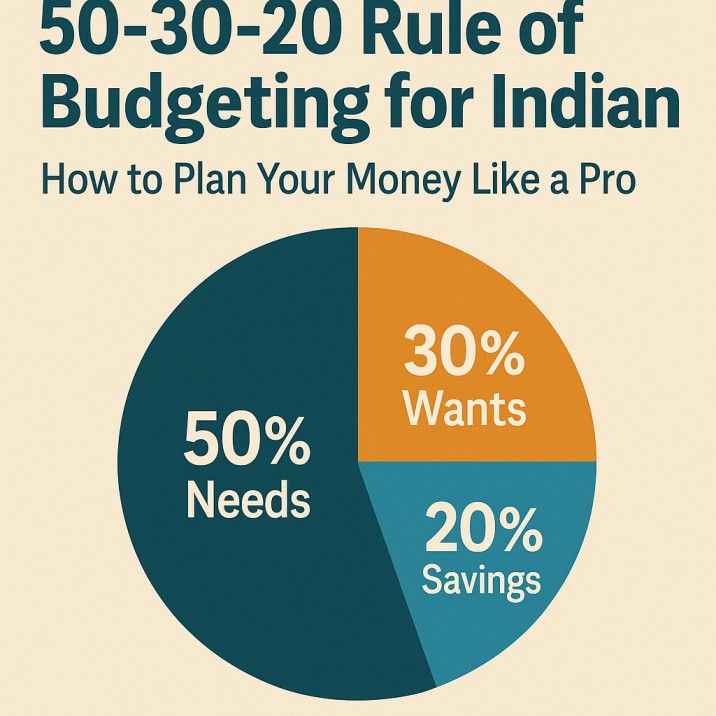
The 50-30-20 rule is one of the simplest and most effective budgeting frameworks in the world.
It divides your net income (after tax) into three parts:
| Category | Purpose | Recommended % |
|---|---|---|
| 🏠 Needs | Rent, food, EMIs, bills | 50% |
| 🎉 Wants | Dining out, entertainment, shopping | 30% |
| 💰 Savings & Investments | SIPs, FDs, insurance, emergency fund | 20% |
💬 In short: Spend smart, enjoy life, and invest for the future.
It’s not about restricting yourself — it’s about controlling money before it controls you.
🇮🇳 2. Why This Budgeting Rule Fits the Indian Middle Class
India’s middle class is the backbone of the economy — hardworking, aspirational, and always juggling multiple responsibilities.
The 50-30-20 rule fits perfectly because:
✅ It balances lifestyle and savings — no extreme frugality.
✅ It helps plan for irregular incomes (bonus, festival expenses).
✅ It’s adaptable to small-town or metro living.
For example, a family following this rule can easily create an Emergency Fund and still enjoy occasional luxuries like weekend outings.
💡 3. How to Calculate Your 50-30-20 Budget Step-by-Step
Let’s break it down:
Step 1: Identify Monthly Net Income
Include all earnings — salary, freelancing, or side hustles.
💼 Read: Best Side Hustles in India 2025 to add extra cash flow.
Step 2: Allocate 50% for Needs
This includes essentials:
- House rent/loan
- Groceries
- Utilities (electricity, water, mobile recharge)
- Transport/fuel
- School fees
💡 Control costs using How to Reduce Your Electricity Bill in India 2025.
Step 3: Allocate 30% for Wants
Enjoy guilt-free spending — movies, travel, or eating out.
Just cap it at 30%.
Use rewards and cashback to stretch this section:
👉 How to Earn ₹500 Daily with Cashback Apps.
Step 4: Allocate 20% for Savings & Investments
Start SIPs, build your emergency fund, or invest in low-cost schemes.
Use tools from Best Free Budgeting Apps in India 2025 Edition to track.
📊 4. Example: Family with ₹60,000 Monthly Income
| Category | % | Amount (₹) | Example Expenses |
|---|---|---|---|
| Needs | 50% | ₹30,000 | Rent (12k), groceries (8k), bills (5k), transport (5k) |
| Wants | 30% | ₹18,000 | Dining out, OTT, kids’ hobbies, weekend trips |
| Savings/Investments | 20% | ₹12,000 | SIP (₹5000), RD (₹2000), insurance (₹3000), emergency fund (₹2000) |
💬 Even on ₹60k income, this family can save ₹1.44 lakh/year while living comfortably.
If your income is lower, use 60-20-20 (more for needs).
If higher, shift to 40-30-30 to build wealth faster.
🧠 5. Benefits of Following the 50-30-20 Rule in 2025
✅ Simple & Visual: Easy to understand, no complex formulas.
✅ Builds Discipline: Automates savings without thinking.
✅ Balances Lifestyle: You can spend freely without guilt.
✅ Financial Awareness: Makes you conscious of where every rupee goes.
✅ Helps Beat Inflation: Prioritizing investing ensures your money grows faster than expenses.
💡 Combine this method with Smart Investment Habits of Middle-Class Indians for maximum growth.
🧾 6. Common Mistakes Indians Make While Budgeting
- Mixing Needs & Wants:
Buying a new phone “because you need it” — but do you really? - No Emergency Fund:
One medical bill can destroy a year’s savings. Build yours first. - Ignoring Small Recurring Charges:
Netflix, OTT, and app subscriptions quietly eat ₹1000+/month.
See: Hidden Bank Charges You’re Paying Every Month. - Not Tracking Spends:
You can’t fix what you don’t measure.
Use free tools from Best Budgeting Apps in India. - Neglecting Insurance:
Don’t forget — savings vanish fast without protection.
Check: How to Save on Insurance Premiums.
💼 7. How to Customize This Rule for Your Lifestyle
The 50-30-20 rule is flexible — here’s how to tweak it:
| Life Stage | Custom Ratio | Example Focus |
|---|---|---|
| Students | 60-20-20 | Lower income, fewer bills |
| Newly Married Couples | 45-25-30 | Focus on investments |
| Families with Kids | 55-25-20 | Education + EMIs |
| Retirees | 40-30-30 | Healthcare & stability |
| Freelancers/Self-employed | 40-40-20 | Variable income; save more |
Adapt, don’t abandon. The key is consistency.
💬 Budgeting is personal — the math stays, the meaning changes.
🔗 8. Internal SaveWithRupee Guides to Build a Smarter Budget
- Monthly Budget Plan for Family with ₹30,000 Income
- Why Family Budget Plan Is Important
- 15 Daily Money Hacks to Save ₹10,000 This Year
- 10 Lifestyle Changes That Will Save You Money in 2025
- Best Low-Cost Saving Schemes in India 2025
⭐ 9. Editor’s Pick – SaveWithRupee Team Recommends
🟢 Smart Investment Habits of Middle-Class Indians – Build Wealth Step-by-Step
📈 Learn to grow your savings into real assets.
🟢 Passive Income Ideas in India 2025 – Make Money While You Sleep
💤 Convert your savings into recurring income.
🟢 Hidden Bank Charges You’re Paying Every Month – Stop Losing Money in 2025
⚠️ Keep your hard-earned rupees safe from invisible deductions.
🟢 Best Side Hustles in India 2025 – Earn ₹10,000/Month
💼 Boost your income to strengthen your budget.
🟢 Emergency Fund – How Much Should You Keep?
💰 Protect your family from financial shocks.
❓ 10. Frequently Asked Questions (FAQs)
Q1. How does the 50-30-20 rule work for irregular income?
If your income varies, average your last 3 months and use 50-30-20 as a flexible guide — invest only after covering essentials.
Q2. What if my needs exceed 50% of income?
Shift to 60-20-20 temporarily, then reduce EMI, rent, or bills over time.
Q3. Can I apply this rule with my spouse’s income?
Yes — combine both incomes and categorize total expenses under the same rule.
Q4. How can students use this rule?
Use 60-20-20: 60% for study/living costs, 20% for enjoyment, 20% savings (even ₹500 SIP counts).
Q5. Is this rule suitable for small-town India?
Absolutely. It’s even easier to follow since expenses are lower. You can save more (up to 30%).
Q6. Should I count loan EMIs under needs or savings?
Home/car EMIs count as “needs” since they’re fixed obligations. But investments like SIPs or RDs go under “savings.”
🧭 11. Final Word – Budget Smart, Live Free
A good budget doesn’t feel like punishment — it feels like control.
When you give every rupee a purpose, you never wonder “where did my money go?” again.
💬 Start this month — open a notebook or budgeting app, note your income, and apply the 50-30-20 rule.
Within three months, you’ll notice your savings growing without cutting joy.
The secret isn’t earning more — it’s managing better.
💚 SaveWithRupee Says:
“A budget isn’t about limitation — it’s about freedom.”
Next, read:
👉 Smart Investment Habits of Middle-Class Indians – Build Wealth Step-by-Step in 2025
and
👉 Passive Income Ideas in India 2025 – Make Money While You Sleep
