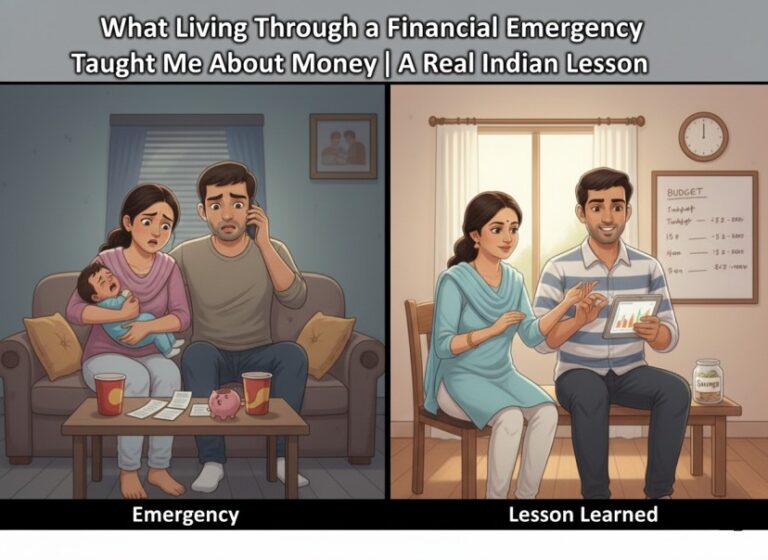

A complete 3000+ word real Indian budgeting guide with my exact monthly system, numbers, habits, tools, mistakes, stories, comparison tables, and internal links to helpful money-saving guides.

🔥 Strong Intro (No Questions)
Money management becomes simple the moment you stop chasing perfection and start building a predictable routine. My monthly budgeting system did not appear overnight. It grew slowly—one bill, one mistake, one financial habit at a time—until it finally became smooth, calm, and reliable.
The Indian financial life is unique: UPI spending, family obligations, festival spikes, delivery apps, EMIs, surprise medical bills, long-term goals, and rising costs. The method I’m sharing here is designed for real Indian life, not foreign budgeting styles. It uses my actual monthly numbers, real habits, and step-by-step planning flow.
Follow this guide for the next two months, and your financial stress will drop dramatically.
⭐ Key Takeaways
- Simplicity beats complicated budgeting apps.
- Auto-deductions are the backbone of long-term wealth.
- Small daily habits matter more than big sacrifices.
- Weekly rebalancing keeps budgets stable in Indian households.
- Festival and family expenses must be planned separately.
- A monthly “Money Day” removes 80% of financial stress.
If you want to build small habits, check
10 Lifestyle Changes That Will Save You Money in 2025.
📚 Table of Contents
- 🏠 My Real Monthly Budget
- 📒 Step-by-Step Guide
- 👨👩👧 Real Indian Stories
- 📊 Comparison Tables
- 👍 Pros & Cons
- ⚠ Common Mistakes
- 🛠 Tools & Apps
- 🎯 Who This Is For
- 📌 Quick Action Checklist
- ❓ FAQs
- 🧩 Final Summary
🏠 My Real Monthly Budget (Indian Example With Actual Numbers)
Here’s the real monthly budget I use (₹1,20,000 take-home income).
The structure works exactly the same even if you earn ₹15,000 or ₹5 lakhs.
| Category | Amount (₹) | % |
|---|---|---|
| Rent + Utilities | 20,000 | 16.6% |
| Groceries | 8,000 | 6.6% |
| Transport | 4,000 | 3.3% |
| Eating Out | 4,000 | 3.3% |
| Subscriptions | 5,000 | 4.1% |
| Health/Fitness | 3,000 | 2.5% |
| Family Support | 10,000 | 8.3% |
| Investments (SIP, PPF) | 30,000 | 25% |
| Emergency Fund | 6,000 | 5% |
| Big Purchases | 10,000 | 8.3% |
| Personal Wants | 5,000 | 4.1% |
| Freedom Buffer | 5,000 | 4.1% |
If you earn less, start with
How to Save Money on a Small Salary ₹10,000–₹20,000.
If your goal is aggressive saving, check
How to Save ₹100 Daily Without Sacrifice.
📒 Step-by-Step Guide: My Monthly Budgeting Flow
This is the system I use every single month.
🗓️ 1️⃣ Step 1: Fix Your Monthly “Money Day”
Mine is the 2nd of every month.
On this day, I do everything money-related:
- Pay rent & bills
- Check SIP confirmations
- Allocate budget buckets
- Transfer money to sub-accounts
- Review last month’s spending
- Set goals for next month
A small routine like this is surprisingly powerful.
For habit-building inspiration, refer to
10 Lifestyle Changes That Will Save You Money in 2025.
🔁 2️⃣ Step 2: Auto-Deduct All Savings Before Spending (30% Rule)
Before I touch a single rupee, I auto-transfer:
- SIPs (equity + index funds)
- PPF monthly split
- Term insurance sinking fund
- Emergency fund
- Big-purchase sinking fund
If you’re new to SIPs, start here:
SIP for Beginners—Start with ₹500.
If you want low-risk options, see
FD vs RD—Which Is Better for Indians?.
📦 3️⃣ Step 3: The Indian 6-Box Budgeting Method
Forget complicated apps and 27 categories.
I divide everything into 6 simple buckets:
🧂 Box 1: Essentials
Rent, electricity, groceries, and mobile plans.
If you want to cut recharge costs, see
How to Save Money on Recharge Plans.
🚗 Box 2: Transport
Fuel, autos, taxis, metro cards.
🍛 Box 3: Eating Out & Delivery
Zomato, Swiggy, cafes.
To reduce this, read
How to Save on Food Delivery Apps.
🎁 Box 4: Personal Wants
Shopping, grooming, gadgets.
👪 Box 5: Family Support
A uniquely Indian category. Parents, siblings, shared bills.
🕊️ Box 6: Freedom Buffer
Unexpected guests, festival spikes, random plans.
This has saved me countless times.
If you want to compare budgeting styles, read
50-30-20 Rule of Budgeting for Indians.
🧾 4️⃣ Step 4: Daily 10-Minute UPI Spending Check
Every night or morning:
- I check yesterday’s UPI transactions
- Tag them into buckets
- Watch for overspending
- Fix impulse purchases
UPI makes spending too easy—daily checks keep me grounded.
♻ 5️⃣ Step 5: Weekly Rebalancing
Every Sunday night I reset the week:
- Cut eating out if groceries went high
- Reduce wants if transport was heavy
- Adjust for upcoming birthdays/festivals
This weekly habit is inspired by
Weekly Budget vs Monthly Budget—Which Works Better?.
🔚 6️⃣ Step 6: Month-End Reset (12 Minutes Only)
I close the month with:
- Bucket review
- Spending trends
- Savings progress
- Emergency fund update
- Plan for next month
- Festival adjustments
This gives clarity and confidence.
If you’re building a safety net, read
Emergency Fund—How Much Should an Indian Household Keep?.
👨👩👧 Real Indian Stories (Actual Results)
🇮🇳 Story 1: Chennai Couple Who Saved ₹12,000/Month
Their problem was:
- Delivery apps
- Multiple small subscriptions
- Mid-month grocery spikes
After switching to a weekly system and following tips from
10 Lifestyle Changes That Will Save You Money in 2025
they trimmed ₹12,000/month without losing comfort.
🇮🇳 Story 2: Pune Freelancer With Unstable Income
She used:
- A base budget
- A variable budget
- Emergency fund
- Sinking funds
Her income stabilized using principles similar to
How to Build Wealth Slowly in India.
🇮🇳 Story 3: Bangalore Techie Facing EMI Pressure
UPI spending was silently draining money.
Through weekly rebalancing and learning from
Hidden Bank Charges You’re Paying Every Month
he saved ₹800–₹1,000 monthly just on bank fees.
📊 Comparison Tables
Budgeting Methods
| Method | Best For | Pros | Cons |
|---|---|---|---|
| 50-30-20 | Beginners | Simple | Too broad |
| 6-Box Rule | Busy Indians | Flexible | Needs weekly review |
| Envelope System | Cash users | Good discipline | Not suitable for UPI |
| Zero-Based Budget | Detail lovers | Total control | Time-heavy |
Investment Choices (Monthly Budget Perspective)
| Option | Risk | Best For | Learn More |
|---|---|---|---|
| SIP (Equity) | Medium | Long-term growth | Smart Investment Habits of Middle-Class Indians |
| FD | Low | Safety seekers | FD vs RD |
| Cashback Earnings | Very low | Extra income | Earn ₹500 Daily with Cashback Apps |
| Gold | Low | Stability | Gold vs SIP vs FD |
👍 Pros & Cons of My Budget Method
Pros
- Simple, Indian-friendly
- Helps avoid emotional overspending
- Works for families, students, couples
- Encourages long-term wealth
- Weekly system prevents mid-month shocks
Cons
- Needs consistency
- Cash users may struggle
- Requires a bit of setup
- Festivals require planning
⚠ Common Mistakes Indians Make
❌ Mistake 1: Tracking every rupee
→ Use broad buckets instead.
❌ Mistake 2: Saving after spending
→ Reverse the flow with auto-deductions.
❌ Mistake 3: Festival chaos
→ Keep a separate festival fund (Diwali, Navratri, birthdays).
❌ Mistake 4: Ignoring mobile plan costs
→ Compare plans here:
Best Family Postpaid Plans in India
❌ Mistake 5: No emergency fund
→ Follow the emergency fund guides on SaveWithRupee.
🛠 Tools & Apps I Use
| Tool | Why |
|---|---|
| Google Sheets | Stable, custom tracking |
| Notion | Reflection + planning |
| UPI Notes | Daily categorisation |
| Bank Sub-Accounts | Budget buckets |
| Auto-SIP | Hands-free investing |
If you want app recommendations, see
Best Free Budgeting Apps in India.
🎯 Who This Is For
- Salaried professionals
- Couples
- Students (see
Student Budget Hacks) - Small salary earners
- Freelancers with irregular income
- Families needing structure
📌 Quick Action Checklist
- Fix your Money Day
- Auto-deduct savings first
- Create 6 buckets
- Set weekly rebalancing
- Daily 10-minute UPI review
- Maintain a festival fund
- Build an emergency fund
- Adjust every month-end
❓ FAQs
1. How long before budgeting feels natural?
30–60 days.
2. Do I need an app?
Not necessary—UPI + sheets is enough.
3. Should couples budget together?
Yes, and this guide may help:
How Couples Can Budget Without Fights.
4. What if my income fluctuates?
Use a base + variable budget.
🧩 Final Summary
Budgeting is not about restriction—it’s about direction.
This real Indian budgeting system—Money Day, auto-saving, the 6-Box Method, weekly rebalancing, daily UPI checks, and month-end resets—has kept my finances calm, predictable, and stable for years.
Author Insight
In my own experience managing monthly expenses in India, I realized that the biggest financial problems were not due to low income, but due to lack of planning. For example, when my monthly income was around ₹25,000, I often ended up spending almost everything without saving anything at the end of the month.”
“I started tracking my expenses daily using a simple notebook. Within one month, I noticed that small, unnecessary expenses like frequent online orders and unplanned spending were taking a large portion of my income.”
“By making small changes—like setting a fixed budget for groceries, limiting online purchases, and saving at least ₹2,000 at the beginning of each month—I was able to reduce financial stress and slowly build better control over my money.” “These are simple and practical methods that any Indian household can follow without needing complex financial knowledge.”
Research Sources
- Reserve Bank of India – Financial Reports
- SEBI Investor Education
- Economic Times – Personal Finance
- Investopedia – Budgeting & Finance Basics
Disclaimer: This article is based on personal experience and is for educational purposes only. It does not constitute financial, investment, or legal advice. Readers are advised to do their own research or consult a qualified professional before making any financial decisions.