

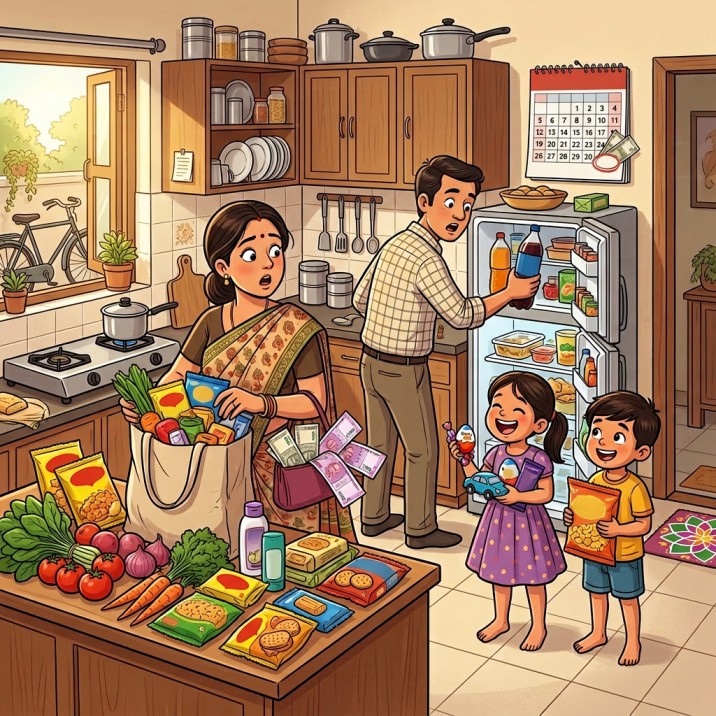
Many Indian families believe they are careful with money. They avoid luxury purchases, plan their major expenses, and try to live within their income. Yet by the end of the month, they often feel that their salary disappears faster than expected.
This happens because of small, unnoticed expenses that quietly add up over time. Individually these costs look harmless—₹50 here, ₹100 there—but together they can easily cross ₹2,000 every month.
For a middle-class household, ₹2,000 may not seem huge, but over a year that becomes ₹24,000. If saved or invested wisely, that money could help build an emergency fund or contribute to long-term financial goals.
The good news is that most of these expenses are completely avoidable once you identify them.
This article explains where Indian families unknowingly overspend ₹2,000 every month and simple steps to stop it.
💡 Personal Experience
When I first started tracking my expenses, I was surprised to see how much money went toward small daily spending like food delivery, subscriptions, and impulse purchases. Once I noticed these patterns, cutting a few unnecessary expenses saved me nearly ₹1,500–₹2,000 every month.
You can also explore practical saving money tips here:
https://savewithrupee.com/15-daily-money-hacks-to-save-₹10000-this-year/
Why Small Expenses Matter More Than You Think
Many people focus on big financial decisions such as buying a house, paying EMIs, or investing in mutual funds.
But daily spending habits often have a larger long-term impact.
Small expenses are dangerous because:
- they feel insignificant
- they happen frequently
- they are rarely tracked
For example:
| Small Expense | Monthly Cost |
|---|---|
| Daily snacks | ₹900 |
| Online subscriptions | ₹400 |
| Food delivery | ₹700 |
Total: ₹2,000 per month
Tracking expenses is an important part of personal finance planning.
https://savewithrupee.com/7-steps-to-become-financially-independent/
7 Common Ways Indian Families Overspend Every Month
1. Frequent Food Delivery Orders
Food delivery apps like Swiggy and Zomato are convenient, but they also add hidden costs such as:
- delivery fees
- platform charges
- higher menu prices
Example:
| Order Type | Cost |
|---|---|
| Home-cooked meal | ₹80 |
| Delivery order | ₹250 |
Ordering food 4–5 times a week can easily cost ₹1,000–₹2,000 monthly.
2. Multiple OTT Subscriptions
Many households subscribe to several streaming platforms.
Example:
| Platform | Monthly Cost |
|---|---|
| Netflix | ₹199 |
| Amazon Prime | ₹149 |
| Disney+ Hotstar | ₹299 |
Total: ₹647 per month
Often, families don’t use all these subscriptions regularly.
3. Daily Snacks and Tea
Small daily treats add up quickly.
Example spending:
| Item | Daily Cost | Monthly Cost |
|---|---|---|
| Tea and snacks | ₹40 | ₹1,200 |
Even occasional purchases contribute significantly.
4. Impulse Online Shopping
Online shopping platforms encourage impulse purchases through:
- flash sales
- limited-time discounts
- recommended products
Many people buy items simply because they are on sale.
You can learn how to control online spending here:
https://savewithrupee.com/best-online-shopping-tricks-to-save-money/
5. Unused Mobile or App Subscriptions
Some families pay for services they rarely use, such as:
- gaming subscriptions
- cloud storage
- premium apps
These subscriptions often renew automatically.
6. Wasted Groceries
Food waste is a hidden expense.
Buying too many groceries often leads to:
- expired vegetables
- unused packaged foods
Better meal planning can reduce this waste.
7. Unplanned Weekend Spending
Weekend outings can quickly increase spending.
Example:
| Expense | Cost |
|---|---|
| Movie tickets | ₹400 |
| Snacks | ₹300 |
| Transport | ₹200 |
Total: ₹900 for one outing
Two such outings a month can cost ₹1,800.
Monthly Overspending Example
Let’s look at a typical example.
| Expense | Monthly Cost |
|---|---|
| Food delivery | ₹700 |
| OTT subscriptions | ₹600 |
| Snacks and tea | ₹500 |
| Impulse shopping | ₹300 |
Total: ₹2,100
Most families don’t even realise this money is being spent.
Step-by-Step Plan to Stop This Overspending
Step 1: Track Every Expense
Write down every expense for one month.
Tracking helps identify unnecessary spending.
You can learn how to track expenses in our monthly budgeting guide:
https://savewithrupee.com/how-i-manage-my-own-monthly-budget-in-india-my-real-2025-example-with-actual-numbers/
Step 2: Reduce Unnecessary Subscriptions
Cancel services you rarely use.
Example:
Canceling two OTT platforms can save ₹400–₹500 per month.
Step 3: Limit Food Delivery
Try setting a rule such as:
- maximum two delivery orders per week
Cooking at home is usually much cheaper.
Step 4: Plan Weekly Groceries
Buying groceries with a list reduces waste and unnecessary purchases.
Step 5: Create a Small Lifestyle Budget
Allocate a fixed amount for entertainment and shopping.
Example:
₹1,000 per month for leisure spending.
Real-Life Example: Reducing Monthly Overspending
A family spending ₹2,200 monthly on small expenses made the following changes:
| Change | Monthly Savings |
|---|---|
| Reduced OTT subscriptions | ₹300 |
| Fewer food deliveries | ₹600 |
| Planned grocery shopping | ₹400 |
| Reduced impulse purchases | ₹500 |
Total savings: ₹1,800 per month
Annual savings: ₹21,600
Common Mistakes Families Make
1. Ignoring Small Expenses
People often ignore expenses below ₹100.
2. Not Tracking Spending
Without tracking, overspending remains unnoticed.
3. Emotional Spending
Shopping to relieve stress can increase expenses.
4. Using Credit Cards for Small Purchases
Small credit card transactions can accumulate quickly.
Expert Tips to Control Household Spending
Follow a Budget Rule
A simple budgeting method helps control spending.
You can learn about it here:
https://savewithrupee.com/50-30-20-rule-of-budgeting-explained-for-indians/
Save First, Spend Later
Automatically transfer savings before spending money.
Build an Emergency Fund
Unexpected expenses become easier to manage with emergency savings.
Learn how here:
https://savewithrupee.com/emergency-fund-how-much-should-an-indian-household-keep-practical-guide-2025/
Review Expenses Monthly
A monthly review helps identify wasteful spending.
Pros and Cons of Cutting Small Expenses
| Pros | Cons |
|---|---|
| Increased savings | Requires discipline |
| Better financial awareness | Lifestyle adjustments needed |
| Improved budgeting habits | Takes time to build habits |
The benefits usually outweigh the challenges.
Frequently Asked Questions
1. Are small expenses really important?
Yes. Small expenses repeated daily can significantly impact monthly spending.
2. How can families track their spending?
Using budgeting apps or simple notebooks can help track expenses.
3. Is it necessary to stop all entertainment spending?
No. The goal is controlled spending, not eliminating enjoyment.
4. How much should families save monthly?
Many experts recommend saving 20% of monthly income.
5. What is the easiest way to reduce monthly expenses?
Start by reducing unnecessary subscriptions and impulse purchases.
6. Can small savings really make a difference?
Yes. Saving ₹2,000 per month equals ₹24,000 per year, which can grow significantly if invested.
Conclusion
Many Indian families unknowingly overspend around ₹2,000 every month due to small daily expenses. Because these costs appear insignificant, they often go unnoticed.
However, once you start tracking spending and making small adjustments—such as reducing food delivery, limiting subscriptions, and planning purchases—you can recover this money easily.
The key lesson is simple: small financial habits create big results over time.
By identifying and controlling these hidden expenses, families can improve their savings, reduce financial stress, and build a stronger financial future.
References
- Investopedia – How Small Expenses Affect Personal Finance
https://www.investopedia.com/articles/pf/12/small-expenses-add-up.asp - Reserve Bank of India – Household Savings Trends
https://www.rbi.org.in/Scripts/PublicationsView.aspx?id=20589 - Economic Times – Rising Household Spending in India
https://economictimes.indiatimes.com/wealth/save - Consumer Affairs India – Financial Awareness for Consumers
https://consumeraffairs.nic.in/consumer-awareness-programmes
Disclaimer: This article is based on personal experience and is for educational purposes only. It does not constitute financial, investment, or legal advice. Readers are advised to do their own research or consult a qualified professional before making any financial decisions.