
Introduction
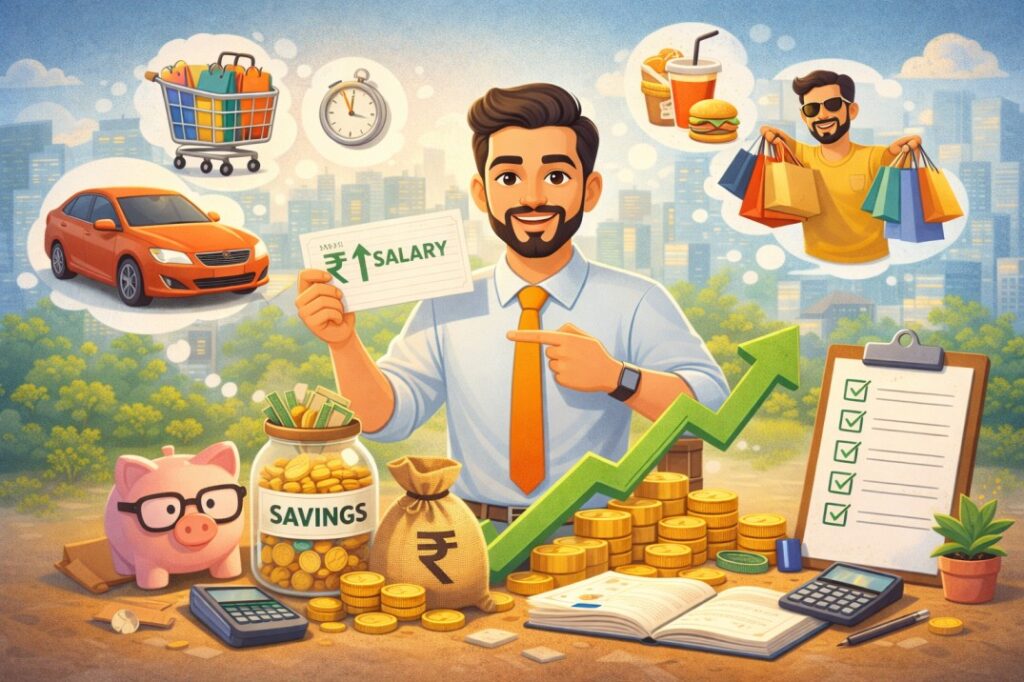
Getting a salary hike feels great.
- You worked hard
- You waited for recognition
- Your income finally increased
Naturally, your first thought is:
👉 “Now I can upgrade my lifestyle”
- Better phone
- More eating out
- Shopping without thinking
- Upgrading your lifestyle
But within a few months, many people realise something shocking:
👉 Despite earning more, they are still not saving money.
This is called lifestyle inflation.
It happens when your expenses increase along with your income—leaving you with little or no financial progress.
In India, this is very common, especially among salaried employees in cities.
The good news is:
👉 You can enjoy your salary hike AND still grow your savings—if you manage it properly.
In this guide, you will learn:
- Why lifestyle inflation happens
- Real-life examples
- Practical steps to avoid it
- A simple system to manage your increased income
What Is Lifestyle Inflation?
Lifestyle inflation means:
👉 Increasing your spending as your income increases.
Example:
Before hike:
- Salary → ₹30,000
- Expenses → ₹25,000
- Savings → ₹5,000
After hike:
- Salary → ₹45,000
- Expenses → ₹40,000
- Savings → ₹5,000
👉 Income increased, but savings did not.
Real Experience: When Salary Increased but Savings Didn’t
When my income increased for the first time, I felt financially free.
I started:
- ordering food more often
- upgrading gadgets
- spending without tracking
It didn’t feel wrong.
Because:
👉 “I am earning more now”
But after a few months:
- My expenses increased significantly
- Savings stayed almost the same
That’s when I realised:
👉 My lifestyle improved, but my financial situation did not.
The turning point came when I decided:
👉 Not to increase my lifestyle immediately after income growth.
Instead:
- I fixed a savings amount
- controlled unnecessary spending
- planned expenses
Within a few months:
👉 My savings improved significantly.
Why Lifestyle Inflation Happens
1. Reward Mentality
You feel:
👉 “I deserve this”
After working hard.
2. Social Pressure
You see:
- colleagues upgrading lifestyle
- friends spending more
3. Lack of Financial Planning
No clear system leads to uncontrolled spending.
4. Easy Spending (UPI Effect)
Spending becomes effortless.
5. Delayed Financial Thinking
People think:
👉 “I’ll save later”
Hidden Dangers of Lifestyle Inflation
❌ No Increase in Savings
Income grows, but wealth doesn’t.
❌ Higher Financial Stress
More expenses = more pressure.
❌ No Emergency Backup
Risk increases.
❌ Dependency on Salary
No financial freedom.
Step-by-Step Plan to Avoid Lifestyle Inflation
Step 1: Don’t Change Lifestyle Immediately
After salary hike:
👉 Wait at least 2–3 months
Step 2: Increase Savings First
Before increasing expenses:
👉 Increase savings percentage
Example:
- Earlier savings → ₹5,000
- After hike → ₹10,000
Step 3: Fix a Budget System
Without a system, money disappears.
Learn:
👉 https://savewithrupee.com/50-30-20-rule-of-budgeting-explained-for-indians/
Step 4: Track New Expenses Carefully
Track:
👉 where extra money is going
Start:
👉 https://savewithrupee.com/how-i-track-every-rupee-i-spend-my-simple-real-indian-method-2025/
Step 5: Upgrade Lifestyle Slowly
Instead of sudden changes:
👉 Gradual upgrades
Step 6: Avoid Unnecessary EMIs
Don’t convert higher income into higher debt.
Step 7: Increase Income Streams
Use extra income to grow more income.
Explore:
👉 https://savewithrupee.com/passive-income-ideas-in-india-2025-12-real-ways-to-earn-while-you-sleep/
Real Example: ₹30,000 to ₹45,000 Salary
Wrong Approach
- Increased spending → ₹40,000
- Savings → ₹5,000
Smart Approach
- Increased savings → ₹10,000
- Controlled expenses → ₹30,000
👉 Wealth grows.
Simple Rule to Follow After Salary Hike
👉 “Increase savings first, then expenses”
This one rule can change your financial future.
How Much Should You Increase Spending?
Suggested Rule:
- 50% → Savings & investments
- 30% → Lifestyle upgrade
- 20% → Goals
Practical Tips to Stay Disciplined
✔ Automate Savings
Transfer money immediately after salary.
✔ Avoid Comparing Lifestyle
Focus on your financial goals.
✔ Set Financial Targets
Example:
- Save ₹1 lakh
- Invest regularly
✔ Limit Impulse Spending
Control small expenses.
Emotional Side of Lifestyle Inflation
It’s not just money—it’s psychology.
You feel:
- happiness
- excitement
- freedom
But without control:
👉 it leads to long-term problems.
Long-Term Impact of Controlling Lifestyle Inflation
✔ Higher Savings
✔ Financial Security
✔ Investment Growth
✔ Less Stress
Frequently Asked Questions
1. Should I enjoy my salary hike?
Yes, but with control.
2. How much should I save after a hike?
Increase savings significantly.
3. Is it wrong to upgrade lifestyle?
No, but do it slowly.
4. How do I control spending?
Track expenses and set limits.
5. Can I invest after a salary hike?
Yes, it is the best time to start.
6. What is the biggest mistake after a hike?
Increasing expenses immediately.
7. How long should I wait before upgrading lifestyle?
At least 2–3 months.
Final Thoughts
A salary hike is an opportunity.
But it can either:
👉 Improve your financial future
👉 Or increase your expenses
The difference lies in your habits.
You don’t need to:
- stop enjoying life
- avoid spending completely
You just need to:
👉 spend consciously
Personal Insight
One of the biggest lessons I learned was this:
👉 Income growth does not guarantee financial growth.
When I got my first salary increase:
- I increased spending
- I didn’t track expenses
- I didn’t plan savings
Result:
👉 No real progress
But when I changed:
- increased savings first
- controlled expenses
- tracked money
Within months:
👉 my financial situation improved
👉 The key was not earning more
👉 It was managing better
