
A simple, practical 2025 Indian guide to improving your credit score quickly. Learn step-by-step actions, common mistakes, real stories, tools, tips, and proven ways to increase your CIBIL score fast.
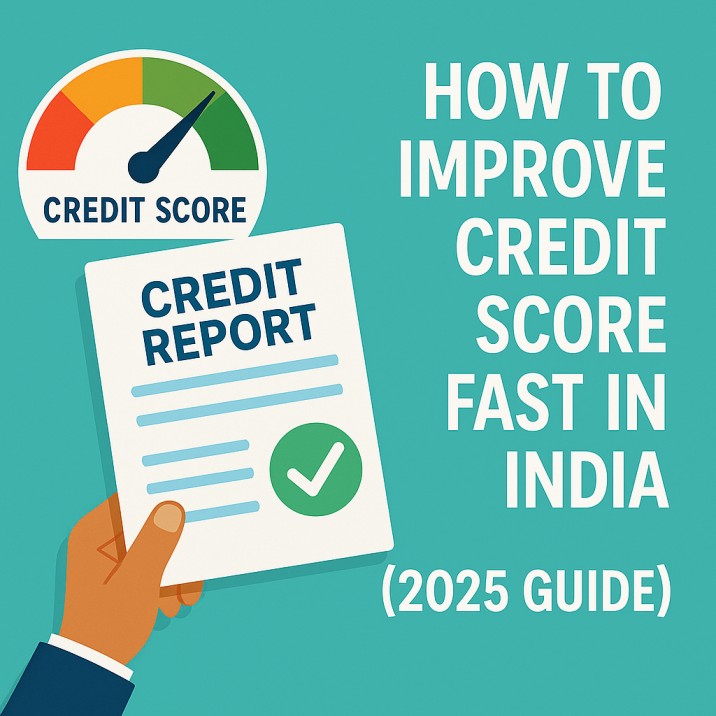
🌟 Strong Intro (No Questions)
A good credit score has become one of the most important financial assets for Indian families in 2025. Whether you want a home loan, car loan, credit card, personal loan, or even a balance transfer, lenders now judge your creditworthiness primarily through your credit score. The higher your score, the lower your interest rate—and the smoother your approval experience.
The best part?
Improving your credit score is completely under your control.
With the right habits, disciplined repayments, and smart usage patterns, you can increase your CIBIL score faster than most people think.
This guide breaks down everything in a simple, Indian, step-by-step format so you can start improving your score today. These steps work beautifully alongside helpful money-management guides like How to Save Money on a Small Salary, Hidden Bank Charges You Must Avoid and 10 Lifestyle Changes That Save Big Money.
📌 Key Takeaways
- Your credit score affects loan approval, interest rates, and overall financial freedom.
- In 2025, lenders prefer scores above 750.
- Your repayment behaviour has the biggest impact.
- Even small mistakes—like high credit card utilisation—can harm your score.
- You can improve your score within 60–120 days with consistent habits.
- Paying EMIs on time is the #1 factor influencing your CIBIL score.
- Avoiding unnecessary loans and maintaining a low credit utilisation ratio can boost your score quickly.
- Checking your credit report regularly helps identify errors early.
📚 Table of Contents
- 📊 What Is a Good Credit Score in India?
- 🔍 Why Your Score Dropped
- 🪜 Step-By-Step Guide to Improve Your Credit Score
- 👪 Real Indian Stories
- 📊 Comparison Tables
- 👍 Pros of a High Credit Score
- ❌ Common Mistakes Indians Make
- 🛠 Tools & Apps to Track Credit Score
- 🎯 Who Should Improve Their Score Quickly
- ✔️ Quick Action Checklist
- ❓ FAQs
- ⭐ Editor’s Pick
- 🏁 Final Summary
📊 What Is a Good Credit Score in India?
A credit score (300 to 900) indicates your financial reliability. In 2025, lenders follow this:
| Score Range | Meaning | Chances of Approval |
|---|---|---|
| 800–900 | Excellent | Very high |
| 750–799 | Good | High |
| 700–749 | Average | Moderate |
| 600–699 | Low | Difficult |
| Below 600 | Poor | High rejection |
To understand the basics deeply, check Credit Score in India – Beginner’s Guide.
🔍 Why Your Score Dropped
The most common reasons:
- Late EMI or credit card payments
- High credit card utilisation
- Multiple loan applications
- Closing old accounts
- Unpaid dues or small forgotten charges
- Errors in credit report
- Co-signing loans for others
Similar to how people unknowingly lose money through hidden charges (see Hidden Bank Charges You Must Avoid), many borrowers damage their credit without realising it.
🪜 Step-By-Step Guide to Improve Your Credit Score Quickly (2025)
⭐ Step 1: Pay All EMIs & Credit Card Bills on Time
This is the biggest factor affecting your credit score.
- Set reminders
- Enable auto-pay
- Never wait for the “last day”
Paying on time for just 3 months improves CIBIL significantly.
⭐ Step 2: Reduce Credit Card Utilisation (Below 30%)
If your card limit is ₹1,00,000:
Spend not more than ₹30,000 per month.
High utilisation signals financial stress to lenders.
⭐ Step 3: Do Not Apply for Too Many Loans or Cards
Every application creates a “hard inquiry”, which reduces your score temporarily.
Borrow strategically. Before considering extra credit, read Personal Loan vs Bank Overdraft vs Loan Apps to choose wisely.
⭐ Step 4: Pay Off Small Dues & Pending Charges
Sometimes even a forgotten ₹200 charge can pull down your score.
This is similar to the money leaks explained in 5 Money Mistakes Indians Make in Their 20s.
⭐ Step 5: Don’t Close Old Credit Accounts
Old accounts build a long credit history.
Closing them shortens your credit age → score drops.
⭐ Step 6: Maintain a Healthy Mix of Credit
Good mix:
- 1–2 credit cards
- 1 long-term loan (home/auto)
- 1 personal loan (optional)
Bad mix:
- 3–4 personal loans
- Too many short-term borrowings
⭐ Step 7: Check Your Credit Report for Errors
Common errors:
- wrong PAN linkage
- incorrect outstanding loan
- duplicate entries
- unknown loan enquiries
- old closed loans still showing “active”
Raise disputes immediately.
⭐ Step 8: Increase Card Limit Instead of Reducing Spending
If your utilisation is high, request a credit limit increase.
It improves your utilisation ratio instantly.
⭐ Step 9: Pay Credit Card Bills in Full (Not Minimum Due)
Paying only minimum due triggers:
- interest
- penalty
- lower score
Pay full bills every month.
⭐ Step 10: Build Financial Discipline
Use budgeting apps, expense tracking tools, and saving strategies.
For smarter planning, check:
- Best Free Budgeting Apps in India
- Why a Family Budget Plan Is Important
- How to Save Your First ₹1 Lakh
👪 Real Indian Stories
👨🔧 Story 1: Sandeep, Pune – Score Jumped From 612 → 752 in 4 Months
- Cleared two old pending charges
- Reduced credit utilisation to 28%
- Paid all EMIs on time
👩💼 Story 2: Neha, Delhi – Improved Score in 45 Days
- Stopped applying for multiple loans
- Paid off one small personal loan
- Increased credit card limit
🧓 Story 3: Sharma Couple – Score Drop Due to Ignored Credit Card
They forgot a ₹450 annual-fee charge. Score dropped from 780 → 705.
Once paid, it restored in 60 days.
📊 Comparison Tables
Factors Affecting Your Credit Score
| Factor | Impact Level |
|---|---|
| Repayment history | Very high |
| Credit utilisation | High |
| Credit age | Medium |
| Credit mix | Medium |
| Loan enquiries | Medium |
| Errors/disputes | High |
Fastest Ways to Improve Score (2025)
| Method | Speed of Impact |
|---|---|
| Timely EMIs | Fast |
| Reduce utilisation | Very fast |
| Pay pending dues | Fast |
| Stop new loan applications | Moderate |
| Correct credit report errors | Fast |
👍 Pros of a High Credit Score
- Faster loan approvals
- Lower interest rates
- Higher credit limits
- Better card rewards
- Easier balance transfers
- Negotiation power with banks
Understanding interest savings is similar to planning with Best Bank Accounts to Save Money.
❌ Common Mistakes Indians Make
- Paying only minimum due
- Using 70%–100% of credit limit
- Taking too many personal loans
- Applying for loans repeatedly
- Ignoring old charges
- Closing old credit lines prematurely
To avoid more money mistakes, refer to Hidden Bank Charges You Must Avoid.
🛠 Tools & Apps to Track Your Credit Score
- Credit score apps
- Banking apps with credit dashboards
- Best budgeting apps like those in Best Free Budgeting Apps in India
- EMI calculators
- Expense managers
🎯 Who Should Improve Their Score Quickly?
- Anyone planning to take a home loan
- Borrowers wanting to refinance
- People applying for credit cards
- Individuals denied loans recently
- Those whose score dropped suddenly
- Young earners starting their credit journey
If you’re building financial discipline, also see 10 Lifestyle Changes That Save Money.
✔️ Quick Action Checklist
- Pay EMIs & bills on time
- Reduce card utilisation to <30%
- Don’t apply for new loans
- Pay pending dues
- Check credit report
- Correct errors
- Increase credit limit
- Maintain long credit history
- Track expenses regularly
❓ FAQs
1. How long does it take to improve credit score?
Usually 45–120 days with consistent habits.
2. Does checking my score reduce it?
No. Soft checks don’t affect your score.
3. Does closing a credit card reduce score?
Yes, if it’s an old card.
4. What is the fastest way to improve?
Reduce utilisation + pay dues on time.
5. Can personal loans reduce my score?
Only if taken frequently or repaid late.
⭐ Editor’s Pick – Smartest Credit Score Strategy (2025)
For fast improvement:
- Reduce utilisation below 30%
- Pay all dues for 3 months on time
- Increase card limit
- Fix any report errors
- Avoid new loan applications
- Maintain at least one old card
This combination works extremely fast.
🏁 Final Summary
Improving your credit score in India is easier than most people think. With the right steps—timely payments, low card utilisation, smart credit behaviour, and error-free reports—you can boost your score quickly in 2025. A higher score unlocks better loans, lower EMIs, and more financial freedom.
Combine these habits with budgeting and saving strategies from guides like How to Save Your First ₹1 Lakh and you’ll build a strong, stable financial future.
Author Insight
In my own experience managing monthly expenses in India, I realized that the biggest financial problems were not due to low income, but due to lack of planning. For example, when my monthly income was around ₹25,000, I often ended up spending almost everything without saving anything at the end of the month.”
“I started tracking my expenses daily using a simple notebook. Within one month, I noticed that small, unnecessary expenses like frequent online orders and unplanned spending were taking a large portion of my income.”
“By making small changes—like setting a fixed budget for groceries, limiting online purchases, and saving at least ₹2,000 at the beginning of each month—I was able to reduce financial stress and slowly build better control over my money.” “These are simple and practical methods that any Indian household can follow without needing complex financial knowledge.”
Research Sources
- Reserve Bank of India – Financial Reports
- SEBI Investor Education
- Economic Times – Personal Finance
- Investopedia – Budgeting & Finance Basics
Disclaimer: This article is based on personal experience and is for educational purposes only. It does not constitute financial, investment, or legal advice. Readers are advised to do their own research or consult a qualified professional before making any financial decisions.