
A complete and practical monthly budget guide for Indian families earning ₹30,000. Includes real stories, emotional insights, step-by-step plans, internal links, and trusted government resources.
🔥 Strong Intro (No Questions)
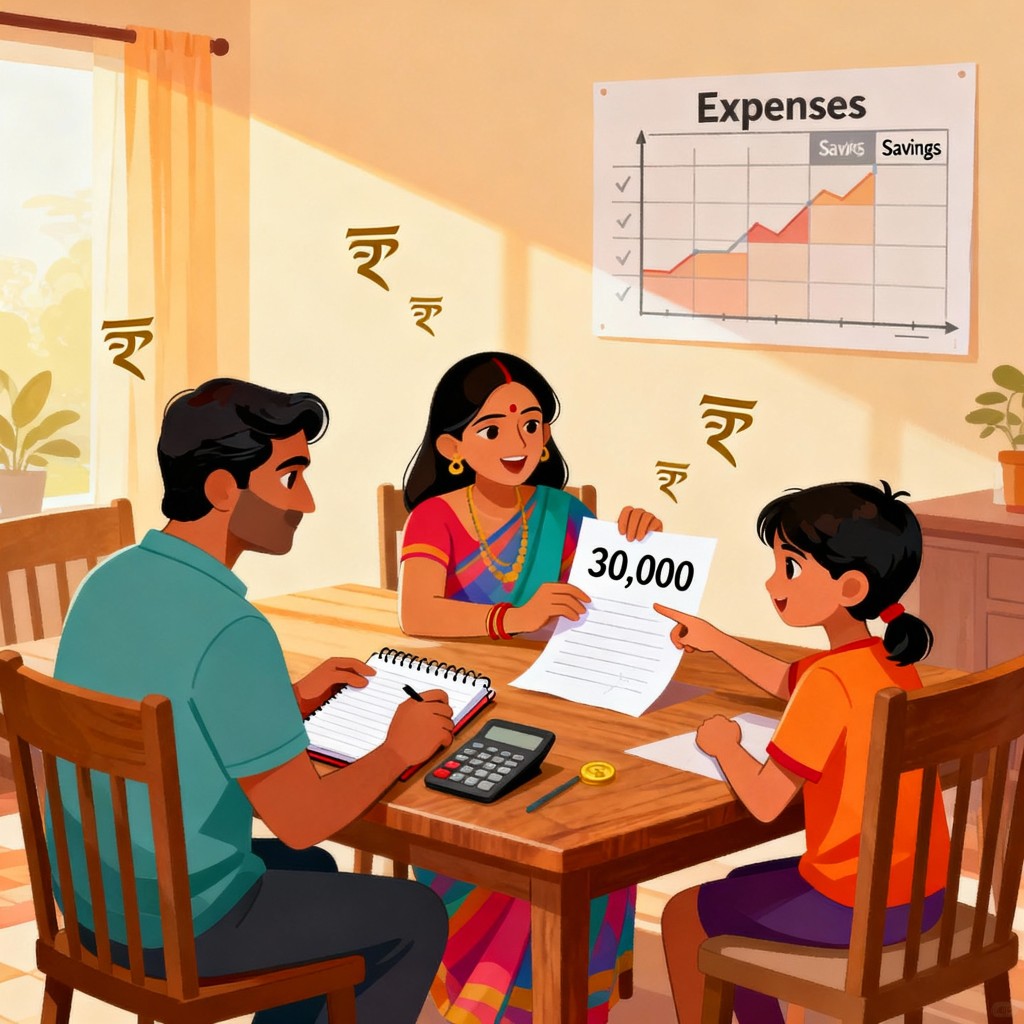
Managing a family on a ₹30,000 income requires discipline, teamwork, and incredible emotional strength. Every rupee matters, every choice counts, and every unexpected event tests your stability. Yet countless Indian families run their homes beautifully with this income through smart planning and strong habits.
This guide is designed for real Indian households—practical, simple, and written with honesty and empathy. You’ll find step-by-step budgeting, relatable stories, comparison tables, internal SaveWithRupee links, and external trusted government references.
⭐ Key Takeaways
- A ₹30,000 income can support a small family with carefully structured budgeting.
- Budgeting works best when done weekly rather than monthly.
- Savings must be automated every month—even if it’s small.
- UPI tracking prevents silent money leaks.
- Emotional discipline is more important than financial tools.
📚 Table of Contents (Numbered)
- 🧾 Understanding Life on a ₹30,000 Income
- 📊 Recommended Budget Breakdown (No Chart)
- 🧮 Step-by-Step Monthly Budget Plan
- 🏡 Real Indian Family Stories
- 🔍 Needs vs Wants Comparison Table
- 👍 Pros & Cons of a 30k Budget
- ⚠ Common Mistakes Families Make
- 🛠 Tools, Apps & Government Resources
- 🔗 Internal & External Helpful Links
- 👪 Who This Guide Is For
- 📌 Quick 1-Page Action Plan
- ❓ FAQs
- 🧩 Final Summary
🧾 1. Understanding Life on a ₹30,000 Income
A ₹30,000 family income often comes with:
- A single earning member
- School-going children
- Monthly rent pressure
- Groceries rising every year
- Medical unpredictability
- Transport costs
- Family expectations
Yet families with this income are often the most disciplined money managers in India.
📊 2. Recommended Budget Breakdown (No Chart)
A practical split for ₹30,000 monthly income:
| Category | Amount (₹) | % |
|---|---|---|
| Rent + Utilities | 9,000 | 30% |
| Groceries | 6,000 | 20% |
| Transport | 2,000 | 6.7% |
| School/Family Expenses | 4,000 | 13.3% |
| Medical | 2,000 | 6.7% |
| Savings | 3,000 | 10% |
| Emergency Fund | 2,000 | 6.7% |
| Personal/Other | 2,000 | 6.7% |
This structure balances survival + stability + future planning.
🧮 3. Step-by-Step Monthly Budget Plan
🗓️ 3.1 Fix Your “Money Day”
Choose 1st or 2nd for:
- Paying rent
- Allocating categories
- Sending savings
- Planning family expenses
- Reviewing previous month
🛒 3.2 Weekly Grocery Budget
Weekly planning prevents overbuying and wastage.
💰 3.3 Automate Savings
Even ₹500–₹3,000 is life-changing.
Guide:
How to Save ₹5000 Every Month Without Sacrifice
📱 3.4 Track UPI Daily
Most leaks happen here.
💳 3.5 Avoid Credit Cards
Interest + impulsive swipes = small salary disaster.
🧺 3.6 Use Sinking Funds
Divide money monthly for:
- School fees
- Festivals
- Rent increases
- Repairs
🚑 3.7 Emergency Fund Before Investments
Start with ₹1,000–₹2,000/month.
Guide:
Emergency Fund Guide for Indian Families
🏡 4. Real Indian Family Stories
⭐ Story 1: Chennai Auto Driver’s Family
Income: ₹28,000
They saved ₹1,800/month by following:
- Weekly groceries
- No food delivery
- Strict UPI tracking
⭐ Story 2: Pune Retail Worker Supporting Two Kids
Income: ₹30,500
She used the 50-30-20 structure and built a ₹20,000 emergency fund.
Guide:
50-30-20 Rule for Indians
⭐ Story 3: Mumbai Migrant Family
Income: ₹29,000
Controlled spending by:
- Cash-only for food
- Low-cost recharge plans
- Monthly expense diary
Authority reference (inflation data):
https://www.mospi.gov.in/
🔍 5. Needs vs Wants Comparison Table
| Needs | Wants |
|---|---|
| Rent | Eating out |
| Groceries | OTT subscriptions |
| School fees | Delivery apps |
| Medicine | Clothing/fashion |
| Transport | Impulse shopping |
Indian households must master this distinction.
👍 6. Pros & Cons of a 30k Budget
Pros
- Very disciplined lifestyle
- Helps cut unnecessary habits
- Better long-term stability
- Strong family cooperation
Cons
- Tight month-end
- No flexibility for surprises
- Festive seasons become expensive
- High-rent areas inaccessible
⚠ 7. Common Mistakes Families Make
- No weekly budget
- Grocery overbuying
- Using credit cards for basics
- Subscriptions they don’t use
- Overspending during festivals
Recharge savings:
How to Save Money on Recharge Plans
🛠 8. Tools, Apps & Government Resources
Budgeting Apps
- Monefy
- Walnut
- Google Sheets
- Money Manager
Trusted Government Resources
- RBI Consumer Awareness: https://rbi.org.in
- SEBI Investor Education: https://www.sebi.gov.in
- Govt Schemes: https://www.india.gov.in
- MOSPI Inflation Tracker: https://mospi.gov.in
🔗 9. Internal & External Helpful Links
Internal SaveWithRupee Guides
External Trusted References
- TRAI Recharge Plans: https://www.trai.gov.in
- India Govt Scheme Portal: https://www.india.gov.in
👪 10. Who This Guide Is For
This guide helps:
- Families earning ₹25k–₹35k
- Parents with school-going kids
- Couples with single income
- Migrant workers in cities
- Anyone struggling with UPI overspending
📌 11. Quick 1-Page Action Plan
- Fix Money Day
- Allocate essentials first
- Weekly groceries
- Track UPI daily
- Save ₹1,000–₹3,000
- Build festival fund
- Review monthly
- Avoid credit cards
❓ 12. FAQs
Q1: Can a ₹30k income support a family?
Yes—with strict planning.
Q2: How much can I realistically save?
₹1,500–₹3,000 depending on rent.
Q3: Should I invest with a low income?
Yes—start with ₹500 SIP (SEBI-approved).
https://www.sebi.gov.in
Q4: What if rent is too high?
Move slightly outside city centres or share accommodation.
🧩 Final Summary
A ₹30,000 income can still create a stable and dignified life when handled with structure, weekly planning, UPI discipline, and consistent savings. Indian families are resilient, strong, and capable of running homes with extraordinary financial intelligence.
Your budget doesn’t need perfection—only consistency.
Author Insight
In my own experience managing monthly expenses in India, I realized that the biggest financial problems were not due to low income, but due to lack of planning. For example, when my monthly income was around ₹25,000, I often ended up spending almost everything without saving anything at the end of the month.”
“I started tracking my expenses daily using a simple notebook. Within one month, I noticed that small, unnecessary expenses like frequent online orders and unplanned spending were taking a large portion of my income.”
“By making small changes—like setting a fixed budget for groceries, limiting online purchases, and saving at least ₹2,000 at the beginning of each month—I was able to reduce financial stress and slowly build better control over my money.” “These are simple and practical methods that any Indian household can follow without needing complex financial knowledge.”
Research Sources
- Reserve Bank of India – Financial Reports
- SEBI Investor Education
- Economic Times – Personal Finance
- Investopedia – Budgeting & Finance Basics
Disclaimer: This article is based on personal experience and is for educational purposes only. It does not constitute financial, investment, or legal advice. Readers are advised to do their own research or consult a qualified professional before making any financial decisions.