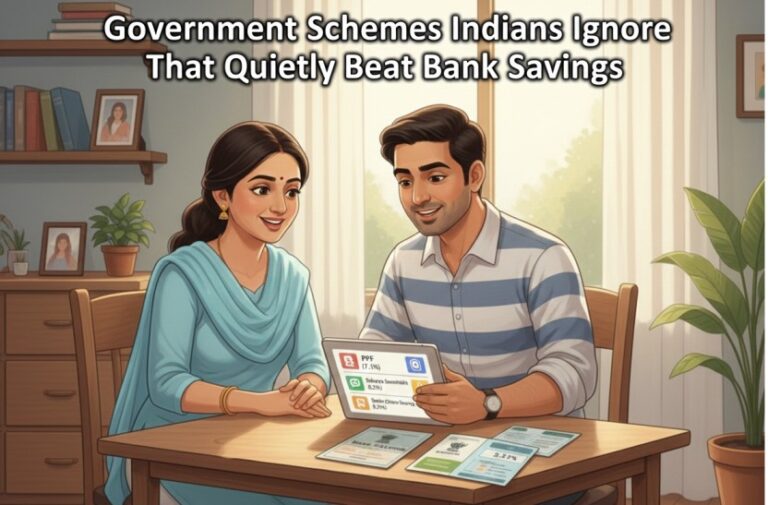

A complete 2025 guide to India’s senior citizen pension schemes. Learn monthly benefits, eligibility, documents, application process, comparison, and real-life examples for Indian families.

🌟 Strong Intro (No Questions)
Financial security becomes the biggest priority after retirement, especially for senior citizens across India who depend on fixed income, family support, and savings accumulated over the years. Rising medical costs, daily expenses, electricity bills, travel, and household spending make it essential for every elderly person to have a stable and predictable monthly pension. In 2025, both Central and State Governments offer multiple pension schemes designed to support senior citizens with dignity, independence, and financial confidence.
This guide breaks down the best senior citizen pension schemes in India, along with monthly benefit amounts, eligibility rules, documents required, and a super-simple application process anyone can follow. It also includes real-life stories, comparisons, and practical budgeting tips that align perfectly with financial guides like Emergency Fund Planning, Daily Money Hacks and Family Budgeting.
📌 Key Takeaways
- Senior citizens in India get pensions ranging from ₹1000 to ₹5000+ per month depending on scheme & state.
- Government schemes include social pension + old-age security + insurance benefits.
- Family dependents and caretakers can also apply on behalf of elders.
- Online and offline application options are available.
- Pension benefits deposit directly into the bank account every month.
- Proper documentation ensures fast approval.
📚 Table of Contents
- 🎉 Why Senior Pension Schemes Matter in 2025
- ⭐ Best Senior Citizen Pension Schemes in India
- 💰 Monthly Benefits Breakdown
- 🔍 Eligibility Criteria
- 📄 Required Documents
- 🪜 Easy Step-by-Step Application Process
- 👪 Real-Life Indian Stories
- 📊 Comparison Tables
- 👍 Pros & Cons of Senior Pension Schemes
- ❌ Common Mistakes to Avoid
- 🛠 Tools & Money-Saving Apps for Senior Citizens
- 🎯 Who These Schemes Are For
- ✔️ Quick Action Checklist
- ❓ FAQs
- 🏁 Final Summary
🎉 Why Senior Pension Schemes Matter in 2025
The number of senior citizens in India is growing fast, and with higher living costs, relying only on children or savings is no longer enough. A stable monthly pension:
- reduces family burden
- supports medical expenses
- ensures self-respect
- helps elders stay independent
- protects against emergencies
Budgeting knowledge is equally important, which connects well with guides like Save ₹5000 Every Month and Money Hacks.
⭐ Best Senior Citizen Pension Schemes in India (2025)
⭐ 1. Indira Gandhi National Old Age Pension Scheme (IGNOAPS)
Monthly Pension: ₹200 – ₹500 (varies by state + central share)
Age Requirement: 60+
Special Benefits: Higher pension after age 80
⭐ 2. State-Level Old Age Pension Schemes
Each state provides additional pension.
Monthly pension varies:
- Tamil Nadu: ₹1000
- Delhi: ₹2000
- Rajasthan: ₹1000–₹1500
- Karnataka: ₹1000–₹2000
⭐ 3. Atal Pension Yojana (APY)
Monthly Pension: ₹1000 to ₹5000 (based on contribution)
Eligibility: Anyone under 40 can join & receive pension after 60
Tax Benefit: Available
Best long-term pension option for those planning years ahead.
⭐ 4. Pradhan Mantri Vaya Vandana Yojana (PMVVY)
Interest Rate: 7%–8% approx.
Pension Mode: Monthly, quarterly, yearly
Age: 60+
Provider: LIC
Great for senior citizens wanting guaranteed income.
⭐ 5. National Pension System (NPS) – Senior Tier I/II
Benefits:
- Corpus + monthly pension
- Low management charges
- Safe long-term option
⭐ 6. Various State Social Security Schemes
Examples:
- West Bengal Taposili Bandhu
- Kerala Social Security Scheme
- Andhra Pradesh YSR Pension Kanuka
💰 Monthly Benefits Breakdown
| Scheme | Monthly Pension Amount |
|---|---|
| IGNOAPS | ₹200–₹500 |
| State Pensions | ₹1000–₹3000 |
| PMVVY | Depends on deposit amount |
| APY | ₹1000–₹5000 |
| NPS | Variable based on investment |
🔍 Eligibility Criteria (General Overview)
Eligibility varies by scheme but common rules include:
- Age 60+ years
- Indian citizenship
- Income below state limit
- Belonging to BPL or low-income category (for many schemes)
- Not receiving another pension (some schemes allow multiple types)
Families should also maintain clean financial records—guides like Credit Score Basics help maintain good documentation.
📄 Required Documents
- Aadhaar card
- PAN card (optional in some states)
- Age proof
- Address proof
- Bank passbook
- Income certificate / Ration card
- Passport-size photo
- Mobile number
🪜 Easy Step-by-Step Application Process
⭐ Step 1 — Choose the scheme
Decide between central or state schemes.
⭐ Step 2 — Visit the nearest office
Options include:
- Municipality
- Panchayat office
- District Social Welfare Office
- CSC (Common Service Centre)
- State government portal
⭐ Step 3 — Fill the pension form
Provide basic details:
- name
- age
- address
- bank account
- income certification
⭐ Step 4 — Attach documents
Ensure clear photocopies of required documents.
⭐ Step 5 — Verification Process
Government officials verify:
- age
- income
- residence
⭐ Step 6 — Start receiving pension
Once approved, money gets deposited monthly into bank accounts.
A zero-balance or simple account works best—refer to Best Bank Accounts.
👪 Real-Life Indian Stories
👵 Shanta Devi, Bihar (Age 68)
Received state pension of ₹1000/month → helps with medicines + groceries.
👴 Ramanathan, Tamil Nadu (Age 72)
Uses PMVVY for steady monthly income → gives financial confidence.
👵 Fatima Begum, Hyderabad (Age 65)
Daughter applied on her behalf → pension approval in 28 days.
👴 Kishore Patel, Gujarat (Age 62)
APY contribution earlier → now gets steady pension post-retirement.
📊 Comparison Tables
Central vs State Pension Schemes
| Type | Monthly Amount | Difficulty | Best For |
|---|---|---|---|
| Central (IGNOAPS) | ₹200–₹500 | Easy | Below-poverty households |
| State | ₹1000–₹3000 | Medium | Most senior citizens |
| APY | ₹1000–₹5000 | Easy | People planning early |
| PMVVY | Flexible | Medium | Those with savings corpus |
Which Scheme Fits Which Person
| Profile | Best Scheme |
|---|---|
| Low-income elder | IGNOAPS + State Pension |
| Middle-class senior | PMVVY / NPS |
| Working adult planning retirement | APY |
| Widows / differently abled seniors | State schemes |
👍 Pros & Cons of Senior Pension Schemes
✔️ Pros
- Monthly income support
- Helps with medicines & bills
- Provides social security
- Reduces pressure on family
- Easy application process
- Direct bank transfer
❌ Cons
- Low pension in some states
- Delays in verification
- Documentation needed
- Bank account required
❌ Common Mistakes People Make While Applying
- Submitting incorrect proof
- Not updating Aadhaar–mobile link
- Not checking scheme eligibility
- Applying late
- Using inactive bank accounts
- Not keeping photocopies
Avoiding financial errors is similar to avoiding mistakes explained in Money Mistakes in 20s.
🛠 Tools & Money-Saving Apps for Senior Citizens
- Spendee (track expenses)
- PhonePe/UPI (hassle-free payments)
- Electricity saving apps (reduce monthly bills)
- SMS alerts for pension deposits
- Google Sheets (track medical expenses)
Combine these with saving habits from Daily Money Hacks.
🎯 Who These Schemes Are For
- Senior citizens aged 60+
- Low-income families
- Widows
- Differently abled elders
- Retired workers
- People needing monthly income support
- Families supporting elderly parents
✔️ Quick Action Checklist
- Confirm eligibility
- Gather documents
- Visit nearest CSC/office
- Fill pension form
- Verify bank account status
- Track application updates
- Keep copies for future
❓ FAQs
1. How much pension does a senior citizen get?
₹200–₹3000 depending on scheme & state.
2. Can someone else apply on their behalf?
Yes, family members can assist.
3. Do all seniors automatically get pension?
No—application is required.
4. Which scheme gives maximum pension?
APY (₹5000) and PMVVY (variable).
5. Can I receive multiple pensions?
Some states allow combinations; some don’t.
🏁 Final Summary
Senior citizen pension schemes in India provide essential financial stability for elders who depend on monthly income. With simple eligibility rules, clear documentation, and easy online/offline application steps, every Indian senior citizen can benefit from these government-backed programs. When combined with smart savings habits, budgeting, and better financial planning, pension income becomes a strong pillar of support for older adults and their families.
Author Insight
In my own experience managing monthly expenses in India, I realized that the biggest financial problems were not due to low income, but due to lack of planning. For example, when my monthly income was around ₹25,000, I often ended up spending almost everything without saving anything at the end of the month.”
“I started tracking my expenses daily using a simple notebook. Within one month, I noticed that small, unnecessary expenses like frequent online orders and unplanned spending were taking a large portion of my income.”
“By making small changes—like setting a fixed budget for groceries, limiting online purchases, and saving at least ₹2,000 at the beginning of each month—I was able to reduce financial stress and slowly build better control over my money.” “These are simple and practical methods that any Indian household can follow without needing complex financial knowledge.”
Research Sources
- Reserve Bank of India – Financial Reports
- SEBI Investor Education
- Economic Times – Personal Finance
- Investopedia – Budgeting & Finance Basics
Disclaimer: This article is based on personal experience and is for educational purposes only. It does not constitute financial, investment, or legal advice. Readers are advised to do their own research or consult a qualified professional before making any financial decisions.