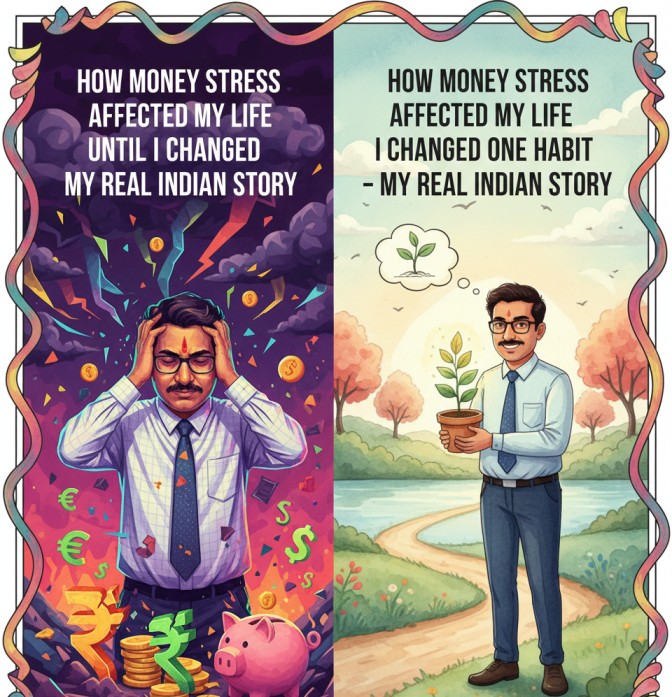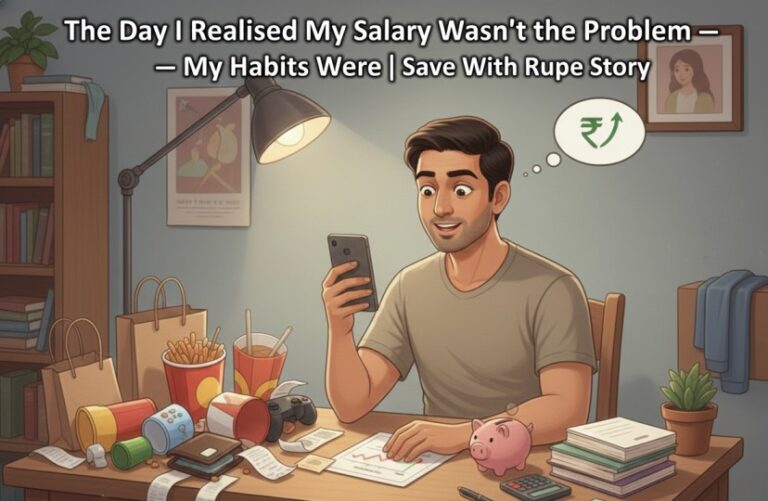

In 2026, SaveWithRupee isn’t just a finance blog—it’s a reflection of real middle-class struggles. This is my honest story about why I started SaveWithRupee, the mistakes I made with money, and what motivated me to help Indian families take control of their finances.
Why I Started SaveWithRupee
My Real Motivation and Journey
SaveWithRupee did not start as a business idea.
It started as frustration.
Frustration of earning every month…
and still feeling broke.
Frustration of reading financial advice that didn’t match Indian realities.
Frustration of seeing middle-class families work hard, yet constantly stressed about money.
In 2026, there are thousands of finance blogs. But when I began, I realised something important:
Most financial advice in India sounds smart—but doesn’t feel real.
That’s when SaveWithRupee was born.
The Phase Where I Felt “Salary Is the Problem”
There was a time when I believed my salary was too small.
Every month looked like this:
- Salary credited
- Bills paid
- Groceries done
- Small random expenses
- Balance almost gone
I told myself:
“Once income increases, life will be better.”
But something strange happened.
Income increased.
Stress didn’t reduce.
That’s when I realised the problem was not income alone.
It was:
- No tracking
- No structure
- No awareness
I was leaking money quietly.
That turning point is something I later explained in how I track every rupee I spend — because that simple habit changed everything.
The Moment I Understood Middle-Class Reality
One day, while reviewing my bank statement, I noticed something shocking.
No luxury purchases.
No expensive gadgets.
Yet thousands gone in small transactions.
Snacks.
Subscriptions.
Convenience charges.
Impulse buys.
That’s when I realised something powerful:
Middle-class Indians don’t lose money through big mistakes.
They lose money through small, repeated habits.
And nobody talks about that honestly.
Financial advice online mostly says:
- “Invest aggressively.”
- “Earn more.”
- “Buy assets.”
But what about:
- Managing ₹25,000 salary?
- Saving ₹1,000 monthly?
- Running a family peacefully?
That gap is where SaveWithRupee began.
I Didn’t Want to Create Another “Motivation” Website
I didn’t want SaveWithRupee to be:
- A flashy finance site
- A get-rich-quick blog
- A platform selling dreams
I wanted it to feel like:
- A conversation
- A practical guide
- A friend explaining money without judgement
The goal was simple:
👉 Help Indian families feel less stressed about money.
Because financial stress affects:
- Mental health
- Relationships
- Confidence
- Decision-making
And I’ve lived that stress personally.
Why the Name “SaveWithRupee”?
Because saving shouldn’t feel lonely.
We often think:
- “I’m bad with money.”
- “Others manage better.”
But the truth is:
Most people struggle silently.
SaveWithRupee means:
- We learn together
- We fix leaks together
- We grow slowly together
Not by competing.
But by improving steadily.
The Kind of Advice I Refused to Give
From the beginning, I made a few personal rules:
- No unrealistic income promises
- No guaranteed return claims
- No risky schemes
- No fear-based content
Because I know how damaging false financial hope can be.
Instead, I focused on:
- Budget clarity
- Small savings
- Slow wealth building
- Discipline over excitement
This mindset is explained clearly in how to build wealth slowly in India — because that’s what actually works for middle-class families.
The Real Motivation Behind SaveWithRupee
It wasn’t money.
It was relief.
The relief I felt when:
- I stopped overspending
- I created an emergency fund
- I built simple systems
- I reduced money arguments
That feeling is powerful.
And I realised:
If small changes helped me, they can help thousands of Indian families.
That’s the real motivation.
Lessons I Learned Before Starting SaveWithRupee
- Income alone doesn’t solve money stress
- Tracking expenses changes behaviour
- Small habits beat big plans
- Discipline builds confidence
- Wealth grows slowly, not loudly
These lessons shaped every article written here.
Even when writing about investing or SIPs, I always link it back to real life. Because without budget control, investing doesn’t work.
That’s why practical topics like how to save ₹5,000 every month without sacrifice became core parts of the platform.
What I Hope SaveWithRupee Becomes
Not just a website.
But a resource that:
- Makes budgeting less scary
- Makes investing less confusing
- Makes saving feel achievable
- Makes financial discipline normal
In 2026, financial noise is everywhere.
But clarity is rare.
I want SaveWithRupee to offer clarity.
The Journey So Far
It hasn’t been glamorous.
There were:
- Doubts
- Slow growth
- Technical struggles
- Moments of thinking, “Is this worth it?”
But every message from a reader saying:
“This helped me understand money better.”
reminds me why it started.
Not for traffic.
Not for trends.
But for impact.
What SaveWithRupee Stands For
- Practical over perfect
- Discipline over drama
- Awareness over fear
- Consistency over shortcuts
Money doesn’t need to feel overwhelming.
It needs structure.
FAQs
1. Is SaveWithRupee based on personal experience?
Yes. Most ideas come from real middle-class financial challenges and practical solutions.
2. Is this platform only for low-income families?
No. It’s for anyone who wants clarity and discipline with money.
3. Do you promote risky investments?
No. The focus is on realistic, safe, and structured growth.
4. Why focus so much on budgeting?
Because budgeting is the foundation of every financial decision.
5. What’s the long-term goal of SaveWithRupee?
To help Indian families reduce money stress and build wealth steadily.
Final Thoughts
SaveWithRupee began with one simple realisation:
Money problems are rarely about intelligence.
They’re about awareness and habits.
If this platform helps even one family:
- Avoid unnecessary debt
- Start saving early
- Sleep peacefully at night
Then it has done its job.
And the journey continues.
Author Insight
In my own experience managing monthly expenses in India, I realized that the biggest financial problems were not due to low income, but due to lack of planning. For example, when my monthly income was around ₹25,000, I often ended up spending almost everything without saving anything at the end of the month.”
“I started tracking my expenses daily using a simple notebook. Within one month, I noticed that small, unnecessary expenses like frequent online orders and unplanned spending were taking a large portion of my income.”
“By making small changes—like setting a fixed budget for groceries, limiting online purchases, and saving at least ₹2,000 at the beginning of each month—I was able to reduce financial stress and slowly build better control over my money.” “These are simple and practical methods that any Indian household can follow without needing complex financial knowledge.”
Research Sources
- Reserve Bank of India – Financial Reports
- SEBI Investor Education
- Economic Times – Personal Finance
- Investopedia – Budgeting & Finance Basics
Disclaimer: This article is based on personal experience and is for educational purposes only. It does not constitute financial, investment, or legal advice. Readers are advised to do their own research or consult a qualified professional before making any financial decisions.