

In many Indian households, parents want their children to grow up with good values about money. They want them to understand saving, avoid unnecessary spending, and become financially responsible adults. However, teaching children about money is not always easy.
Some parents try to control spending strictly, while others avoid discussing money with their children at all. Both approaches can create problems. If children feel pressured or restricted, they may develop fear or negative feelings about money. On the other hand, if they never learn about money early, they may struggle with financial decisions later in life.
The key is to teach children about money in a simple, practical, and stress-free way. Everyday situations like grocery shopping, saving pocket money, or planning small purchases can become powerful learning moments.
In India, where financial responsibilities often start early and family values play a big role, helping children understand money can prepare them for a stable future.
This article explains practical ways Indian parents can teach children the value of money without pressure while building healthy financial habits.
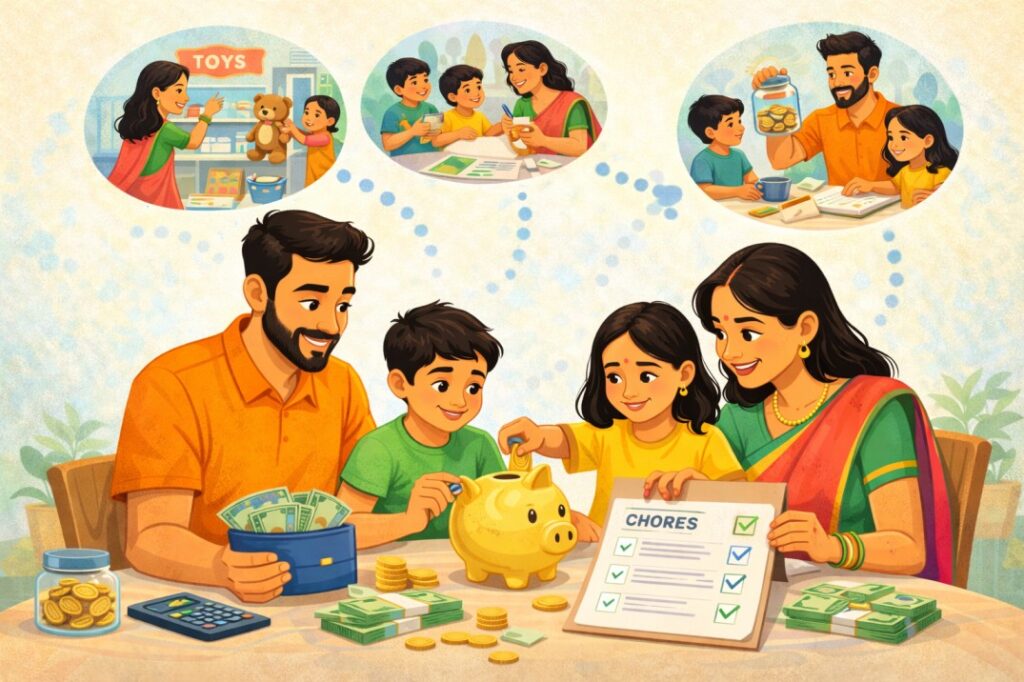
Personal Experience
“When I was growing up, my parents never forced strict financial lessons on us. Instead, they explained small things like why we saved for festivals or planned big purchases carefully.”
“Those simple conversations helped me understand that money is not just about spending—it is about making thoughtful choices.”
Why Teaching Money Skills Early Is Important
Children who learn about money early tend to develop better financial habits as adults.
Builds Responsible Spending Habits
Children understand that money should be used carefully.
Encourages Saving
Saving becomes a natural habit rather than a forced rule.
Reduces Future Financial Stress
Children who understand money grow into adults who manage finances more confidently.
Prepares Them for Real-Life Decisions
From college expenses to career choices, financial awareness helps in many life decisions.
If you want to improve your family’s financial habits overall, explore this guide on personal finance planning at
https://savewithrupee.com/the-only-money-system-an-indian-family-needs-simple-sustainable-stress-free/
Understanding How Children Learn About Money
Children do not learn financial habits from lectures. They learn by observing parents’ behaviour.
For example:
- If parents discuss savings openly, children notice it.
- If parents overspend impulsively, children notice that too.
Children often copy what they see at home.
Therefore, the most effective way to teach financial values is through daily family habits.
Step-by-Step Ways to Teach Children the Value of Money
Step 1: Start With Simple Conversations
Children do not need complicated financial explanations.
Instead, explain money in simple ways.
Example conversations:
- Why the family saves for big purchases
- Why groceries are planned carefully
- Why some things are needs and others are wants
These small discussions build awareness.
Step 2: Give Age-Appropriate Pocket Money
Pocket money can teach children how to manage small amounts of money.
Example:
| Age Group | Suggested Pocket Money |
|---|---|
| 6–10 years | ₹50–₹100 per week |
| 11–14 years | ₹200–₹300 per week |
| 15+ years | ₹500–₹1000 per month |
The goal is not the amount but the experience of managing money.
Step 3: Teach the Difference Between Needs and Wants
This is one of the most important lessons.
Examples:
| Needs | Wants |
|---|---|
| School books | New toys |
| Groceries | Junk food |
| School uniform | Expensive gadgets |
Understanding this difference helps children make smarter choices.
Step 4: Encourage Saving for Small Goals
Instead of buying everything for children, encourage them to save for something they want.
Example:
A toy costs ₹500.
If a child saves ₹50 every week, they can buy it in 10 weeks.
This teaches patience and financial planning.
Step 5: Use a Three-Jar Saving Method
Many parents use a simple system with three jars.
| Jar | Purpose |
|---|---|
| Spend | Daily spending |
| Save | Future purchases |
| Share | Helping others or donations |
This method teaches children how to divide money responsibly.
Step 6: Involve Children in Simple Family Budgeting
Children can learn by observing how families manage expenses.
For example, during grocery shopping:
- Show them how you compare prices
- Explain why you choose certain products
These small lessons are powerful.
You can also read about common spending leaks families face here:
Learn more in our guide on saving money tips at
https://savewithrupee.com/where-most-indian-households-lose-money-without-realising-hidden-leaks-explained/
Step 7: Teach the Importance of Saving for Emergencies
Children should understand that money is also saved for unexpected situations.
Families often maintain an emergency fund for medical or urgent expenses.
You can learn how to build one here:
https://savewithrupee.com/emergency-fund-for-indian-families-how-much-you-really-need-where-to-keep-it-savewithrupee/
Comparison: Different Ways Children Learn Money Skills
| Method | Effectiveness | Ease of Use |
|---|---|---|
| Lecturing about money | Low | Easy |
| Giving pocket money | Medium | Easy |
| Practical money experiences | High | Medium |
| Involving children in budgeting | Very High | Medium |
Practical experiences are usually the most effective.
Real-Life Example: A Simple Lesson in Saving
Consider a family in Chennai with a 10-year-old child.
The child wanted a cricket bat costing ₹800.
Instead of buying it immediately, the parents encouraged saving.
Plan:
| Source | Amount |
|---|---|
| Weekly pocket money | ₹100 |
| Savings period | 8 weeks |
After two months, the child bought the bat using saved money.
This experience taught the child the value of patience and financial planning.
Common Mistakes Parents Should Avoid
Using Money as Punishment
Taking away money as punishment may create negative feelings.
Giving Too Much Pocket Money
Large amounts reduce the learning experience.
Avoiding Money Conversations
Children should understand basic financial concepts.
Forcing Strict Financial Rules
Learning should feel natural rather than stressful.
Expert Tips for Parents
Be a Financial Role Model
Children learn more from behaviour than instructions.
Encourage Small Financial Decisions
Let children decide how to spend or save their pocket money.
Celebrate Good Saving Habits
Positive encouragement strengthens good habits.
Introduce Simple Investment Concepts for Teenagers
Teenagers can learn about basic savings or investments.
Explore beginner options here:
Learn more in our guide on best investment options in India at
https://savewithrupee.com/sip-for-beginners-start-with-₹500/
Pros and Cons of Teaching Children About Money Early
| Pros | Cons |
|---|---|
| Builds strong financial habits | Requires consistent effort |
| Encourages responsible spending | Needs parental guidance |
| Reduces future financial mistakes | Learning process takes time |
| Builds independence | Some children may lose interest initially |
Frequently Asked Questions
1. At what age should children learn about money?
Basic concepts can be introduced around age 5 or 6.
2. Is pocket money necessary?
Yes, it helps children practice managing money.
3. Should parents control how children spend pocket money?
Guidance is helpful, but children should also learn from their own choices.
4. How can parents teach saving habits?
Encourage children to save for small goals.
5. Should teenagers learn about investing?
Yes, basic concepts can be introduced gradually.
6. What is the biggest mistake parents make?
Avoiding financial discussions with children.
7. Can financial education improve children’s future?
Yes, early financial awareness builds lifelong money management skills.
Conclusion
Teaching children the value of money does not require strict rules or complicated financial lessons. The most effective approach is to integrate financial awareness into everyday life.
Through small conversations, pocket money management, saving for goals, and observing family budgeting, children gradually learn how money works.
When children grow up understanding the importance of spending wisely and saving consistently, they develop financial confidence that benefits them throughout their lives.
Parents who teach these lessons patiently and without pressure give their children one of the most valuable life skills—financial responsibility.
References
Reserve Bank of India – Financial Literacy Resources
https://www.rbi.org.in
SEBI Investor Education Program
https://www.sebi.gov.in
Economic Times Personal Finance Section
https://economictimes.indiatimes.com/wealth
Investopedia – Financial Education for Children
https://www.investopedia.com/budgeting-4689745
