
A complete beginner-friendly guide to managing money in India. Learn budgeting, saving, emergency funds, debt control, investing basics, real-life Indian stories, mistakes to avoid, FAQs, and safe money habits.
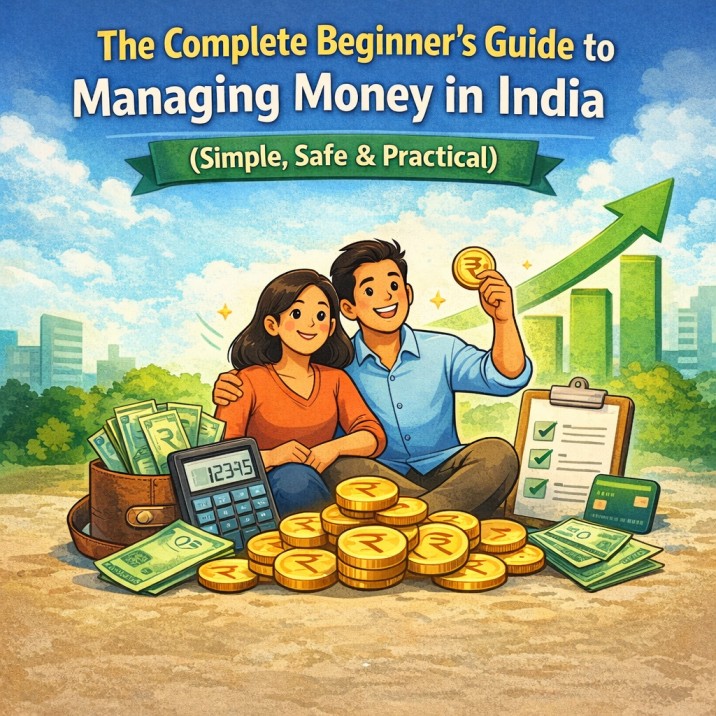
The Complete Beginner’s Guide to Managing Money in India
Managing money in India is rarely taught formally. Most people learn through trial, error, and stress. If you are earning for the first time, living paycheck to paycheck, or feeling confused about savings and investments, this guide is meant for you.
No jargon. No shortcuts. Only clear, practical steps that real Indian households follow.
Why Managing Money Feels Difficult in India
Indian families face unique financial pressures:
- Modest starting salaries
- Irregular income for many professions
- Family responsibilities
- Social expectations around festivals, weddings, and gifting
The issue is usually not income. It is the absence of a simple, repeatable system.
Once a basic system is in place, money stops feeling overwhelming.
Know Where Your Money Is Going First
Before saving or investing, you must clearly know where your money goes every month. Guessing leads to poor decisions.
A realistic Indian example with actual numbers shows how monthly budgeting works in real life:
👉 How I built a simple monthly budget in India – real example with numbers
Start by tracking:
- Rent or EMI
- Groceries
- Transport
- Utilities
- Daily small expenses
This awareness alone helps reduce unnecessary spending.
Build the Saving Habit (Even With Small Amounts)
Many beginners delay saving, waiting for higher income. That usually backfires.
Saving small amounts consistently matters more than saving large amounts occasionally.
A simple challenge that works for Indian households:
👉 How to save ₹100 daily without sacrifice – real life challenge
If you are starting from zero, this practical guide helps you reach your first milestone:
👉 How to save your first ₹1 lakh – step by step
Emergency Fund Comes Before Everything Else
An emergency fund protects you from:
- Medical expenses
- Job loss
- Sudden family needs
Without it, even good investments fail under pressure.
For most Indian households, six months of essential expenses is a good target.
A practical explanation for Indian families:
👉 Emergency fund – how much should an Indian household keep?
This money should be safe and easily accessible, not locked in risky instruments.
Real Life Story: Rahul Sharma, Jaipur, Rajasthan
Rahul, 26, started his first job earning ₹22,000 per month. He didn’t track expenses and relied on credit cards for convenience.
When a medical emergency occurred, he had no savings and had to borrow at high interest.
He changed three habits:
- Tracked expenses monthly
- Built a small emergency fund
- Stopped unnecessary credit card usage
Within 18 months, he cleared debt and built financial stability—without increasing income.
Understand Debt Before It Controls You
Debt becomes dangerous when it is unmanaged.
Common traps for beginners include:
- Paying only the minimum credit card amount
- Using instant loan apps
- Taking EMIs for lifestyle purchases
Understanding credit basics can save lakhs over a lifetime:
👉 Credit score in India – beginner’s guide
A healthy credit score reduces interest costs and financial stress.
Start Investing the Safe Way
Investing is not about quick profits. It is about beating inflation steadily.
One of the safest ways for beginners is investing through SIPs, which:
- Encourage discipline
- Reduce emotional decisions
- Avoid market timing
You don’t need large amounts to begin:
👉 SIP for beginners – start with ₹500
However, beginners should be aware of common errors:
👉 Mistakes to avoid while starting SIP
Balance Safety and Growth
Many beginners assume fixed deposits are bad and mutual funds are risky. Both beliefs are incomplete.
Use:
- Fixed and recurring deposits for safety and short-term goals
- Mutual funds for long-term growth
This comparison helps Indian families decide:
👉 FD vs RD – which is better for Indians?
If you are unsure where to begin:
👉 Gold vs SIP vs FD – what should beginners choose?
Real Life Story: Sunita Devi, Patna, Bihar
Sunita, 35, manages household finances while her husband earns ₹30,000 per month.
She focused on:
- Fixed grocery budgets
- Avoiding unnecessary purchases
- Starting a small recurring deposit
- Using cashback and discounts wisely
Over time, she built emergency savings and managed school expenses without stress. She never chased high returns—she focused on stability.
Common Money Mistakes Beginners Should Avoid
- Investing before building emergency savings
- Chasing guaranteed high returns
- Ignoring small daily expenses
- Overusing credit cards
- Never reviewing finances
Avoiding these mistakes is more powerful than choosing the “best” investment.
Do vs Avoid for Beginners
| Do This | Avoid This |
|---|---|
| Track expenses monthly | Guessing spending |
| Build emergency fund first | Investing blindly |
| Start small SIPs | Timing the market |
| Use FD/RD for safety | Using equity for emergencies |
| Increase income gradually | Borrowing to invest |
Myths vs Reality About Money in India
| Myth | Reality |
|---|---|
| High income means wealth | Habits matter more |
| Small savings don’t matter | Consistency compounds |
| Investing is risky | Lack of planning is risky |
| Money management is complex | Simple systems work |
| Only experts succeed | Early starters win |
Frequently Asked Questions
How much should a beginner save every month?
Start with 10–20% of income. Even smaller amounts are fine initially.
Is investing necessary at an early stage?
Yes, but only after building emergency savings.
Should beginners avoid credit cards completely?
No. Use them carefully and pay full dues monthly.
Are SIPs safe for beginners?
Yes, when done consistently and long term.
Can low-income earners manage money well?
Absolutely. Discipline matters more than income size.
How often should finances be reviewed?
Once a month is sufficient.
Final Call to Action
You don’t need a high salary, perfect timing, or expert knowledge.
Start with one small step today:
- Track your expenses
- Save a little
- Build safety first
- Stay consistent
Managing money is not about becoming rich.
It is about becoming secure, calm, and confident.
👉 Read more practical Indian money guides on SaveWithRupee and take control of your finances—one rupee at a time.
